



Introduction
Blu Tack is one of the most popular adhesive putties used for sticking up posters, photographs, calendars, and small decorations without the need for nails or tape. It is soft, reusable, and easy to mold, which is exactly why so many households and offices rely on it. However, the same oily texture that makes Blu Tack easy to work with is also what causes the greasy, sometimes stubborn marks it leaves behind on painted walls, wallpaper, and plaster surfaces.
If you have ever pulled down a poster only to find a dull, discolored patch where the Blu Tack used to be, you already understand the frustration. The good news is that learning how to get Blu Tack stains off walls does not require expensive products or professional help in most cases. With a handful of household items and a little patience, these marks can usually be lifted without damaging your paint or wallpaper.
This guide walks through everything you need to know, from understanding why these stains form to trying out several proven removal methods, handling special wall types, and preventing the problem from happening again in the future.
Understanding Blu Tack Stains
What Causes the Stain
Blu Tack is made from a mixture of synthetic rubber, chalk, and oils that give it its sticky, moldable texture. Over time, especially if it is left on a wall for weeks or months, the oils inside the putty slowly seep into the surface of the paint or wallpaper.
This oily migration is what creates the yellowish or greasy-looking patch that remains even after the putty itself has been peeled away. The longer the Blu Tack stays stuck to the wall, and the warmer the room, the deeper this oil tends to soak in.
Different Types of Wall Surfaces and How They React
Not all walls respond to Blu Tack in the same way, and this matters a great deal when choosing a cleaning method. The table below breaks down how common wall surfaces typically react.
| Wall Surface Type | How It Reacts to Blu Tack | Cleaning Sensitivity |
|---|---|---|
| Glossy or semi-gloss painted walls | Residue sits mostly on the surface | Generally easy to clean, tolerates most methods |
| Matte or flat painted walls | Absorbs oil more readily, stains appear darker | Requires gentler methods to avoid removing paint sheen |
| Textured walls (e.g., Artex, popcorn finish) | Putty gets trapped in grooves | Harder to clean fully, may need a soft brush |
| Wallpaper | Oil can soak through paper and adhesive layer | Very sensitive, avoid excess moisture |
| Bare or painted plaster | Porous surface absorbs oils quickly | Prone to permanent staining if untreated for long |
Fresh Stains vs. Old or Set-In Stains
A fresh Blu Tack mark, meaning one that has been on the wall for only a few days or weeks, is usually much easier to treat than a stain that has been sitting for months or years. Fresh stains sit closer to the surface of the paint, while old stains have had time to soak deeper into the material.
This does not mean older stains are impossible to remove, but it may take a few attempts, and in some cases a light touch-up of paint may be the final solution.
Things to Do Before You Start
Safety Precautions
Before attempting any cleaning method, open a window or door to keep the room ventilated, particularly if you plan to use rubbing alcohol or WD-40, both of which have strong fumes. Wearing a pair of light gloves is also a good idea if you have sensitive skin, since some of these cleaning agents can be drying.
Tools and Materials Checklist
Having everything ready before you begin will make the process smoother. Here is a simple checklist to gather in advance.
- Soft microfiber cloths or clean rags
- A small bowl for mixing solutions
- Warm water
- Mild dish soap
- Baking soda
- White vinegar
- Rubbing alcohol (isopropyl alcohol)
- A magic eraser sponge
- WD-40 spray (optional)
- Cotton balls or cotton pads
- A soft-bristled brush (for textured walls)
Testing Any Cleaning Solution on a Hidden Spot First
This step cannot be skipped. Every wall paint reacts differently, and what works beautifully on one wall might dull the finish or discolor another. Choose a small, hidden section of the wall, such as behind a piece of furniture or near a skirting board, and apply a small amount of your chosen solution. Wait a few minutes and check for any change in color or texture before moving on to the actual stain.
Step-by-Step Removal Methods
Removing Leftover Blu Tack Residue
Before treating the oily stain itself, make sure all the sticky putty has been fully removed. Gently roll a small amount of fresh Blu Tack over the leftover residue on the wall. The fresh putty acts like a magnet, picking up the old, hardened bits without scratching the paint. Continue rolling and pressing until the surface feels smooth to the touch.
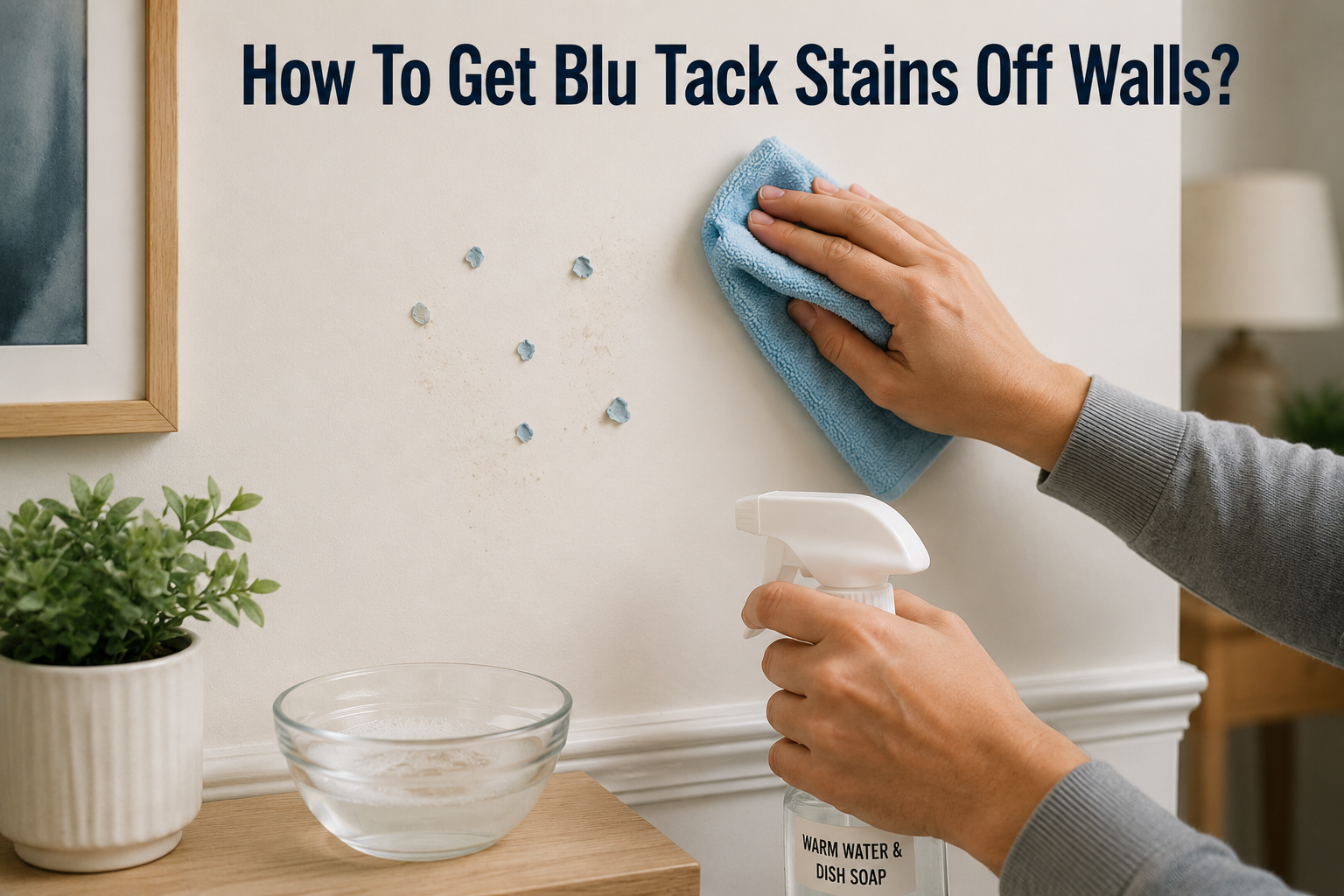
Warm Soapy Water Method
This is the gentlest and often the first method worth trying, especially on fresh stains.
- Mix a few drops of mild dish soap into a bowl of warm water.
- Dip a soft cloth into the mixture and wring out the excess so it is damp, not dripping.
- Gently dab and wipe the stained area in small circular motions.
- Rinse the cloth, remove any soap residue, and dry the wall with a clean towel.
This method works best on light, fresh marks and is safe for most painted walls.
Baking Soda Paste Method
Baking soda is a mild abrasive that helps lift oily residue without being too harsh on paint.
- Combine baking soda with a small amount of water until it forms a thick paste.
- Apply the paste directly onto the stained area using a soft cloth or your fingertip.
- Let it sit for about five to ten minutes.
- Wipe away gently with a clean, damp cloth, then dry the area thoroughly.
This method is particularly effective for greasy marks that soap and water alone could not fully remove.
White Vinegar Method
White vinegar is a natural, mild acid that can help break down oily residue.
- Dilute white vinegar with an equal amount of water.
- Dampen a soft cloth with the mixture.
- Gently dab the stain rather than scrubbing, allowing the vinegar to work on the oils.
- Wipe clean with a fresh, damp cloth afterward to remove any vinegar smell.
Rubbing Alcohol Method
For stains that have proven more stubborn, rubbing alcohol can be more effective, although it should be used carefully.
- Soak a cotton ball or pad with rubbing alcohol.
- Gently rub the stained area using light pressure.
- Check frequently to ensure the paint underneath is not being affected.
- Wipe the area with a clean, damp cloth once the mark has faded.
Because rubbing alcohol is stronger than soap or vinegar, always test it on a hidden section first, particularly on painted walls with a matte or flat finish.
Magic Eraser Sponge Method
Magic eraser sponges are made from melamine foam, which acts as a very fine abrasive.
- Wet the sponge slightly and squeeze out the excess water.
- Gently rub the sponge over the stained area using light, even pressure.
- Check the area every few passes, since these sponges can sometimes remove a small amount of paint sheen if used too aggressively.
- Wipe the wall clean with a damp cloth once finished.
This method tends to work quickly, but it is best avoided on delicate or textured wallpaper.
WD-40 Method
WD-40 can help break down old, set-in grease stains, though it requires a careful follow-up cleaning step.
- Spray a small amount of WD-40 onto a cloth rather than directly onto the wall.
- Dab the cloth onto the stained area.
- Let it sit for a minute or two to loosen the residue.
- Follow up immediately with warm soapy water to remove any oily residue left behind by the WD-40 itself.
Commercial Wall Cleaners or Stain Removers
If household remedies are not fully effective, a store-bought wall cleaner or stain remover designed for painted surfaces can be considered. When choosing one, look for a product labeled safe for the specific type of wall finish you have, and always follow the instructions on the packaging.
Special Cases
Removing Stains From Wallpaper
Wallpaper requires a much gentler touch than painted walls, since excess moisture can cause bubbling, peeling, or discoloration. Stick to a barely damp cloth with a small amount of mild soap, and always dab rather than scrub. Avoid rubbing alcohol and WD-40 on wallpaper unless a small hidden test area confirms it is safe.
Removing Stains From Textured or Matte Walls
Textured walls, such as those with a popcorn or Artex finish, can trap Blu Tack residue in the grooves. A soft-bristled brush combined with the baking soda paste method often works well here, allowing you to reach into the texture without scrubbing too hard on any one spot. Matte walls should be treated gently as well, since their finish can show scrub marks more easily than glossy paint.
Dealing With Old, Set-In Stains
For stains that have been present for a long time, it may take a combination of methods and a bit of patience. Starting with the mildest option, such as warm soapy water, and gradually moving toward stronger solutions like rubbing alcohol or WD-40 if needed, tends to give the best results while minimizing the risk of damage.
Removing Stains From Painted vs. Unpainted Plaster
Painted plaster generally behaves similarly to painted walls and can be treated with the same methods described above. Unpainted or raw plaster, however, is far more porous and absorbs oils quickly, which makes staining more likely to become permanent.
In these cases, a very light touch with soapy water is recommended, and if the stain persists, painting over the area may be the most practical solution.
What to Do If the Stain Won’t Come Out
Sometimes, despite trying several methods, a stain refuses to fully disappear. This does not mean the situation is hopeless.
Touch-Up Painting the Area
If cleaning methods have lightened the stain but not removed it completely, a small amount of touch-up paint can finish the job. Use a small brush and apply a thin, even layer directly over the mark, feathering the edges so the new paint blends smoothly with the surrounding wall.
Matching Paint Color Tips
Getting an exact color match is important for a seamless finish. If you still have the original paint tin, check the label for the color code and take it to a hardware store for a fresh mix if needed. If the original paint is unavailable, many stores offer color-matching services using a small paint chip or sample from the wall itself.
When to Call a Professional
If the stain covers a large area, has caused visible damage to the plaster, or the wall has a specialized finish that you are unsure how to treat, it may be worth calling a professional decorator. This is especially true for rental properties, where getting the repair done correctly the first time can save time and potential deposit deductions.
Preventing Future Blu Tack Stains
Alternatives to Blu Tack
Switching to alternative hanging methods can help avoid this issue altogether in the future. Some popular options include:
- Removable adhesive hooks designed for walls
- Washi tape, which is gentle and residue-free
- Poster mounting strips made for temporary use
- Magnetic paint combined with lightweight magnets
Proper Application Techniques to Reduce Residue
If you do continue using Blu Tack, using only a small amount and pressing it onto a piece of paper or card before applying it to the item you are hanging can reduce direct contact between the putty and the wall.
Timely Removal Tips
Removing Blu Tack as soon as it is no longer needed, rather than leaving it up for months, greatly reduces the chance of oil soaking deeply into the wall. Checking on long-term decorations every so often and swapping the putty for a fresh piece can also help minimize residue buildup over time.
Common Mistakes to Avoid
| Mistake | Why It’s a Problem | Better Approach |
|---|---|---|
| Using harsh chemicals without testing first | Can discolor or strip paint | Always test on a hidden area |
| Scrubbing too hard | Can damage paint sheen or texture | Use light, gentle motions |
| Leaving Blu Tack up for too long | Oil soaks deeper into the wall | Remove and replace periodically |
| Using too much water on wallpaper | Can cause bubbling or peeling | Use a barely damp cloth |
| Skipping the residue removal step | Cleaning agents work less effectively on leftover putty | Remove all putty before treating the stain |
Frequently Asked Questions
Does Blu Tack ruin paint permanently? In most cases, no. Fresh to moderately old stains can usually be treated successfully with the methods described above. Very old, deeply set stains may require a small paint touch-up for a complete fix.
Can I use Blu Tack on wallpaper safely? It can be used, but it carries a higher risk of staining since wallpaper is more porous. Using a small piece and removing it promptly reduces the chances of a lasting mark.
What household items work best for grease stains? Baking soda paste and diluted white vinegar tend to be the most effective and gentlest options for typical greasy Blu Tack marks.
How long does Blu Tack residue take to set in? This varies depending on room temperature and how long the putty stays on the wall, but noticeable oil staining can begin within just a few weeks, becoming more pronounced the longer it remains in place.
Conclusion
Knowing how to get Blu Tack stains off walls does not have to be complicated or costly. Starting with gentle methods like warm soapy water or a baking soda paste, and moving on to stronger options such as rubbing alcohol or WD-40 only if needed, will handle the vast majority of stains safely.
Always test any solution on a hidden area first, be gentle with delicate surfaces like wallpaper and textured walls, and consider a small paint touch-up if a stain proves particularly stubborn. With these simple steps, your walls can look fresh and clean again, and a little extra care when hanging items in the future can help you avoid the problem altogether.
Related Articles
How to Clean Mold from Bathroom Ceiling: Complete Step-by-Step Guide
How Long Does It Take To Do A Bathroom Renovation? Full Timeline Guide
What Is A Drip Edge On A Roof? Complete Guide
How Much Does It Cost to Replace a Roof? Full Material Price Guide
How To Restain Kitchen Cabinets? Step-By-Step Guide For Beginners