



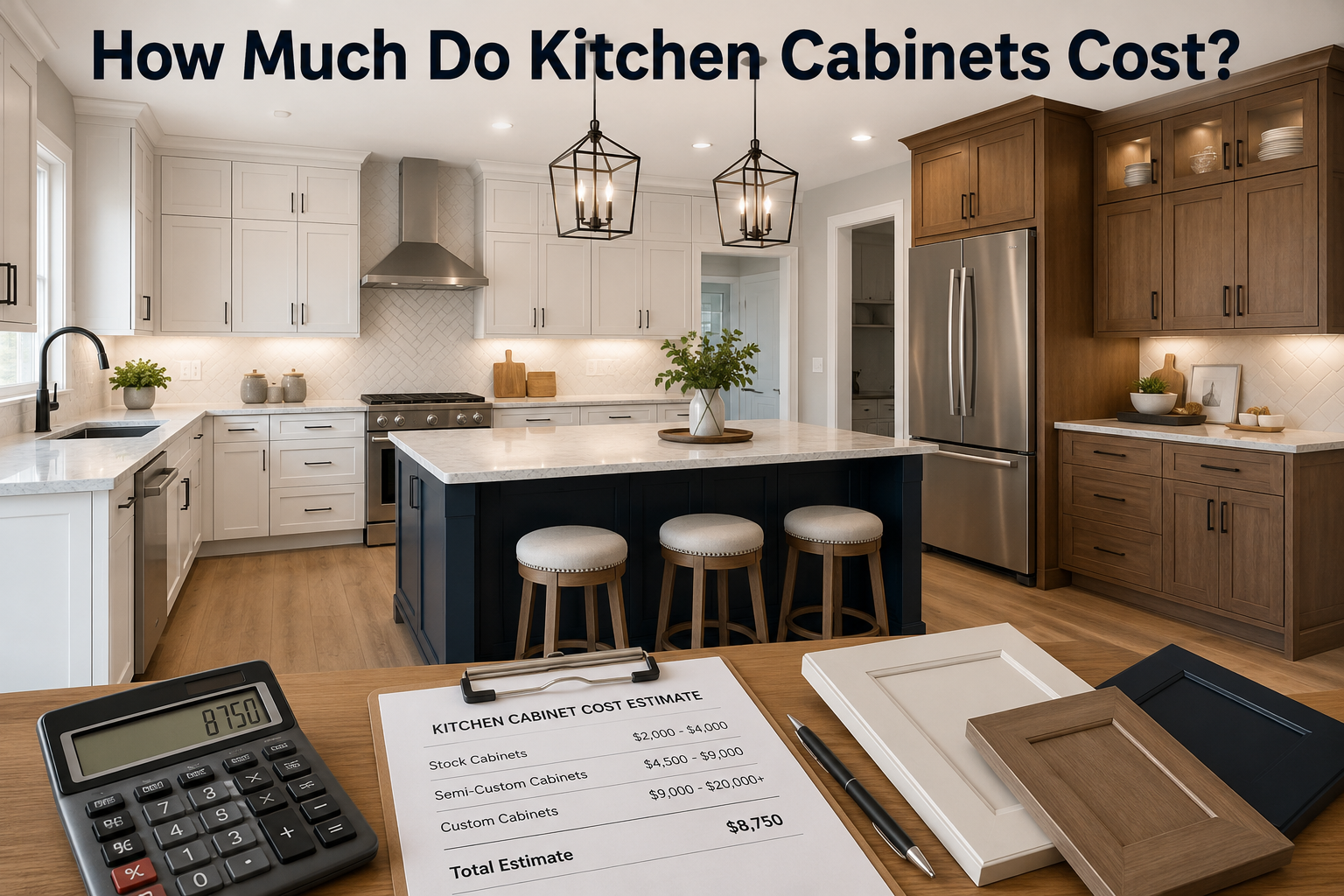
Kitchen cabinets are one of the biggest investments in any remodel, and they usually take up a large chunk of the total renovation budget. If you are planning a kitchen makeover, one of the first questions that probably comes to mind is: how much do kitchen cabinets cost?
The honest answer is that it depends on several factors, including the type of cabinet, the material used, the style you choose, and even where you buy them from. In this guide, we will break down everything you need to know so you can plan your budget with confidence and avoid any unpleasant surprises along the way.
Average Kitchen Cabinet Cost Overview
Before diving into the details, it helps to get a general sense of the numbers. Cabinet pricing is usually measured either per linear foot or per square foot, and the total cost depends heavily on the size of your kitchen.
On average, homeowners can expect to pay anywhere between 60 dollars and 1,200 dollars per linear foot, depending on the quality and customization level. For a standard 10×10 kitchen, which is often used as an industry benchmark and typically requires around 30 linear feet of cabinetry, the totals usually look like this:
| Kitchen Size | Budget Range | Average Total Cost |
|---|---|---|
| Small kitchen (stock cabinets) | Low cost | 3,000 to 6,000 dollars |
| Medium kitchen (semi-custom) | Mid range | 6,000 to 15,000 dollars |
| Large kitchen (custom) | High end | 15,000 to 30,000+ dollars |
These numbers give a helpful starting point, but the real answer to how much do kitchen cabinets cost becomes clearer once you understand the different categories of cabinets available in the market.
Cost by Cabinet Type
Cabinets generally fall into three broad categories, and each one comes with its own price tag and level of customization.
Stock cabinets are the most affordable option because they are mass-produced in standard sizes and shipped ready to install. They are widely available at home improvement stores and can usually be picked up within a week or two. Because there is little to no customization, stock cabinets are perfect for homeowners working with a tighter budget or a straightforward kitchen layout.
Semi-custom cabinets sit in the middle of the pricing spectrum. They still come in standard sizes, but they offer more flexibility when it comes to finishes, door styles, and storage add-ons. This makes them a popular choice for people who want a personalized look without paying custom prices.
Custom cabinets are built specifically for your kitchen’s dimensions and design preferences. Every detail, from the wood species to the exact measurements, is tailored to your space. Naturally, this level of craftsmanship comes at a premium, but it also delivers the best fit and the most unique look.
| Cabinet Type | Price per Linear Foot | Best For |
|---|---|---|
| Stock | 60 to 200 dollars | Budget-conscious remodels |
| Semi-custom | 150 to 650 dollars | Balanced style and cost |
| Custom | 500 to 1,200+ dollars | Unique layouts and high-end finishes |
Cost by Material
The material used to build your cabinets plays a huge role in determining the final price. Cheaper materials like laminate and thermofoil are budget-friendly and easy to clean, making them a practical choice for rental properties or starter homes. MDF, also known as medium-density fiberboard, is another affordable option that provides a smooth surface for painted finishes, though it is not as durable as solid wood.
Plywood cabinets strike a nice balance between affordability and strength, since plywood resists moisture and warping better than particleboard. Solid wood options such as oak, maple, cherry, and walnut are the most expensive but also the most durable and visually appealing. These woods often develop a richer look over time and can last for decades with proper care.
For homeowners who want a modern touch, metal and glass accents can be added to cabinet doors, though these features usually increase the overall price since they require additional hardware and precision manufacturing.
Cost by Cabinet Style
Beyond material, the style of the cabinet door also affects pricing. Shaker style cabinets, known for their clean lines and recessed panel, remain one of the most popular and moderately priced choices on the market. Flat-panel or slab-style cabinets have a sleek, minimalist appearance and are often slightly cheaper to produce since they require less detailed woodworking.
Raised panel cabinets have a more traditional, dimensional look and tend to cost more due to the extra craftsmanship involved. Another factor worth considering is whether you choose inset or overlay doors. Inset doors sit flush within the cabinet frame and require precise fitting, which usually adds to the labor cost, while overlay doors are simpler to install and generally more budget-friendly.
Cost by Finish
The finish applied to your cabinets can also shift the price up or down. Painted cabinets are a popular choice because they offer a clean, uniform look and can be customized to match almost any color scheme. Stained finishes highlight the natural wood grain and tend to appeal to homeowners who want a warmer, more traditional aesthetic.
Glazed finishes add depth and an aged appearance, often making cabinets look more expensive than they actually are, though the glazing process itself adds labor cost. Textured or matte finishes have become increasingly popular in modern kitchens and usually fall in the mid to high price range depending on the technique used.
Installation Costs
Buying the cabinets is only part of the equation, since installation adds a significant portion to your overall budget. Homeowners often wonder how much do kitchen cabinets cost once labor is factored in, and the answer typically adds another 15 to 30 percent on top of the cabinet price itself.
DIY installation can save money, but it requires a fair amount of skill, tools, and time, and mistakes can be costly to fix. Professional installation, on the other hand, ensures everything is level, secure, and built to last, though it comes with an hourly or per-project labor rate.
Additional installation costs can include:
- Removal and disposal of old cabinets
- Adjustments to electrical wiring for under-cabinet lighting
- Plumbing modifications if the sink location changes
- Structural repairs if walls or flooring need attention before installation
These extra steps are easy to overlook when budgeting, so it is wise to ask your contractor for a detailed breakdown before work begins.
Additional Cost Factors
Several other variables can influence your final bill beyond the cabinets and installation themselves. The size and layout of your kitchen naturally affects how many cabinets you need, and unusual layouts with corners, islands, or vaulted ceilings may require custom solutions that raise the price.
The number of cabinets and drawers also matters, since more storage means more materials and hardware. Speaking of hardware, items like handles, hinges, and soft-close mechanisms may seem like small details, but they can add up quickly, especially if you choose premium brands.
Custom features are another consideration. Pull-out shelves, lazy Susans, built-in spice racks, and other organizational upgrades all come at an additional cost but can greatly improve the functionality of your kitchen. Finally, many homeowners choose to update their countertops and backsplash at the same time as their cabinets, which should be factored into the overall remodeling budget even though it is technically a separate expense.
Cost by Brand or Retailer
Where you purchase your cabinets can make a noticeable difference in price. Big box stores like Home Depot and Lowe’s offer a wide range of stock and semi-custom options at competitive prices, along with the convenience of in-store consultations. IKEA is another popular choice known for its affordable, modular cabinet systems that require some assembly.
Online retailers have also grown in popularity, often offering lower prices due to reduced overhead, though it can be harder to see the exact finish and quality in person before buying. Local cabinet makers provide a more personalized experience and are a great option for custom work, though prices are usually higher due to the hands-on craftsmanship involved. High-end designer brands sit at the top of the price range, offering premium materials, unique designs, and a level of exclusivity that comes with a matching price tag.
Budget Breakdown Examples
To put all of this into perspective, here are three sample budgets based on different kitchen sizes and quality levels.
A small kitchen on a tight budget might spend around 4,000 dollars on stock cabinets, keep hardware simple, and handle installation with the help of a handyman rather than a full renovation crew.
A mid-range kitchen remodel could allocate roughly 10,000 dollars for semi-custom cabinets with a shaker door style, upgraded soft-close hinges, and professional installation.
A luxury kitchen project might invest 25,000 dollars or more into fully custom solid wood cabinets, designer hardware, and specialized storage features, along with a skilled contractor to handle every detail of the installation.
Ways to Save Money
There are several practical ways to bring down the overall cost without sacrificing too much on quality or style. Cabinet refacing, which involves replacing just the doors and drawer fronts while keeping the existing cabinet boxes, can save a substantial amount compared to a full replacement. Choosing in-stock cabinets over fully custom ones is another simple way to reduce both cost and waiting time.
Painting existing cabinets instead of replacing them entirely is one of the most budget-friendly transformations available, and it can make a kitchen look brand new for a fraction of the price. Timing your purchase around off-season sales, such as during the winter months when remodeling projects tend to slow down, can also lead to meaningful discounts from retailers looking to move inventory.
Signs You Might Be Overpaying
It is not always easy to tell whether a quote is fair, but there are a few warning signs worth watching for. Be cautious if a contractor is unwilling to provide an itemized breakdown of costs, as vague pricing can hide unnecessary markups. Prices that are significantly higher than multiple other quotes for the same materials and scope of work should also raise a flag.
Getting at least three separate estimates before committing to a project is one of the best ways to ensure you are paying a fair price and not being overcharged for standard materials or labor.
How to Get Accurate Quotes
When requesting a quote, it helps to ask specific questions so you can compare apples to apples. Consider asking about the exact materials being used, whether the price includes hardware and installation, what the estimated timeline looks like, and whether there are any potential additional charges that could arise during the project.
A trustworthy quote should clearly outline the cost of materials, labor, hardware, and any anticipated extra work, leaving little room for surprise charges once the project is underway.
Return on Investment
Kitchen remodels are often considered one of the smarter home improvement investments because they can meaningfully boost resale value. According to general industry trends, a well-executed kitchen renovation can recoup a solid portion of its cost when the home is eventually sold, making it a worthwhile investment for homeowners planning to stay for several more years or sell in the near future.
Choosing timeless styles like shaker doors and neutral finishes tends to appeal to a broader range of future buyers, which can further improve the return on your cabinet investment.
Conclusion
So, how much do kitchen cabinets cost in the end? The answer really comes down to your choices around cabinet type, material, style, and where you decide to shop. A small kitchen with stock cabinets might cost a few thousand dollars, while a large custom kitchen can easily climb well beyond 20,000 dollars. By understanding the factors that influence pricing and following the money-saving tips outlined above, you can create a kitchen that fits both your style and your budget.
Frequently Asked Questions
How much do IKEA cabinets cost? IKEA cabinets are generally priced on the more affordable end, often falling within the stock to semi-custom range depending on the finish and hardware selected.
Is it cheaper to buy or build cabinets? Buying pre-made stock cabinets is usually cheaper and faster than building custom cabinets from scratch, unless you already have significant woodworking experience and tools.
How long do kitchen cabinets last? With proper care, well-built cabinets can last anywhere from 20 to 50 years, with solid wood options typically lasting the longest.
Related Articles
Is Ceiling Ghosting Dangerous? What Those Dark Streaks Actually Mean
How to Install 12×12 Ceiling Tiles With Staples?
Gap Between Wall and Ceiling: What Causes It and How to Fix It