

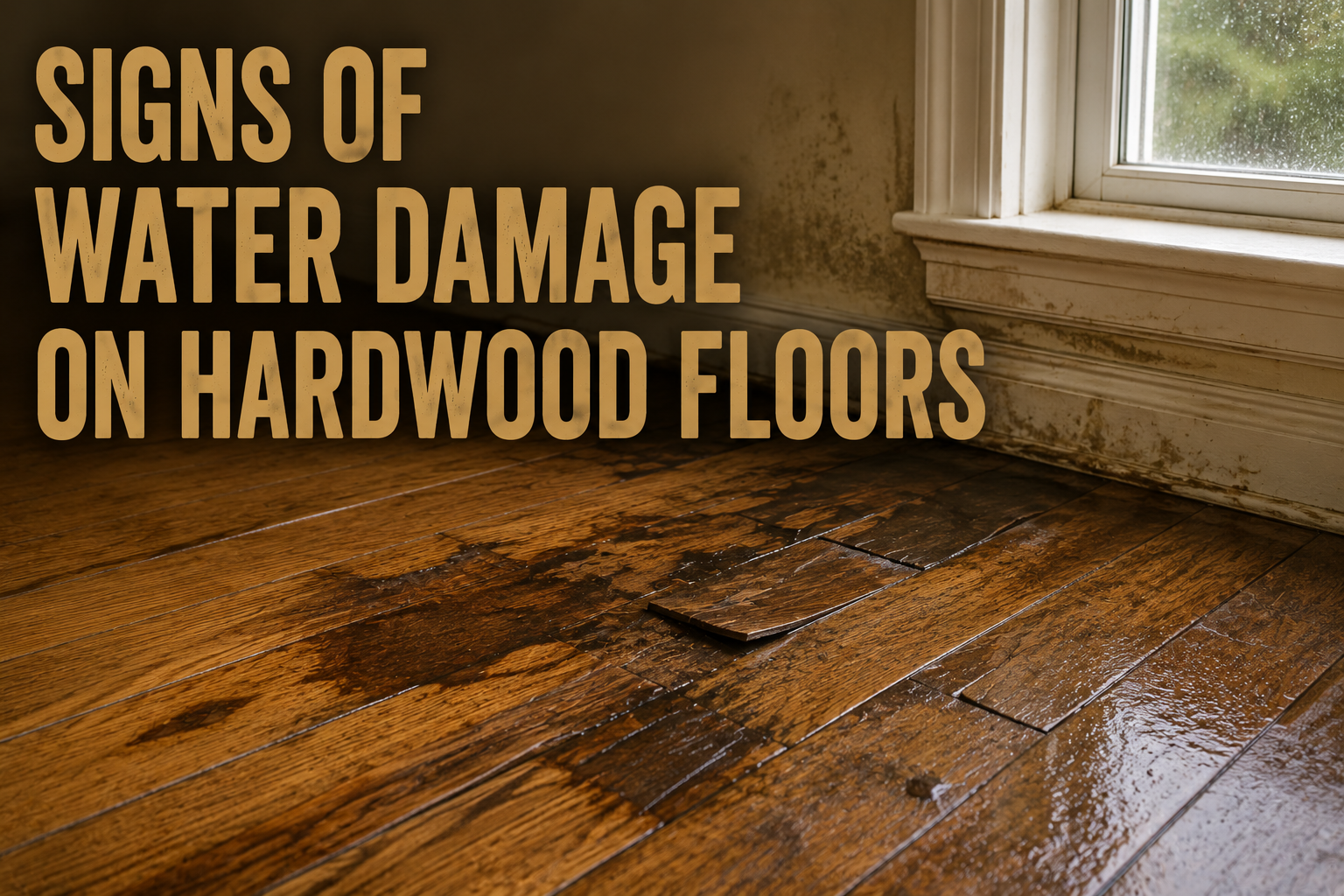
Hardwood floors are one of the most attractive and valuable features a home can have, but they are also one of the most vulnerable to water. Whether it’s a slow, hidden leak under a kitchen sink or a sudden flood from a burst pipe, water and wood simply don’t mix well. Recognizing the signs of water damage on hardwood floors early can save you thousands of dollars in repairs and prevent bigger problems like mold growth or structural weakening.
Many homeowners don’t notice water damage until it’s already fairly advanced, because the early symptoms can be subtle. A slightly uneven board or a faint musty smell might not seem like a big deal at first, but these small clues are often the beginning of a much larger issue happening beneath the surface. This guide walks through everything you need to know, from the earliest visual cues to the more serious structural warning signs, so you can catch problems before they spread.
How Hardwood Floors React to Water
Wood is a naturally porous material, which means it absorbs moisture from its surroundings almost like a sponge. When water sits on or seeps into hardwood flooring, the wood fibers swell. If the moisture then dries out unevenly, the wood can shrink and crack. This constant cycle of swelling and shrinking is what causes most of the visible damage homeowners eventually notice.
There’s an important difference between surface moisture and deep or subfloor damage. Surface moisture, like a spilled glass of water wiped up quickly, usually causes little to no lasting harm. Deep moisture, however, can seep between the boards and into the subfloor underneath, where it’s much harder to detect and dry out. This hidden moisture is often the real danger, since it can sit undisturbed for weeks while damage quietly builds.
The timeline for damage varies depending on how much water is involved and how long it stays in contact with the wood. A quick spill wiped up within minutes usually won’t cause harm. Standing water left for several hours can begin to warp the finish. Water that sits for days, such as from a slow leak behind an appliance, can lead to cupping, staining, and even mold growth within just one to two weeks.
Visual Signs of Water Damage
Visual inspection is usually the first way homeowners notice something is wrong. Here are the most common visual signs of water damage on hardwood floors, along with what each one typically indicates.
Cupping (Edges Higher Than Center)
Cupping happens when the edges of individual boards rise higher than their centers, creating a slight U-shaped curve across each plank. This is one of the earliest and most common signs of water damage on hardwood floors. It usually occurs because the underside of the board absorbs more moisture than the top, causing it to expand unevenly.
Crowning (Center Higher Than Edges)
Crowning is essentially the opposite of cupping. The center of the board rises higher than its edges. This often happens after cupped boards have been sanded down without allowing the wood to fully dry first, or when moisture affects the top surface more than the underside.
Buckling (Boards Lifting Off the Subfloor)
Buckling is a more severe stage of water damage where boards actually pull away from the subfloor, sometimes rising several inches. This typically results from prolonged exposure to standing water, such as flooding, and often requires professional repair or full board replacement.
Warping and Bowing
Warping refers to boards twisting or bending out of their original flat shape. Bowing is similar but describes a curve along the length of the board rather than across it. Both are strong indicators that moisture has penetrated deep into the wood fibers.
Gapping Between Boards
While small seasonal gaps are normal in hardwood floors due to humidity changes, unusually wide or uneven gaps can signal that the wood has lost moisture rapidly, often after being overly saturated and then drying too quickly.
Discoloration
Dark spots, gray or black staining, and white hazy patches are all classic signs of water exposure. Dark or black stains often indicate that water has been present for an extended period and may be linked to mold or mildew forming underneath the surface.
Finish Damage
Peeling, bubbling, or cracking of the protective finish layer is another telltale sign. Water trapped beneath the finish can cause it to separate from the wood, leaving a cloudy, milky, or bubbled appearance.
Physical and Tactile Signs
Not all signs of water damage on hardwood floors are visible to the eye. Some are things you’ll notice simply by walking across the floor.
- Soft or spongy spots underfoot: This usually means the subfloor has absorbed significant moisture and has begun to weaken.
- Squeaking or creaking boards: New or worsening noises can indicate that the boards or subfloor have shifted due to moisture-related swelling.
- Loose boards or noticeable movement: Boards that shift, rock, or feel unstable when stepped on may have lost their proper adhesion or fastening because of water exposure.
- Uneven or sloping sections: A section of flooring that feels tilted or uneven compared to the rest of the room often points to subfloor damage.
Smell-Based Signs
Sometimes your nose will notice a problem before your eyes do. A persistent musty or mildew-like odor is one of the more overlooked signs of water damage on hardwood floors, especially when the source of the water isn’t immediately visible.
If a damp smell lingers even after the floor has been cleaned and dried, it’s often a sign that moisture has settled into the subfloor or between the boards, where it can’t be reached by regular cleaning. In many cases, this smell signals hidden damage that hasn’t yet become visible on the surface, making it one of the earliest warning signs worth paying attention to.
Mold and Mildew Indicators
Mold thrives in damp, dark environments, which makes water-damaged hardwood flooring an ideal breeding ground. Visible mold can appear as green, black, white, or gray fuzzy or speckled patches, often forming along the edges of boards or near baseboards.
In many cases, though, mold grows in places you can’t easily see, such as underneath the flooring or behind baseboards. This hidden mold can still cause health symptoms like coughing, sneezing, headaches, or worsened allergies and respiratory issues, even if you can’t spot it directly.
Certain areas of the home are more prone to mold growth after water exposure, including spaces near exterior walls, underneath rugs or furniture that trap moisture, and rooms with higher humidity like kitchens and bathrooms.
Common Causes of Water Damage
Understanding what causes water damage can help you prevent it in the first place. The table below summarizes the most frequent culprits.
| Cause | Description | Risk Level |
|---|---|---|
| Plumbing leaks | Slow leaks from pipes, dishwashers, or washing machines | High (often hidden) |
| Roof or window leaks | Water entering through damaged seals or roofing | Medium to High |
| Spills left untreated | Liquids not cleaned up promptly | Low to Medium |
| High humidity | Excess moisture in the air absorbed by wood over time | Medium |
| Flooding | Sudden, large-scale water intrusion | Very High |
| Improper cleaning | Using excess water or steam mops on hardwood | Medium |
Where Damage Commonly Appears First
Water damage doesn’t happen evenly across a floor; it tends to start in specific high-risk zones. Keep a closer eye on flooring near exterior doors and windows, since these areas are exposed to rain and condensation. Kitchens are another common starting point, particularly around dishwashers, refrigerators, and sinks where small leaks can go unnoticed for a long time.
Bathrooms and laundry rooms are naturally higher-humidity spaces and are prone to both leaks and moisture buildup. Flooring located near or above a basement can also be at higher risk if the basement itself has moisture issues. Finally, pay attention to the areas along baseboards and room edges, since water often travels and pools in these lower, less visible spots.
Early-Stage vs. Advanced Damage
Not all water damage looks the same, and understanding the stage of damage helps determine the right response.
Early-stage signs are subtle and easy to miss. These include very slight cupping, a faint musty smell, or minor discoloration in one small area.
Moderate damage becomes harder to ignore. At this stage, you might notice more pronounced cupping or warping, visible staining, finish bubbling, or soft spots when walking across the floor.
Severe or structural damage includes buckling, significant board separation, visible mold, or a subfloor that feels unstable. At this point, sections of the floor often need to be removed and replaced rather than simply repaired or refinished.
How to Confirm Suspected Water Damage
If you suspect water damage but aren’t fully sure, there are a few ways to confirm it before calling in help.
- Do a simple touch and visual check. Press down gently on suspicious areas to feel for softness, and look closely for discoloration or finish changes.
- Use a moisture meter. These affordable, easy-to-use tools measure the moisture content within the wood and can confirm whether levels are higher than normal, even if the surface looks fine.
- Call a professional inspector. If you notice multiple signs of water damage on hardwood floors, especially odor combined with softness or staining, a professional can assess the extent of hidden damage using specialized equipment.
Risks of Ignoring Water Damage
Leaving water damage unaddressed rarely makes it go away on its own, and the risks tend to compound over time. Structurally, prolonged moisture can weaken the subfloor and framing beneath your hardwood, potentially leading to costly repairs beyond just the flooring itself. Health-wise, hidden mold growth can affect indoor air quality and worsen allergies or respiratory conditions for household members.
From a financial standpoint, minor issues caught early are often inexpensive to fix, while advanced damage frequently requires full board replacement or even subfloor reconstruction. Additionally, visible water damage can lower a home’s resale value and make it harder to pass a home inspection during a sale.
Prevention Tips
While this guide focuses mainly on recognizing signs of water damage on hardwood floors, a few preventive habits go a long way in avoiding the problem altogether:
- Clean up spills quickly rather than letting them sit
- Use a dehumidifier or proper ventilation to manage indoor humidity
- Regularly inspect appliances and plumbing connections for early leaks
- Place rugs or mats in high-risk areas like entryways and near sinks
- Avoid excessive water or steam when cleaning hardwood floors
When to Call a Professional
Some situations call for professional help rather than a DIY approach. If you notice buckling, widespread staining, a persistent musty smell that won’t go away, or soft and spongy areas underfoot, it’s time to bring in an expert. Mold remediation specialists should be contacted if you see visible mold growth or suspect hidden mold behind walls or under flooring.
A flooring professional can also help determine whether a damaged section can simply be repaired and refinished, or whether it needs to be fully replaced. This decision often depends on how deep the moisture has penetrated and whether the subfloor itself has been compromised.
Conclusion
Catching the signs of water damage on hardwood floors early is one of the best ways to protect both your home’s value and your family’s health. From subtle cupping and faint odors to more advanced buckling and visible mold, each sign offers a clue about what’s happening beneath the surface. Because much of the most serious damage occurs out of sight, it’s worth periodically inspecting your floors, especially in kitchens, bathrooms, and areas near exterior walls.
Taking action at the first sign of trouble, whether that means using a moisture meter, calling a professional inspector, or simply addressing a leak promptly, can mean the difference between a small, affordable fix and a major renovation down the road. A little attention now goes a long way toward keeping your hardwood floors beautiful and structurally sound for years to come.
Related Articles
How to Clean a Copper Sink Without Ruining the Finish
Why Is My Toilet Bubbling? Causes, Fixes & When to Call a Plumber
How Long Does a Kitchen Remodel Take? A Realistic Timeline
What Is the Standard Depth of Kitchen Countertops?