


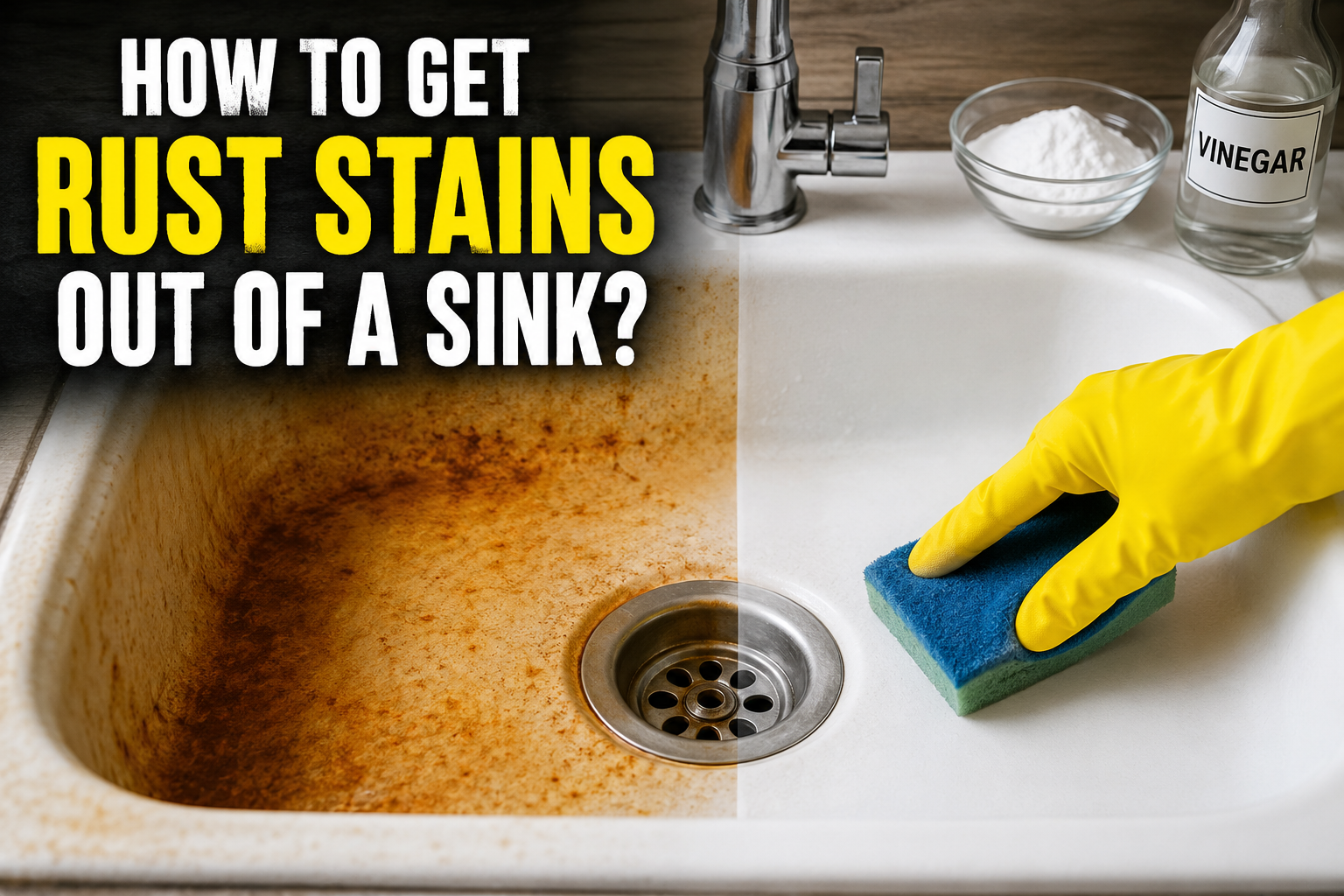
To get rust stains out of a sink, cover the stain with a paste of baking soda and water, let it sit for 20 to 30 minutes, then scrub gently with a soft cloth or nylon brush and rinse. For tougher stains, use an acid instead: white vinegar, lemon juice, or a cream of tartar paste. The one rule that saves your sink is to match the method to the material and skip anything harsh. Never use bleach on rust, and never use pumice or abrasive pads on a stainless steel sink.
Most rust stains lift with things you already have in the kitchen. Below is how to do it safely on any sink, why the stains keep coming back, and how to stop them for good.
Why rust stains appear (it’s usually not the sink)
Rust is what forms when iron, water, and oxygen meet. That matters because most sinks aren’t made of iron, so the rust you see often isn’t the sink corroding. It comes from somewhere else.
The two usual sources are wet metal objects and your water itself. A cast iron pan, a shaving cream can, or a wet metal utensil left sitting in the basin will leave a rust ring where it touched. And if you have well water or older galvanized pipes, your water can carry dissolved iron that settles around the drain, reacts with air, and leaves that familiar orange-brown mark. Hard-water homes see this a lot, because the mix of minerals and iron clings to the surface.
Knowing the source helps, because if the rust keeps returning no matter how often you clean, the problem is likely in your water, not your scrubbing. More on that in the prevention section.
First, know what your sink is made of
The safe way to remove rust depends entirely on the surface, so identify yours before you start:
- Stainless steel: A metal sink, usually with a faint brushed grain running in one direction. Common in kitchens. Scratches easily if you scrub the wrong way or use abrasives.
- Porcelain, enamel, or ceramic: A hard, glossy, glass-like coating over cast iron or steel. Common in bathrooms and farmhouse kitchens. The glaze is tough but brittle, so it chips and scratches under coarse tools.
Almost every gentle method below works on both, but each material has a couple of specific do’s and don’ts that come later. When in doubt, always test any method on a small, hidden spot first.
The gentlest method: baking soda paste
Start here for light rust on any sink. Baking soda is mild enough that it won’t scratch or etch when used with a soft touch.
- Mix baking soda with just enough water to make a thick paste, about the consistency of toothpaste.
- Spread it over the rust stain so the whole mark is covered.
- Let it sit for 20 to 30 minutes. For a stubborn stain, cover the paste with plastic wrap so it doesn’t dry out, and leave it longer, even overnight.
- Scrub gently with a soft cloth, sponge, or nylon-bristle brush. Never a metal pad.
- Rinse well and check. Repeat if the stain has faded but not vanished.
Let the paste do the work and keep your pressure light. The goal is to lift the rust, not grind at the surface.
For tougher stains: use a mild acid
Rust is iron oxide, and mild acids dissolve it, which is why they work faster on set-in stains. A few options, all things you probably have:
- White vinegar or lemon juice: Soak the stained area for at least 30 minutes. On a flat sink bottom, pour it on directly. On a slope, lay a vinegar-soaked cloth over the stain so it stays wet. The acid breaks down the rust so it wipes away.
- Baking soda and vinegar paste: Mix about three parts baking soda to one part vinegar into a paste. Add the vinegar slowly so it doesn’t foam over. Apply, wait 10 to 20 minutes, then scrub gently and rinse. This pairs mild abrasion with mild acid.
- Cream of tartar: This is tartaric acid, strong enough to lift iron deposits but gentle enough not to etch a porcelain glaze. Mix it into a paste with a little water, lemon juice, or hydrogen peroxide, apply, wait, then scrub with a nylon brush.
- Lemon and salt: Sprinkle salt on the stain, then work in lemon juice to make a paste. Let it sit about 30 minutes before scrubbing gently. The salt adds light grit, the lemon adds acid.
Whichever acid you use, rinse thoroughly with water afterward so no residue is left sitting on the surface.
Stainless steel: two rules that matter most
Stainless steel sinks come with two hard rules, and breaking either one leaves permanent marks that look worse than the rust did.
First, always scrub with the grain, never across it. Look closely and you’ll see fine brushed lines running one direction. Rub along those lines, not against them, or you’ll leave visible scratches. Second, never use a pumice stone, steel wool, or a coarse scouring pad on stainless. These will scratch it for good.
For stainless, the baking soda and acid methods above work well, and a mild non-scratch cleanser made for the metal is a safe extra option. As Bar Keepers Friend notes, most rust on a quality stainless sink is surface staining rather than deep corrosion, and it’s often caused by leaving cast iron or other metal pans soaking in the basin. Apply the cleaner to a damp non-abrasive cloth, work with the grain, then rinse and dry.
Porcelain, enamel, and ceramic: gentle first, pumice last
The glaze on these sinks is hard but can chip and scratch, and once it does, the rough spot traps stains and gets harder to clean. So work up slowly. Start with the baking soda paste, move to cream of tartar or a vinegar soak, and give each one time to work before scrubbing.
A cleaning pumice stone is a genuine option here, but only as a last resort for a welded-on stain that nothing else will budge, and only on porcelain or ceramic. Keep both the stone and the surface soaking wet the entire time, use very light pressure in small circles, and rinse often to check progress. Used dry or with force, even pumice can dull the finish. A melamine foam sponge, the generic magic-eraser type, is a gentler middle step worth trying first.
Store-bought rust removers
If the household methods don’t finish the job, a commercial rust remover will. The effective ones are built around oxalic acid or similar, which breaks down iron oxide fast, sometimes without much scrubbing. Bar Keepers Friend and CLR are two widely available choices that are safe on many sink surfaces when used as directed.
A few cautions come with these. Always check the label to confirm the product is rated for your sink material, and test a hidden spot first. Follow the timing on the label exactly, since some are meant to sit only a minute or two. Work in a ventilated space and wear gloves, because the fumes can be strong and the chemicals can irritate skin. And never mix cleaning products together, especially anything with bleach and anything with ammonia.
What not to do
A few common moves make rust stains worse or damage the sink:
- Don’t use abrasive scrubbers on the wrong surface. Steel wool and coarse pads scratch both stainless steel and porcelain glaze. Scratches then hold dirt and rust, so you trade one problem for a worse one.
- Don’t scrub across the grain on stainless steel. It leaves marks you can’t undo.
- Don’t leave a rust stain for months. Over time rust can etch into porcelain and become nearly impossible to remove, so treat stains while they’re fresh.
How to prevent rust stains from coming back
Removing the stain is only half the job. If it keeps returning, get ahead of it:
- Dry the sink after use. Standing water is what lets rust form, so a quick wipe with a towel makes a real difference, especially around the drain and faucet base where water pools.
- Keep metal out of the basin. Don’t leave cast iron pans, metal utensils, or steel cans sitting in a wet sink, since those leave rust rings.
- Clean regularly. A weekly wipe-down stops iron and mineral deposits from building into stains in the first place.
- Address your water. If you have well water or rust returns constantly, the iron is in your supply. A water softener or a dedicated iron filter reduces the iron reaching your sink and is the only real fix for recurring stains.
The bottom line
Rust stains look alarming but usually come off with simple stuff: a baking soda paste for light marks, vinegar or lemon or cream of tartar for tougher ones. Match your method to the sink material, scrub stainless with the grain, save pumice for porcelain emergencies only, and keep bleach away entirely. Then dry the sink, keep metal out of it, and if the rust keeps coming back, look at your water. Handle it early and gently, and your sink comes back looking like the stain was never there.
Frequently asked questions
Does bleach remove rust stains from a sink?
No, and it can make them worse. Bleach reacts with rust in a way that often deepens the stain rather than lifting it. Use a mild acid like vinegar or cream of tartar, or an oxalic-acid rust remover, instead.
Can I use a pumice stone on a stainless steel sink?
No. Pumice will scratch stainless steel permanently. It’s only safe on porcelain or ceramic, kept wet, as a last resort. For stainless, stick to baking soda, vinegar, or a non-abrasive cleanser, and always scrub with the grain.
Why does rust keep coming back in my sink?
Recurring rust usually means iron in your water, common with well water or older galvanized pipes. No amount of scrubbing fixes the source. A water softener or iron filter is the lasting solution.
What is the fastest way to remove a rust stain?
A commercial oxalic-acid rust remover like Bar Keepers Friend or CLR is fastest, since it dissolves rust quickly. Among household options, a vinegar or lemon juice soak works faster than baking soda alone because the acid breaks the rust down.
Will these methods damage my sink?
Not if you match the method to the material and use a light touch. Baking soda, vinegar, lemon, and cream of tartar are all gentle. The damage usually comes from abrasive pads, pumice on the wrong surface, or scrubbing stainless against the grain. Test any method on a hidden spot first.
Related Articles
How Many Bundles of Shingles for an 8×10 Roof?
How Do You Measure Drapes for Windows? A Complete Step-by-Step Guide
How Long Does It Take To Paint A Room? Complete Time Guide
How To Fix Squeaky Hardwood Floors: A Complete Step-by-Step Guide