


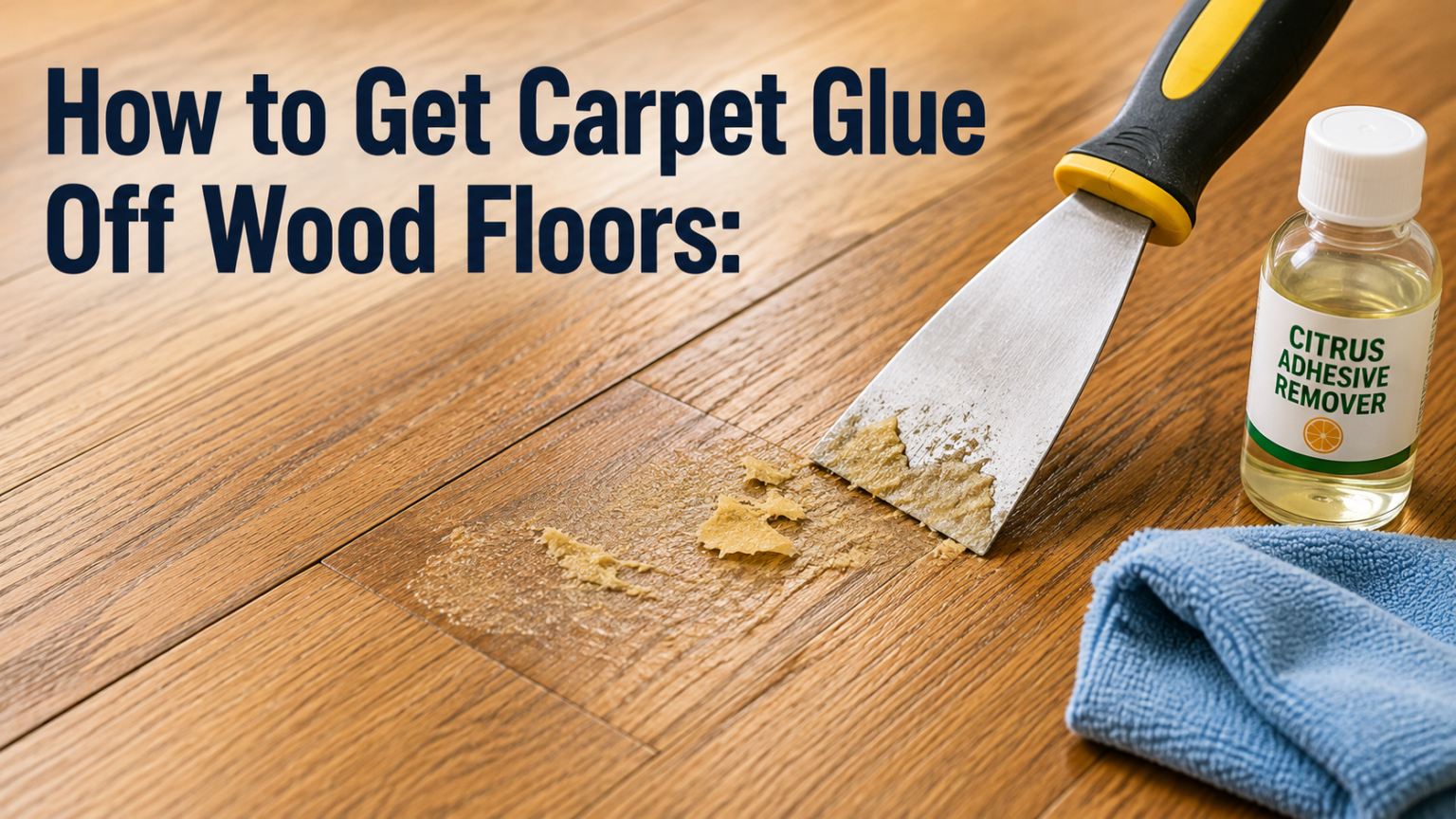
Removing old carpet often leaves behind stubborn glue marks that stick firmly to wood floors underneath. This leftover residue can look messy and even damage the natural beauty of your flooring if left untreated for too long.
The good news is that learning how to get carpet glue off wood floors does not require expensive tools or professional help in most cases. With the right combination of heat, gentle scraping, and safe cleaning solutions, you can restore your wood floor to its original condition without scratching or staining the surface.
Understanding Carpet Glue and Wood Floors
Before starting the removal process, it helps to understand what type of glue you are dealing with and how it interacts with your wood floor’s finish. Different adhesives respond differently to heat, moisture, and solvents, so identifying the glue type first can save you time and prevent accidental damage.
Types of Carpet Adhesive
Carpet adhesives generally fall into three categories: water-based glue, solvent-based glue, and double-sided tape adhesive. Water-based glue is usually easier to soften with warm water, while solvent-based glue often requires a chemical remover. Tape adhesive tends to leave a sticky, rubbery residue that responds well to heat and gentle scraping.
Why Different Glue Types Need Different Methods
Since each adhesive type has a unique chemical composition, using the wrong removal method can make the glue harder to lift or spread it further into the wood grain.
Testing a small area first helps you determine whether heat, solvent, or a natural cleaning agent will work best for your specific situation.
How Wood Finish Affects Your Approach
The type of finish on your floor, whether polyurethane, wax, or oil, determines how much solvent strength your wood can safely handle. Stronger chemicals may dull or strip certain finishes, so always choose the gentlest effective method first before moving to harsher solvents.
Safety Precautions Before You Start
Working with solvents and scraping tools around wood floors requires a few basic safety steps to protect both you and the flooring. Taking a few extra minutes to prepare properly can prevent unnecessary accidents or damage.
Ventilate the Room Properly
Many adhesive removers release strong fumes, so opening windows and doors or using a fan creates safer airflow while you work. Good ventilation also helps the solvent evaporate faster once you’re done cleaning.
Wear Gloves and Eye Protection
Adhesive removers and solvents can irritate skin and eyes, so wearing rubber gloves and safety glasses is a simple but important precaution. This protects you while giving you more confidence to work closely with the glue spots.
Test Products in a Hidden Area First
Before applying any solvent across the entire floor, test it on a small hidden section, such as a corner under furniture. This ensures the product does not discolor or damage the wood finish before you commit to the full cleaning process.
Tools and Materials You’ll Need
Gathering the right supplies beforehand makes the entire glue removal process smoother and faster. Below is a simple table listing what you’ll need and why each item matters.
| Tool or Material | Purpose |
| Plastic putty knife or scraper | Lifts dried glue without scratching wood |
| Hairdryer or heat gun | Softens glue for easier removal |
| Mineral spirits or rubbing alcohol | Dissolves stubborn adhesive residue |
| Commercial adhesive remover | Works on tougher solvent-based glue |
| Soft cloths | Wipes away residue and solvent |
| Fine steel wool (0000 grade) | Gently scrubs leftover glue spots |
| Mild soap and water | Cleans the floor after solvent use |
| Wood polish or refinishing product | Restores shine after cleaning |
Step-by-Step Removal Methods
There are several effective techniques you can use depending on how much glue remains and how stubborn it is. Trying the gentlest method first is always recommended before moving to stronger solvents.
Method 1: Scraping Off Dried Glue
Start by gently sliding a plastic putty knife under the edges of the dried glue at a low angle. Applying slow, even pressure helps lift larger chunks without gouging the wood surface. Avoid metal scrapers, as they can easily scratch or dent the flooring.
Method 2: Using Heat to Soften Glue
Point a hairdryer on a low or medium setting directly at the glue for about thirty seconds to soften it. Once warm, use your scraper to lift the loosened adhesive in small sections. A warm damp cloth pressed over the area for a few minutes works as a gentler alternative to a heat gun.
Method 3: Using Solvents and Adhesive Removers
Apply a small amount of mineral spirits or a commercial adhesive remover onto a soft cloth and rub it gently over the glue. Let the solvent sit for a minute or two so it can break down the adhesive before wiping it away. For lighter residue, rubbing alcohol often works just as effectively with less odor.
Method 4: Natural and DIY Alternatives
If you prefer avoiding harsh chemicals, a mixture of white vinegar and warm water can help loosen lighter glue spots over time. A baking soda paste applied directly to the residue and left for a few minutes can also help lift adhesive with minimal scrubbing.
Cleaning and Restoring the Floor After Glue Removal
Once the glue has been fully removed, the final cleanup stage restores your floor’s natural shine and protects the wood from long-term damage. This step is just as important as the removal process itself.
Wiping Away Solvent Residue
After using any solvent, wipe the treated area thoroughly with a clean, damp cloth to remove leftover chemical residue. Leaving solvent on the wood for too long can cause discoloration over time.
Drying the Floor Completely
Allow the floor to air dry fully before walking on it or placing furniture back in the room. Moisture trapped in the wood grain can lead to warping or finish damage if not dried properly.
Buffing and Polishing for Shine
Once dry, buff the treated area with a soft cloth to blend it with the surrounding floor finish. If the spot looks dull compared to the rest of the floor, applying a matching wood polish can restore an even, glossy appearance.
Common Mistakes to Avoid
Many people unintentionally damage their wood floors while trying to remove carpet glue quickly. Being aware of these common errors can help you avoid costly repairs later.
| Mistake | Why It’s a Problem |
| Using a metal scraper | Scratches and dents wood surfaces |
| Oversaturating wood with solvent | Can seep into grain and cause warping |
| Skipping the spot test | Risk of discoloring the entire floor |
| Scrubbing too aggressively | Damages the protective finish layer |
| Leaving solvent on too long | May cause staining or dullness |
When to Call a Professional
If the glue has deeply penetrated the wood grain or the finish appears damaged after multiple cleaning attempts, it may be time to consult a flooring professional. Deep staining, warped boards, or extensive finish loss are signs that refinishing the entire floor might be a better long-term solution than continued spot treatment.
Tips for Preventing Future Glue Residue
Choosing removable, low-tack carpet tape instead of permanent adhesive can make future carpet removal far easier on your wood floors. Placing protective floor coverings or rugs pads during carpet installation also reduces the chance of adhesive bonding too strongly with the wood surface.
Frequently Asked Questions
Does rubbing alcohol damage wood floors?
Rubbing alcohol is generally safe for most sealed wood floors when used in small amounts and wiped away promptly, though it’s still wise to test a hidden area first.
Can I use a heat gun instead of a hairdryer?
Yes, a heat gun works faster but should be kept on a low setting and moved constantly to avoid scorching the wood finish.
How long does it take to remove carpet glue from wood floors?
Small areas can often be cleaned within thirty minutes to an hour, while larger or more stubborn glue spots may take a few hours of repeated treatment.
Is vinegar strong enough for old, hardened glue?
Vinegar works best on lighter or fresher residue; older, hardened glue usually responds better to heat or a commercial adhesive remover.
Conclusion
Knowing how to get carpet glue off wood floors comes down to using the right combination of heat, gentle scraping, and safe cleaning solutions for your specific adhesive type. Taking a careful, patient approach protects your floor’s finish while fully restoring its natural appearance, giving you a clean, glue-free surface ready for its next use.
Related Articles
How to Clean Dust from Popcorn Ceiling: The Complete Guide
How to Cover Up Popcorn Ceiling: 6 Easy Methods for a Modern Look
Is Ceiling Ghosting Dangerous? What Those Dark Streaks Actually Mean
How To Get Rid Of Springtails In Bathroom: Complete Step-By-Step Guide