


Introduction
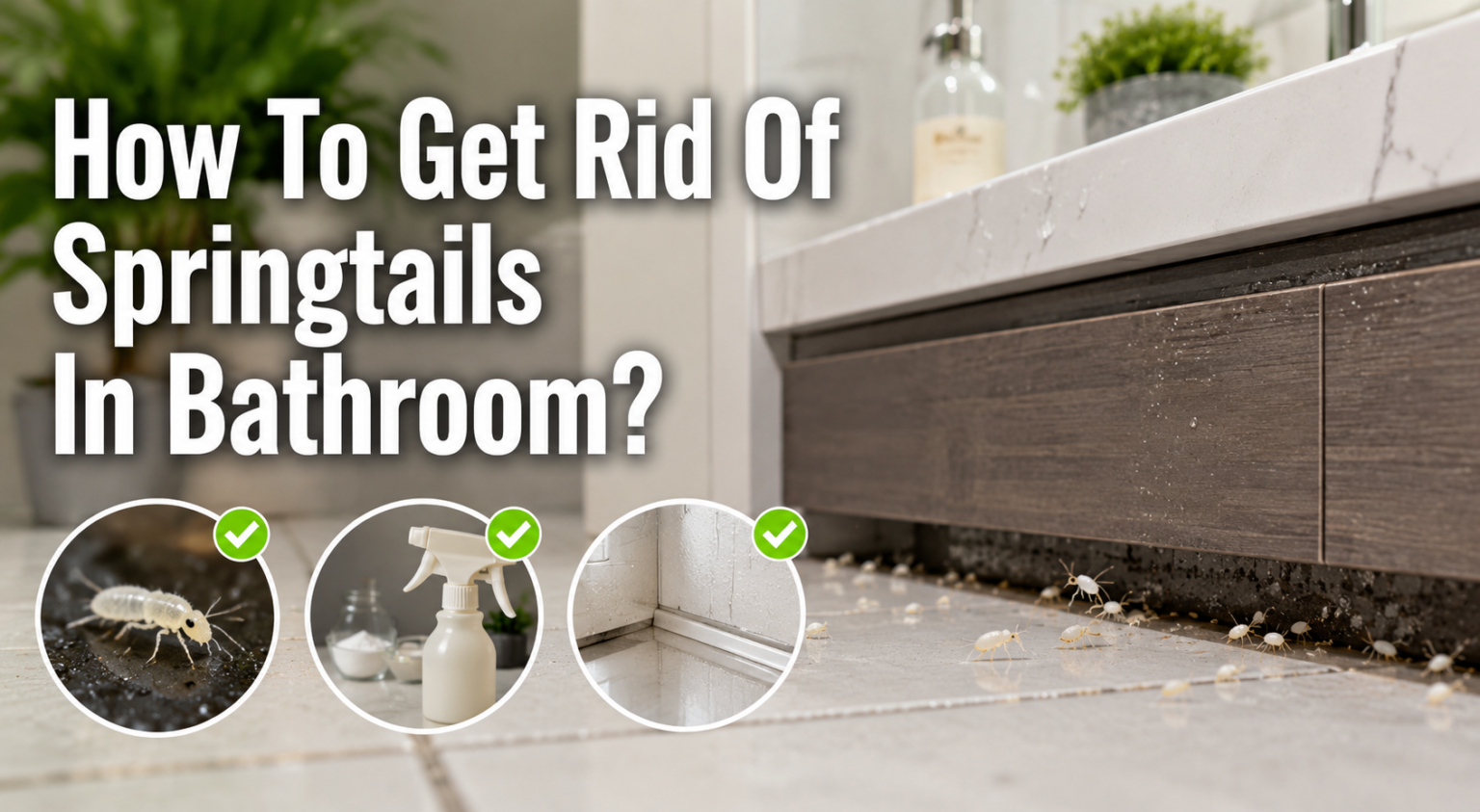
If you have noticed tiny, jumping bugs near your bathtub, sink, or drain, there is a good chance you are dealing with springtails. These small insects are one of the most common nuisance pests found in bathrooms, and once they show up, they can multiply fast if the right conditions are in place. The good news is that learning how to get rid of springtails in bathroom spaces is not complicated once you understand why they are there in the first place.
Springtails are drawn to bathrooms because these rooms often provide exactly what the insects need to survive: moisture, warmth, and organic material to feed on. Unlike many household pests, springtails are not attracted to food crumbs or garbage. Instead, they thrive in damp corners, under sinks, near drains, and inside cracks where humidity tends to collect.
Before panicking, it helps to know that springtails are considered a nuisance pest rather than a dangerous one. They do not bite, they do not sting, and they are not known to spread disease. Their presence, however, usually signals an underlying moisture problem in your bathroom that should be addressed, both to get rid of the current infestation and to prevent future ones.
This guide walks through everything you need to know, from identifying springtails correctly to eliminating them permanently and keeping them from coming back.
Understanding Springtails
Springtails, scientifically known as Collembola, are tiny insect-like creatures that typically measure between one and two millimeters in length. Despite their small size, they are often easy to spot in groups since they tend to cluster in moist areas. Their name comes from a unique tail-like structure called a furcula, which is tucked underneath their body and allows them to spring or jump several inches when disturbed.
Their color can range from white, gray, and blue to a darker brown or black, depending on the species. Because of their jumping ability, many homeowners initially mistake springtails for fleas. However, there are a few clear differences that make identification easier.
| Feature | Springtails | Fleas |
|---|---|---|
| Bite humans or pets | No | Yes |
| Habitat | Damp, moist areas | Fur, carpets, bedding |
| Movement | Springs using a tail-like furcula | Jumps using strong hind legs |
| Body shape | Soft, elongated or oval | Flat, hard-shelled body |
| Common location | Bathrooms, basements, potted plants | Pets, upholstery, carpets |
Springtails reproduce quickly, especially in humid environments. A female can lay dozens of eggs at a time, and under the right moisture conditions, a small number of springtails can turn into a noticeable infestation within a couple of weeks. This rapid reproduction cycle is one of the main reasons bathroom infestations seem to appear suddenly and grow fast if left untreated.
What Attracts Springtails To Your Bathroom?
Understanding what draws springtails into your bathroom is the foundation of solving the problem for good. Several everyday conditions create the perfect environment for them.
Excess moisture is by far the leading cause. Bathrooms are naturally humid spaces due to showers, baths, and sinks, and if that humidity is not properly ventilated, it creates the damp environment springtails need to survive. Leaky pipes, dripping faucets, or a slowly leaking toilet tank can also introduce hidden moisture behind walls or under flooring, giving springtails a hidden breeding ground that is not always visible during a quick inspection.
Mold and mildew growth is another major attractant, since springtails feed on fungi and organic matter rather than food scraps. Any patch of mold forming in grout lines, behind a toilet, or along a windowsill can become a food source that keeps a colony sustained.
Poor ventilation compounds the moisture problem. Bathrooms without an exhaust fan or a window that opens tend to trap humidity in the air long after a shower has ended, allowing dampness to settle into walls, cabinets, and flooring.
Drains themselves can also become a hotspot. Organic buildup such as soap scum, hair, and biofilm inside pipes creates a food source and a moist microenvironment that is ideal for springtails to live and reproduce in, often out of sight.
Finally, small cracks and gaps around baseboards, tile grout, or plumbing fixtures give springtails easy access points into your bathroom from outside soil, crawl spaces, or neighboring damp areas of the house.
Signs You Have A Springtail Infestation
Most people first notice springtails as tiny specks that appear to jump when they get close, often mistaking them for dust or debris until they move. They are commonly spotted near bathtub drains, sink basins, the base of the toilet, and inside cabinets under the sink where moisture tends to linger.
A small number of springtails appearing occasionally after a heavy rain or a particularly humid day may not indicate a serious problem. However, if you are seeing them daily, in clusters, or in multiple areas of the bathroom, this points to an active breeding site somewhere nearby that needs to be located and treated.
Common hiding spots include the underside of bath mats, grout lines, the seal around the tub, inside wall cavities near plumbing, and potted plants if any are kept in the bathroom, since damp potting soil is another favorite springtail habitat.
Step-By-Step: How To Get Rid Of Springtails In Bathroom
Getting rid of springtails permanently requires a combination of moisture control, cleaning, and targeted treatment. Skipping the moisture-control step is the most common reason infestations keep coming back even after cleaning and spraying.
Step 1: Identify and fix the moisture source. Start by inspecting under the sink, around the toilet base, behind the tub, and near any visible pipes for leaks. Even a small, slow drip can sustain an infestation for months. Repair any leaks immediately, and dry out the affected area completely.
Step 2: Improve bathroom ventilation. Run the exhaust fan during and for at least twenty minutes after every shower or bath. If your bathroom does not have a fan, consider installing one, or keep a window cracked open when possible to help humidity escape rather than settle into surfaces.
Step 3: Deep clean the bathroom. Scrub tile grout, the base of the toilet, the tub seal, and under-sink cabinets with a mold-and-mildew cleaner. Removing the mold removes a food source, which naturally discourages springtails from staying.
Step 4: Treat visible areas with a natural remedy. A simple mixture of equal parts water and white vinegar in a spray bottle can be applied directly to springtails on contact, along with baseboards, grout lines, and cabinet interiors. Vinegar disrupts their body’s moisture balance and is a safe first line of defense for households with children or pets.
Step 5: Apply diatomaceous earth. Food-grade diatomaceous earth can be lightly dusted into cracks, along baseboards, and inside cabinets under the sink. This fine powder works by drying out the exoskeleton of springtails on contact, offering a long-lasting barrier as long as it stays dry.
Step 6: Use an insecticide if needed. For larger infestations, a pyrethrin-based spray labeled for use against springtails can be applied according to the product’s instructions, focusing on cracks, corners, and areas near plumbing fixtures.
Step 7: Seal entry points. Once the area is treated, use silicone caulk to seal any gaps around baseboards, pipe entries, and the base of the toilet. This prevents new springtails from migrating in from crawl spaces or neighboring damp areas.
Step 8: Clean the drains thoroughly. Since drains are a common hidden breeding ground, use a drain brush to physically remove buildup, followed by a pour of boiling water or an enzymatic drain cleaner to break down remaining organic residue.
Natural Versus Chemical Treatment Options
Choosing between natural and chemical treatments often depends on the severity of the infestation and personal preference regarding household safety.
| Treatment Type | Best For | Safety Notes | Effectiveness |
|---|---|---|---|
| Vinegar spray | Light infestations, spot treatment | Safe around kids and pets | Moderate, needs repeat use |
| Diatomaceous earth | Preventive barrier, cracks and crevices | Food-grade version is low risk | High if kept dry |
| Boric acid | Cracks, hidden corners | Keep away from children and pets | High |
| Pyrethrin-based sprays | Larger or persistent infestations | Follow label instructions carefully | High |
| Enzymatic drain cleaners | Drain-related infestations | Generally safe for pipes and septic systems | High for drain-based colonies |
For most households, starting with natural methods such as vinegar and diatomaceous earth is a reasonable first approach, moving to a chemical treatment only if the infestation persists after a week or two of consistent effort.
Preventing Springtails From Coming Back
Long-term prevention comes down to keeping the bathroom as dry as possible. Wiping down the tub, sink, and floor after use, running the exhaust fan consistently, and periodically checking under the sink for hidden leaks are simple habits that make a significant difference over time.
A basic maintenance checklist can help keep the bathroom springtail-free:
- Run the exhaust fan during and after every shower
- Wipe down wet surfaces, especially around the tub and sink
- Check under-sink plumbing for leaks once a month
- Clean grout and drains regularly to prevent mold buildup
- Use a dehumidifier if the bathroom consistently feels humid
- Re-seal caulking around the tub and sink once it starts to crack or peel
It is also worth noting that springtail activity tends to increase during humid seasons or after periods of heavy rainfall, since outdoor moisture can seep into homes more easily during these times. Being slightly more vigilant with ventilation and drying habits during these periods can prevent a new infestation from starting.
When To Call A Professional?
Most bathroom springtail infestations can be resolved with consistent DIY effort, but there are situations where professional pest control becomes worthwhile. If springtails continue to appear in large numbers despite fixing visible leaks, cleaning thoroughly, and applying treatments for several weeks, there may be a hidden moisture source behind walls or under flooring that requires professional inspection equipment to locate.
A pest control technician can also help if the infestation has spread beyond the bathroom into other parts of the home, since this often points to a larger structural moisture issue rather than a simple surface-level problem. Professional treatment costs vary depending on the size of the affected area and the extent of the moisture problem, but a single visit for a springtail infestation is generally considered a moderate expense compared to treatments for larger pest problems.
Frequently Asked Questions
Do springtails bite or spread disease? No, springtails do not bite humans or pets, and they are not known to transmit any diseases. They are considered a nuisance pest rather than a health hazard.
How long does it take to get rid of springtails? With consistent moisture control and treatment, most bathroom infestations noticeably improve within one to two weeks. Full elimination may take slightly longer if a hidden leak needs to be repaired first.
Can springtails damage my home? Springtails do not chew through wood, wiring, or structural materials, so they do not cause physical damage to a home. Their presence is more of an indicator of an underlying moisture issue than a threat on its own.
Will springtails go away on their own? They are unlikely to disappear on their own as long as the moisture source that attracted them remains. Addressing the humidity or leak is necessary for a lasting solution.
Conclusion
Dealing with springtails in the bathroom does not have to be a long or complicated process once the root cause is addressed. The key takeaway from this guide on how to get rid of springtails in bathroom spaces is that moisture control is the foundation of any successful treatment plan. Fixing leaks, improving ventilation, cleaning regularly, and applying a combination of natural and chemical treatments where needed will not only eliminate an existing infestation but also keep your bathroom dry and unwelcoming to future springtail activity for the long term.
Related Articles
Why Does My Bathroom Sink Smell Like Rotten Eggs? (Causes & Easy Fixes)
How Much Does It Cost to Replace a Roof? Full Material Price Guide
Should Curtains Touch the Floor? The Complete Guide to Curtain Length
How To Remove Texture From Walls: The Complete Step-by-Step Guide
How to Get Wrinkles Out of New Curtains (No Ironing Required)