


If you have ever walked down into your basement after a heavy storm and found puddles forming near the walls, you already know how frustrating and damaging basement water problems can be. This is exactly the kind of situation that French drain basement systems were designed to solve. A French drain is one of the oldest and most trusted drainage solutions used by homeowners and contractors alike, and it continues to be a go-to fix for keeping basements dry.
The name “French drain” does not actually come from France. It comes from Henry French, a farmer and lawyer from Massachusetts who wrote about this drainage technique in the 1850s. He used the method to drain farmland, and over time, the same basic idea was adapted for residential foundations and basements. Today, French drain basement systems are considered one of the most reliable ways to manage groundwater and protect a home’s structural integrity.
In this guide, we will walk through everything you need to know about French drain basement systems, including how they work, the different types available, what materials are used, how installation is done, what it costs, and how to maintain the system once it is in place. Whether you are dealing with a damp basement right now or simply want to be prepared before a problem starts, this article will give you a clear and complete picture.
Understanding Basement Water Problems
Before diving into the solution, it helps to understand why basements get wet in the first place. Basements sit below ground level, which means they are surrounded by soil that holds moisture. When that moisture builds up, it creates pressure and finds ways to enter through cracks, joints, and porous concrete.
Common Causes of Basement Water Intrusion
Several factors contribute to water problems in basements, and often more than one is at play at the same time.
- Hydrostatic pressure — When soil around the foundation becomes saturated, water pushes against the basement walls and floor, eventually forcing its way through even tiny cracks.
- Poor grading around the foundation — If the ground slopes toward the house instead of away from it, rainwater naturally flows toward the foundation instead of away from it.
- Clogged or missing gutters — Gutters that are blocked or downspouts that dump water too close to the house send large amounts of water directly toward the foundation.
- High water table — In some areas, the natural water table sits close to the surface, meaning groundwater is almost always present near the foundation.
- Heavy rainfall or snowmelt — Sudden and intense water volume can overwhelm even a well-built foundation, especially in older homes.
Signs You Need a French Drain
It is not always obvious that a basement has a drainage problem until the damage has already started. Some of the most common warning signs include water stains or discoloration on basement walls, a persistent musty odor that never seems to go away no matter how much you clean, visible cracks in the walls or floor with signs of seepage, standing water appearing after rainstorms, and mold or mildew growth in corners or along baseboards.
If you notice any combination of these signs, it is a strong indication that installing a French drain basement system should be a priority.
How a French Drain Works?
At its core, a French drain basement system works on a simple principle: water always follows the path of least resistance. Instead of letting water build up around your foundation and eventually push its way inside, a French drain gives that water an easier route to travel — one that leads away from your home instead of into it.
The Components Explained
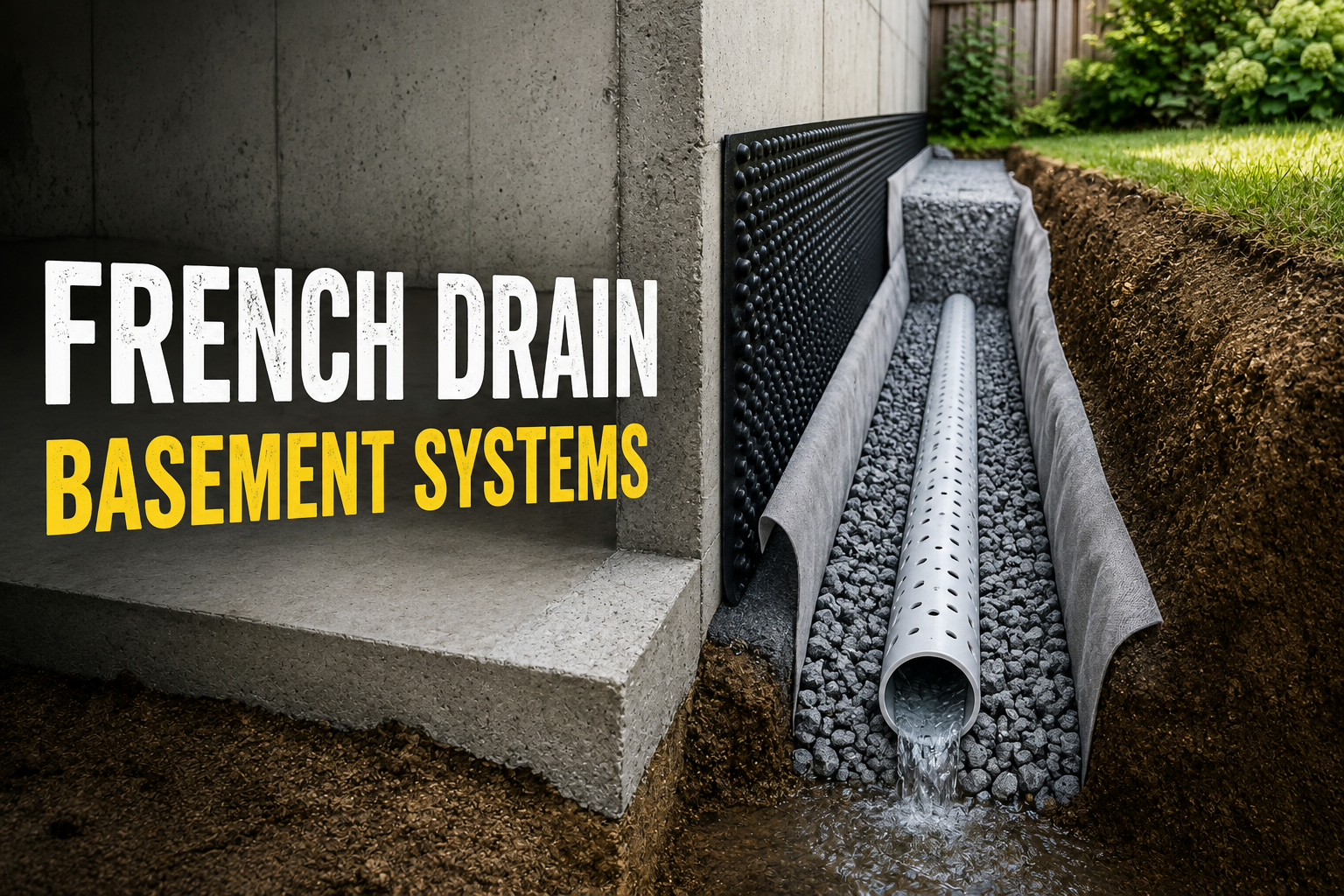
A typical French drain system is made up of a few key parts working together.
| Component | Purpose |
|---|---|
| Perforated pipe | Collects water along its length through small holes and channels it away |
| Gravel or aggregate | Surrounds the pipe, allowing water to flow freely toward it |
| Filter fabric | Wraps around the gravel and pipe to prevent soil and debris from clogging the system |
| Sump pump (if applicable) | Pumps collected water up and out of the basement, especially for interior systems |
When water enters the ground, it moves through the gravel toward the perforated pipe rather than continuing on toward the basement walls. The pipe, which is laid at a slight downward slope, carries that water to a discharge point — this could be a storm drain, a dry well, or simply a lower point in the yard away from the house.
This continuous, gravity-assisted flow is what makes French drain basement systems so effective at preventing water buildup.
Types of French Drains
Not every basement needs the same drainage approach. The right type of French drain depends on your budget, how severe the water problem is, and whether you are trying to prevent future issues or fix an existing one.
Interior French Drains
An interior French drain is installed inside the basement, typically along the foundation footing beneath the floor. This type is designed to catch water that has already made its way through the walls or up through the floor, directing it to a sump pump before it can spread across the basement floor.
Exterior French Drains
An exterior French drain is installed outside the home, along the foundation wall, before water ever has a chance to reach the interior. Because it intercepts water earlier, this type is generally considered more effective at preventing damage — though it does require more extensive excavation work.
Curtain Drains
A curtain drain is a variation that is installed away from the foundation, often used to redirect surface water or shallow groundwater before it even reaches the vicinity of the house. This is a good preventative option for homes on sloped lots.
Interior vs Exterior Comparison
| Factor | Interior French Drain | Exterior French Drain |
|---|---|---|
| Installation location | Inside the basement | Outside the foundation |
| Excavation required | Minimal (basement floor only) | Extensive (around foundation) |
| Cost | Generally lower | Generally higher |
| Effectiveness | Manages water after it enters | Prevents water from entering |
| Disruption to landscaping | None | Significant |
| Best for | Budget-conscious repairs | Long-term prevention |
Materials Needed
Whether you plan to hire a contractor or attempt the project yourself, understanding the materials involved will help you make informed decisions.
The pipe used in a French drain basement system is usually either rigid PVC or flexible corrugated plastic. PVC tends to be more durable and less likely to collapse under soil weight, while corrugated pipe is easier to maneuver around tight corners but can be more prone to clogging over time.
Gravel is another essential material, and it needs to be a specific size — typically washed stone that allows water to pass through easily without letting fine soil particles clog the spaces. Filter fabric, often called landscape fabric or geotextile fabric, wraps around the gravel and pipe combination to keep silt and dirt from working their way into the system over the years.
For basements that need active water removal, a sump pump and its accompanying basin are also necessary. Beyond these core materials, you will also need basic excavation tools, a level to check slope, and connectors or fittings depending on your specific layout.
Step-by-Step Installation Process
Installing a French drain basement system is a methodical process that requires careful planning and attention to detail at every stage.
The first step is planning and assessment. This means measuring the perimeter of the area that needs drainage and checking with local authorities about any permits that might be required, since some municipalities regulate exterior excavation or water discharge locations. Once planning is complete, excavation begins — digging a trench either along the interior footing or around the exterior foundation, depending on which type of system you are installing.
After the trench is dug, the pipe-laying process starts. The perforated pipe is placed at the bottom of the trench, and this is where precision matters most. The pipe needs to be laid at a consistent downward slope, generally around a one percent grade, so gravity can pull water toward the discharge point without pooling anywhere along the way. Once the pipe is properly positioned, it gets surrounded by gravel and wrapped in filter fabric to keep the system clear of debris over time.
The final steps involve connecting the pipe to its discharge point, which might be a sump pump for interior systems or a gravity-fed outlet for exterior systems, followed by backfilling the trench and restoring the surface — whether that means replacing basement flooring or restoring landscaping outside.
DIY vs Professional Installation
Deciding whether to install a French drain basement system yourself or hire a professional depends on several practical factors.
Cost is often the first consideration, and DIY installation can save a significant amount of money on labor. However, this savings comes with trade-offs. The skill level required is not trivial — getting the slope wrong, for example, can render the entire system ineffective. Time investment is another factor, since excavation and pipe-laying, especially for exterior installations, can take several days of physical labor for someone without experience.
Professional installation, while more expensive, brings expertise in reading soil conditions, calculating proper slope, and ensuring the system connects correctly to existing drainage infrastructure. If your basement has a severe or ongoing water problem, or if the installation involves working near your foundation’s structural elements, it is generally worth calling a professional rather than risking a poorly executed DIY project that could lead to costly repairs later.
Cost Breakdown
The cost of a French drain basement system varies widely based on the type of system, the size of the area involved, and regional labor rates.
| System Type | Typical Cost Range |
|---|---|
| Interior French drain | Lower cost, primarily labor and materials for indoor trenching |
| Exterior French drain | Higher cost due to extensive excavation and landscaping restoration |
Several factors influence the final price you might pay. The overall size of the basement or foundation perimeter plays a major role, since more linear footage means more materials and labor hours. Soil type matters as well — rocky or clay-heavy soil is more difficult and time-consuming to excavate than loose, sandy soil.
Labor rates also vary significantly by region, with urban areas typically commanding higher prices than rural locations. Finally, if the project uncovers additional issues, such as foundation cracks that need sealing or an outdated sump pump that needs replacing, those additional repairs will add to the total cost.
Maintenance Tips
A French drain basement system is not something you install and then forget about entirely. Like any drainage system, it benefits from periodic attention to keep it working at full effectiveness.
Regular inspection is the foundation of good maintenance. Checking the discharge point periodically ensures water is actually flowing out as expected rather than backing up somewhere along the pipe. Cleaning the system when needed — particularly clearing any visible debris near the outlet — helps prevent blockages before they become serious.
If your system includes a sump pump, that pump needs its own maintenance routine, including testing it periodically to make sure it activates properly and checking the battery backup if one is installed.
Watching for signs of clogging or failure, such as slower drainage than usual or water pooling near the discharge area, allows you to catch problems early. Seasonal maintenance is also worth building into your routine, since heavy leaf fall in autumn and snowmelt in early spring both put extra strain on the system.
Common Problems and Troubleshooting
Even a well-installed French drain basement system can run into issues over time, and knowing what to look for makes troubleshooting much easier.
Clogged drains are among the most frequent problems, usually caused by silt, roots, or debris building up inside the pipe or filter fabric over the years. Pump failure is another common issue for systems that rely on a sump pump, often caused by power outages, worn-out motors, or a pump that was undersized for the volume of water it needs to handle.
Improper installation issues, such as insufficient slope or a pipe that was laid unevenly, can cause water to pool instead of draining properly, and unfortunately these problems often only become apparent after the system is buried and backfilled. In colder climates, freezing can also become a concern if the discharge pipe is not buried deep enough below the frost line, causing ice blockages during winter months.
The good news is that most of these problems have straightforward solutions. Clogs can often be cleared with a plumber’s snake or by flushing the system with water. Pump failures are typically resolved by replacing the pump or adding a battery backup system. Slope and installation issues, unfortunately, often require re-excavating the affected section to correct the grade. Freezing issues can usually be prevented by ensuring the pipe is buried at an appropriate depth for your climate zone.
French Drain Alternatives
While French drain basement systems are highly effective, they are not the only option available, and in some cases they work best when combined with other waterproofing strategies.
Interior waterproofing membranes can be applied directly to basement walls to create a barrier against moisture, often used alongside a French drain rather than as a replacement for one. Exterior waterproofing coatings serve a similar purpose but are applied to the outside of the foundation before backfilling during construction or major renovation.
Window well drains address a specific vulnerability — basement windows that sit below grade — by giving water an escape route away from the window itself. Downspout extensions are a simpler and less expensive fix that can sometimes reduce water problems significantly just by moving roof runoff further away from the foundation.
Grading solutions, which involve reshaping the soil around your home so it slopes away from the foundation, are often the first and most cost-effective step homeowners should take before considering more involved drainage systems.
Benefits of Installing a French Drain
Investing in a French drain basement system pays off in several important ways beyond simply keeping your basement dry.
Long-term foundation protection is perhaps the most significant benefit, since consistent moisture exposure can weaken concrete and lead to expensive structural repairs down the line. Increased property value is another advantage, as a documented, functioning drainage system is often viewed favorably by home inspectors and potential buyers who are wary of basement moisture issues.
There are also real health benefits to consider, since controlling moisture directly reduces the conditions that allow mold and mildew to grow, which can affect indoor air quality and aggravate respiratory issues for household members. Finally, there is a simple peace of mind that comes with knowing your basement is protected during heavy rain events, rather than dreading every storm forecast.
Frequently Asked Questions
How long does a French drain last? A properly installed French drain basement system can last anywhere from 20 to 30 years or more, depending on the materials used and how well it is maintained over time.
Can I install one myself? Yes, particularly for smaller interior systems, though exterior installations around the full foundation are more physically demanding and benefit from professional expertise.
Does it require a permit? This depends on your local building codes. Some areas require permits for exterior excavation or for connecting drainage discharge to municipal storm systems, so it is worth checking with your local building department before starting.
Will it work with any soil type? French drains work in most soil types, though heavy clay soil can slow water movement and may require additional grading or a more robust gravel bed to function effectively.
How much does professional installation cost? Costs vary significantly based on system type, basement size, and region, with interior systems generally costing less than full exterior installations due to reduced excavation requirements.
Conclusion
Basement water problems are more than just an inconvenience — left unaddressed, they can lead to structural damage, mold growth, and a steady decline in your home’s value. French drain basement systems offer a proven, time-tested solution that redirects water away from your home before it has the chance to cause harm.
Whether you choose an interior system for a more budget-friendly fix or invest in an exterior system for maximum protection, understanding how these systems work puts you in a much stronger position to make the right decision for your home.
If you are currently dealing with a damp or flooding basement, it is worth consulting with a qualified drainage professional who can assess your specific situation and recommend the right approach. A dry, protected basement is not just about comfort — it is an investment in the long-term health of your entire home.
Related Articles
Can You Stain Cabinets That Have Been Painted?
Is Black Sludge in Your Sink Dangerous? What to Know