


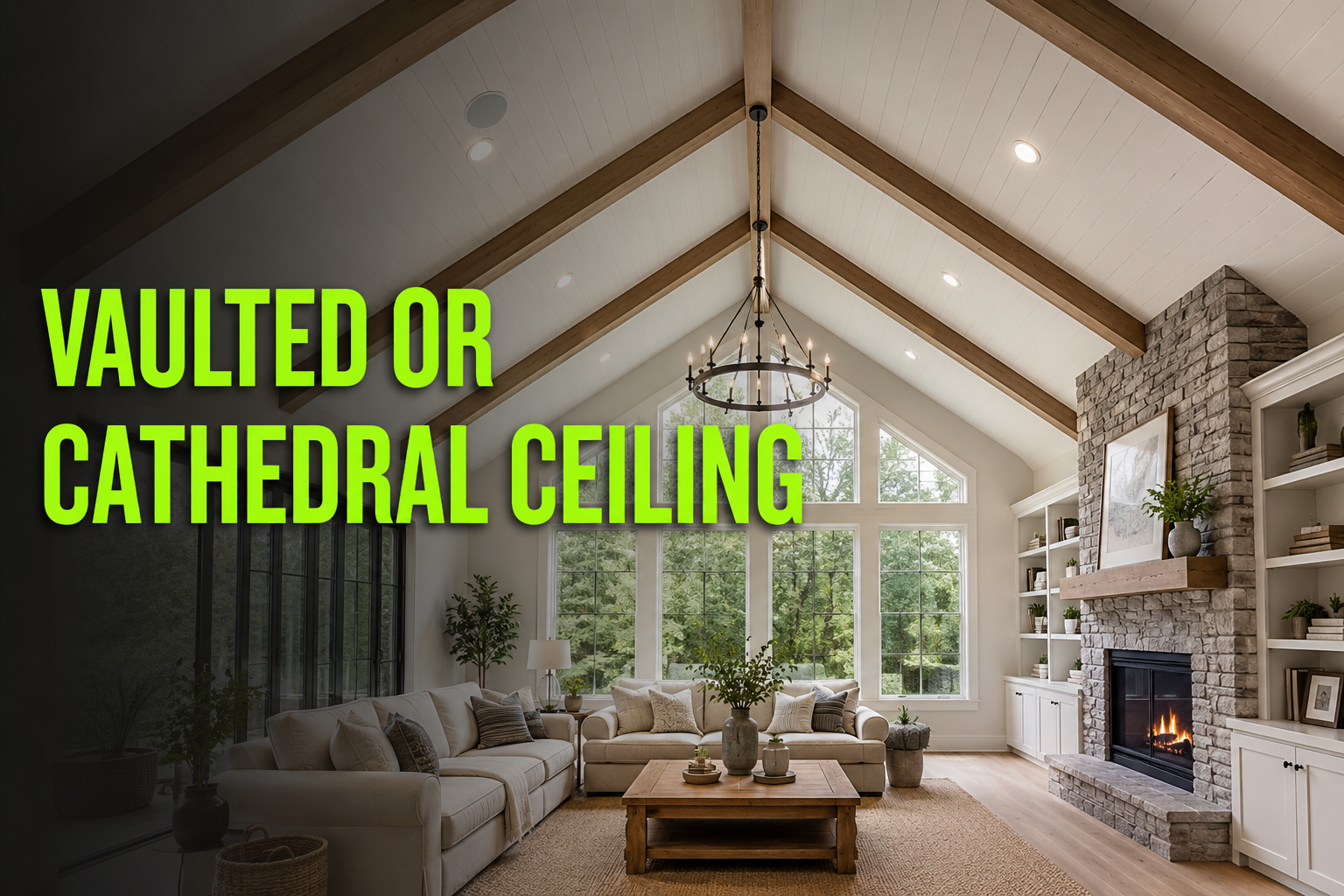
Walk into a home with a soaring, open ceiling and it’s hard not to feel a little bit amazed. That dramatic sense of height and openness is usually the work of either a vaulted or cathedral ceiling, two design features that instantly transform an ordinary room into something memorable. Homeowners, builders, and interior designers throw these terms around all the time, and more often than not, they use them interchangeably. But are they really the same thing?
In this guide, we’re going to break down everything you need to know about a vaulted or cathedral ceiling in plain, simple language. We’ll cover what each style actually means, how they differ, their pros and cons, the best rooms to use them in, decorating ideas, cost expectations, and practical maintenance advice. By the end, you’ll not only understand the difference but also feel confident deciding whether one of these ceiling styles is right for your own home.
What Is a Vaulted Ceiling?
A vaulted ceiling is any ceiling that rises above the standard flat, horizontal plane found in most homes. Instead of a flat surface sitting at a uniform height, a vaulted ceiling curves, arches, or angles upward, creating extra vertical space in a room. The term “vault” actually comes from architecture, referring to an arched structure that forms a roof or ceiling.
Unlike a basic flat ceiling, which simply sits parallel to the floor, a vaulted ceiling plays with height and shape. It can rise gently or dramatically, follow the slope of the roofline, or curve into rounded forms. Because the word “vaulted” is really an umbrella term, it covers several distinct shapes, each with its own character and construction style.
Common Types of Vaulted Ceilings
| Type | Description |
|---|---|
| Barrel Vault | A continuous, rounded arch shape, resembling half of a cylinder cut lengthwise |
| Groin Vault | Formed where two barrel vaults intersect at right angles, creating a crisscross pattern |
| Dome Vault | A rounded, bowl-like shape, often used in foyers or grand rooms |
| Shed Vault | A single sloped plane rising from one wall to another, common in modern homes |
| Cove Vault | A gentle, curved transition between the wall and ceiling, softer than a sharp angle |
Each of these styles brings its own personality to a space, and builders often choose one based on the home’s overall architectural theme.
What Is a Cathedral Ceiling?
A cathedral ceiling, on the other hand, refers specifically to a ceiling that follows the pitch of the roof and rises symmetrically to a central peak, much like the inside of a classic church or cathedral. This is where the name comes from: the shape mimics the soaring, pointed interiors found in Gothic and Romanesque cathedrals built centuries ago.
The defining feature of a cathedral ceiling is its symmetry. Two sloped sides rise at matching angles from opposite walls and meet at a central ridge line, forming an upside-down V shape when viewed from inside the room. This design typically follows the same angle as the roof trusses above it, which is why cathedral ceilings are most common in homes with steeply pitched roofs.
While a cathedral ceiling is technically a specific type of vaulted ceiling, its symmetrical, peaked shape sets it apart from other vault styles like barrel or dome vaults, which don’t necessarily rise to a single central point.
Vaulted vs. Cathedral Ceiling: Key Differences
Since a cathedral ceiling is technically a subtype of vaulted ceiling, it’s easy to see why people mix up the terms. However, there are a few clear distinctions worth understanding.
A vaulted ceiling is the broader category. It simply means any ceiling that rises above the standard height, regardless of shape. It might be curved, angled on one side only, or shaped like a dome. A cathedral ceiling, by contrast, is a specific and more narrowly defined type of vaulted ceiling. It always rises symmetrically to a central peak, mirroring the roof structure above it.
Another difference lies in construction. A cathedral ceiling generally follows the exact slope of the roof rafters, meaning there’s often little to no attic space above it. A vaulted ceiling, especially styles like a shed vault, might not follow the roofline as closely and can sometimes be built with more flexibility in shape and height.
Visually, cathedral ceilings tend to feel more formal and traditional because of their symmetrical, church-like appearance. Vaulted ceilings, especially barrel or dome vaults, can feel more artistic, curved, or contemporary depending on the style chosen.
A common misconception is that these terms are entirely different concepts. In reality, every cathedral ceiling is a vaulted ceiling, but not every vaulted ceiling is a cathedral ceiling. Think of “vaulted” as the umbrella term and “cathedral” as one specific style beneath that umbrella.
History and Architectural Origins
The idea of raising a ceiling for dramatic effect isn’t new. It dates back thousands of years to ancient Roman and Byzantine architecture, where builders used arched and vaulted structures to construct large, open interior spaces without the need for excessive interior columns. These techniques were later refined during the Gothic period, when architects designed massive stone cathedrals across Europe with soaring, pointed ceilings meant to inspire awe and draw the eye toward the heavens.
Over time, these architectural techniques made their way into residential design, particularly during the mid-20th century when open-concept living became popular in the United States.
Homeowners and architects began incorporating vaulted and cathedral ceilings into houses, especially in great rooms and living areas, to create a similar sense of grandeur on a smaller, residential scale. Today, a vaulted or cathedral ceiling is a hallmark of many upscale and custom-built homes, blending centuries-old architectural inspiration with modern comfort.
Pros and Benefits
Choosing a vaulted or cathedral ceiling comes with a long list of appealing benefits, many of which go beyond simple aesthetics.
One of the most noticeable advantages is the increased sense of space. Even in a room with a relatively small footprint, a high ceiling can make the area feel significantly larger and more open. This is especially valuable in smaller homes where floor space is limited but a feeling of openness is still desired.
These ceiling styles also tend to enhance natural light. Many vaulted and cathedral ceiling designs incorporate clerestory windows, skylights, or large upper-level windows, allowing sunlight to pour into the room from angles that a standard flat ceiling simply can’t accommodate. This added light can make interiors feel brighter, warmer, and more inviting throughout the day.
From a design standpoint, there’s no denying the elegance these ceilings bring. Exposed wooden beams, dramatic lighting fixtures, and the sweeping lines of the ceiling itself create a strong visual focal point that elevates the entire room’s design.
Finally, homes featuring a vaulted or cathedral ceiling often see a boost in resale value. Buyers are frequently drawn to homes with unique architectural features, and a dramatic ceiling can be a strong selling point, particularly in living rooms, great rooms, and entryways.
Cons and Challenges
Of course, no design choice is without trade-offs, and vaulted or cathedral ceilings come with a few practical challenges worth considering before committing to the style.
Heating and cooling costs are often higher in rooms with these ceilings. Because warm air naturally rises, rooms with significant vertical space can be harder to heat efficiently in the winter, while cooling costs may increase in the summer as air conditioning works to fill a larger volume of space.
Acoustics can also become an issue. The open, hard surfaces of a vaulted or cathedral ceiling can cause sound to bounce around the room more than it would with a standard flat ceiling, sometimes creating an echo effect, particularly in rooms with hardwood floors or minimal soft furnishings.
Construction and renovation costs tend to run higher as well. Building or converting a ceiling to a vaulted or cathedral style typically requires additional structural work, including reinforced framing and sometimes engineering adjustments, which can add significantly to a project’s overall budget.
Maintenance is another factor to weigh. Cleaning cobwebs, changing light bulbs, or repainting a ceiling that sits far above standard reach often requires specialized equipment or professional help, making regular upkeep more time-consuming and costly than with a typical ceiling height.
Best Rooms for a Vaulted or Cathedral Ceiling
Not every room in a home is well-suited for this kind of dramatic ceiling treatment. Certain spaces tend to benefit more than others.
Living rooms are one of the most popular choices, since they’re often the heart of the home and benefit greatly from the open, welcoming feel these ceilings create. Great rooms, which combine living, dining, and sometimes kitchen space into one large area, are another natural fit, as the added height helps balance the expansive floor plan.
Primary bedrooms can also feel especially luxurious with a vaulted or cathedral ceiling, giving the space a retreat-like, hotel-suite atmosphere. Entryways and foyers are another excellent choice, since a tall, open ceiling right at the entrance sets an impressive tone for the rest of the home and often incorporates natural light beautifully.
Design and Decor Tips
Once you’ve decided to embrace a vaulted or cathedral ceiling, thoughtful decorating choices can help you make the most of the extra vertical space.
Lighting deserves special attention in these rooms. Statement chandeliers, oversized pendant lights, or a series of well-placed skylights can draw the eye upward and highlight the architectural beauty of the ceiling itself. Recessed lighting along the slopes can also add subtle warmth without overwhelming the space.
Paint color plays a bigger role than many homeowners expect. Lighter shades on the ceiling can help the room feel airy and expansive, while darker tones can add coziness and draw the ceiling visually closer, which some homeowners prefer in very tall rooms.
Exposed beams and trusses are a popular design choice, adding texture, warmth, and a touch of rustic or farmhouse charm to an otherwise minimalist ceiling. Strategic window placement, particularly high on the walls near the ceiling’s peak, can flood the room with natural light while maintaining privacy.
Cost Considerations
Cost is often one of the biggest deciding factors when homeowners consider adding or renovating a vaulted or cathedral ceiling. On average, converting a standard flat ceiling into a vaulted or cathedral style in an existing home can range from a few thousand dollars for a simple conversion to well over twenty thousand dollars for more complex projects involving structural changes, new framing, insulation, and finishing work.
Several factors influence the final price, including the size of the room, the height and complexity of the desired ceiling shape, whether the existing roof structure can support the change, and the materials chosen for beams, insulation, and finishes.
Building a vaulted or cathedral ceiling into new construction tends to be more cost-effective than retrofitting an existing home, since the structural planning can be incorporated from the very beginning rather than added after the fact.
Energy Efficiency Tips
Because higher ceilings can impact heating and cooling efficiency, it’s worth taking a few practical steps to keep energy costs manageable.
Proper insulation is essential, particularly along the roofline where heat loss is most likely to occur. Using ceiling fans, especially ones with reversible settings, can help circulate warm air downward in the winter and create a cooling breeze in the summer. Smart placement of HVAC vents and returns can also make a noticeable difference, ensuring air is distributed evenly throughout the taller space rather than simply rising and collecting near the ceiling’s peak.
Maintenance Tips
Keeping a vaulted or cathedral ceiling looking its best does require a bit more effort than a standard ceiling, but a few simple habits can make the process easier.
For cleaning, an extendable duster or a professional cleaning service is often necessary to safely reach high corners and remove dust or cobwebs. When it comes to lighting fixtures, choosing designs that are easy to access, such as those on a pulley system or with long-lasting LED bulbs, can reduce how often maintenance is needed.
It’s also important to monitor for signs of moisture or insulation issues near the roofline, since these ceilings sit closer to the roof structure and can be more vulnerable to temperature-related problems if not properly maintained.
Frequently Asked Questions
Is a cathedral ceiling more expensive than a vaulted ceiling? Not necessarily. Cost depends more on the complexity of the shape, the size of the room, and whether structural changes are needed, rather than simply whether the ceiling is labeled vaulted or cathedral.
Can you add a vaulted ceiling to an existing home? Yes, though it typically requires removing the existing flat ceiling, adjusting or reinforcing the roof framing, and updating insulation, which makes it a more involved renovation project.
Do vaulted ceilings increase home value? In many cases, yes. Homes with dramatic architectural features like a vaulted or cathedral ceiling often appeal to buyers looking for a unique, spacious feel, which can positively influence resale value.
What’s the difference between a tray ceiling and a vaulted ceiling? A tray ceiling has a recessed central section, creating a stepped, layered look, while a vaulted ceiling rises upward in an open, continuous slope or curve without that stepped design.
Conclusion
Understanding the difference between a vaulted or cathedral ceiling comes down to recognizing that one term is broader while the other is more specific. Vaulted ceilings encompass a wide range of shapes and styles, from curved barrel vaults to angled shed vaults, while cathedral ceilings refer specifically to the symmetrical, peaked design inspired by traditional church architecture.
Both styles offer a dramatic sense of space, enhanced natural light, and undeniable architectural charm, though they also come with practical considerations like higher energy costs and more involved maintenance.
Whether you’re planning new construction or considering a renovation, weighing the pros, cons, and design possibilities of a vaulted or cathedral ceiling can help you choose the style that best fits your home, your budget, and your personal taste.
Related Articles
Can You Stain Cabinets That Have Been Painted?
How to Fix a Sagging Floor in a Crawl Space: Complete DIY Guide
How to Heat a Basement in Winter (Without Wasting Money)
How To Get Blu Tack Stains Off Walls: A Complete Step-By-Step Guide