


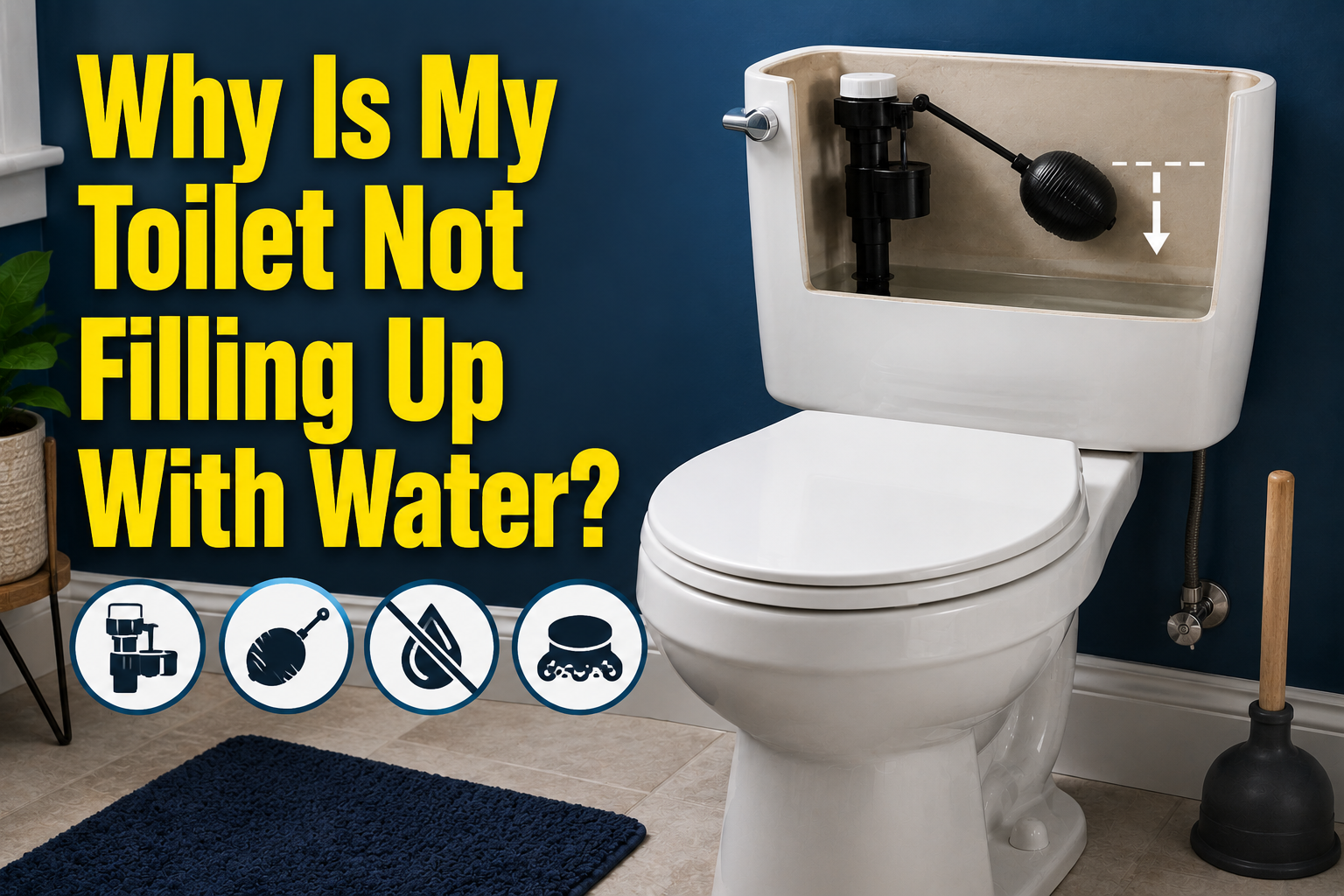
If you have ever lifted the lid of your toilet tank after flushing and noticed that it stays empty or only fills partway, you already know how frustrating this situation can be. A toilet that will not refill properly is one of the most common plumbing complaints in homes, and while it might seem like a mystery at first, the reasons behind it are usually simple and easy to understand once you know what to look for.
This problem is not just an inconvenience. A toilet that does not fill up with water cannot flush waste away effectively, which means the entire bathroom becomes unusable until the issue is resolved. Beyond the immediate hassle, ignoring the problem for too long can sometimes lead to bigger plumbing issues or unnecessary water wastage if a part is stuck open or leaking. That is why it helps to understand exactly why is my toilet not filling up with water, so you can identify the cause quickly and decide whether it is something you can fix yourself or something that needs a professional plumber.
In this guide, we will walk through how a toilet tank is supposed to work, the most common reasons it stops filling, how to diagnose the exact cause in your own bathroom, and step-by-step solutions for each scenario. By the end, you should have a clear picture of what is going wrong and what to do about it.
How a Toilet Filling System Works
Before diagnosing the problem, it helps to understand what is actually happening inside your toilet tank every time you flush. A standard toilet tank contains a handful of key parts that work together in a simple cycle.
The fill valve (sometimes called the ballcock) is the mechanism responsible for letting water into the tank. It is connected to your home’s water supply line through a small hose, usually located at the bottom left of the tank. When the tank is full, the fill valve shuts off the water flow. When the tank empties after a flush, the fill valve opens again to let water back in.
The float is a device attached to the fill valve, either a ball on an arm or a cup that slides up and down a rod. As water rises in the tank, the float rises with it. Once the float reaches a certain height, it triggers the fill valve to stop the water flow. If the float is set too low, the valve will shut off the water too early, leaving the tank with less water than it needs.
The flapper sits at the bottom of the tank and covers the flush valve opening. When you press the flush handle, the flapper lifts, letting the tank water rush into the bowl. Once the tank empties, the flapper falls back into place so the tank can refill and hold water for the next flush.
The overflow tube is a safety feature that allows excess water to drain into the bowl if the fill valve does not shut off properly, preventing the tank from overflowing onto your bathroom floor.
Finally, the supply line and the shut-off valve connect the toilet to your home’s main water system. The shut-off valve is usually located on the wall or floor behind the toilet, and it controls how much water can reach the tank in the first place.
When any one of these parts fails or gets blocked, it can directly affect the tank’s ability to refill, which is often the real answer to the question of why is my toilet not filling up with water.
Common Causes of a Toilet Not Filling Up
There are several possible explanations for this issue, ranging from very simple fixes to slightly more involved repairs. Below are the most common causes, explained one by one.
Water Supply Valve Partially or Fully Closed
The shut-off valve behind or beside your toilet controls how much water reaches the tank. If this valve has been accidentally bumped, turned during cleaning, or closed for a repair and not fully reopened, your toilet may receive little to no water. This is often the very first thing to check because it is the easiest to fix.
Kinked or Blocked Supply Hose
The flexible hose that connects the shut-off valve to the fill valve can sometimes become bent, twisted, or pinched, especially if the toilet has been moved or if the hose is old and less flexible. A kinked hose restricts water flow, which can prevent the tank from filling completely or filling at all.
Clogged Fill Valve
Over time, small mineral particles, rust flecks, or sediment from the water supply can build up inside the fill valve. This debris can block the internal passage where water is supposed to flow through, reducing or completely stopping the water from entering the tank.
Faulty or Worn-Out Fill Valve
Like any mechanical part, a fill valve has a limited lifespan. After years of use, the internal seals, washers, or moving parts can wear down, crack, or stop functioning properly. When this happens, the valve may fail to open at all, which is a very common answer to why is my toilet not filling up with water in older homes.
Float Set Too Low
If the float is adjusted too low, either because it was set that way during installation or because it has shifted over time, the fill valve will shut off the water supply before the tank is properly filled. This often results in a tank that has some water, but not enough for a full, effective flush.
Sediment or Mineral Buildup
Hard water areas are especially prone to this issue. Calcium and mineral deposits can accumulate not just in the fill valve but also in the supply line and other internal components, gradually restricting water flow until it slows to a trickle or stops altogether.
Low Household Water Pressure
Sometimes the problem is not with the toilet at all, but with the home’s overall water pressure. If there is a citywide water outage, ongoing maintenance in your area, or a pressure issue elsewhere in the plumbing system, your toilet tank may fill very slowly or not fill at all until the pressure returns to normal.
Water Supply Line Disconnected or Loose
If the supply line has come loose from either the shut-off valve or the fill valve, water may leak out before it reaches the tank, or it may not connect at all. This is more likely to happen after recent plumbing work or a toilet installation.
Clogged Toilet Trap or Vent
Although less common, in rare cases the actual trap or ventilation system of the toilet can affect how water behaves in the tank and bowl. This is typically linked to more complex plumbing problems and usually shows other symptoms alongside the filling issue, such as gurgling sounds or slow drainage.
Frozen Pipes in Cold Climates
For homes in colder regions, frozen supply lines during winter can completely block water flow to the toilet. This is usually accompanied by other frozen fixtures in the house and requires careful thawing to avoid pipe damage.
How to Diagnose the Problem Step-by-Step
Rather than guessing, it helps to go through a simple diagnostic process to pinpoint exactly why your toilet is not filling.
- Check the shut-off valve first. Locate the valve behind or beside the toilet and make sure it is turned fully counterclockwise to the open position.
- Inspect the supply line. Look for any visible kinks, bends, or disconnected fittings along the hose that runs from the wall to the tank.
- Open the tank lid and observe the fill valve. Flush the toilet and watch what happens. Does water start flowing into the tank at all? Does it stop too early?
- Check the float position. See how high the float sits when the tank appears to stop filling, and compare it to the water line marked inside the tank.
- Listen for sound. A faint hissing or trickling sound usually means water is flowing somewhere, even if it is not reaching the tank properly. Silence often points to a fully blocked valve or closed shut-off.
- Check other faucets in your home. If other fixtures also have low or no water pressure, the issue may be with your home’s water supply rather than the toilet itself.
This simple process usually narrows down the cause within a few minutes, making the next step, fixing it, much easier.
How to Fix Each Cause
Once you have identified the likely cause, here is how to address each one.
Fixing a Closed or Partially Closed Valve
Simply turn the shut-off valve counterclockwise until it stops. If it feels stuck or corroded, a small amount of penetrating oil and gentle pressure with a wrench can help loosen it. Avoid using excessive force, as older valves can be brittle.
Straightening or Replacing a Kinked Hose
If the hose is only slightly bent, carefully straighten it out. If it appears cracked, brittle, or permanently kinked, it is best to replace it entirely with a new flexible braided supply line, which is inexpensive and easy to install.
Cleaning a Clogged Fill Valve
Turn off the water supply, remove the cap of the fill valve, and rinse out any visible sediment or debris under running water. A soft brush can help dislodge stubborn mineral deposits from the internal components.
Replacing a Faulty Fill Valve
- Turn off the shut-off valve and flush the toilet to drain the tank.
- Disconnect the supply line from the bottom of the fill valve.
- Remove the old fill valve by unscrewing the locknut beneath the tank.
- Insert the new fill valve, following the height adjustment instructions on the packaging.
- Reconnect the supply line and slowly turn the water back on.
- Flush and check that the tank fills to the correct level.
Adjusting the Float Height
Most float mechanisms can be adjusted using a screw or clip. Turning the screw clockwise usually raises the water level, while turning it counterclockwise lowers it. Adjust gradually and flush a few times to fine-tune the setting until the tank fills to the marked water line.
Removing Mineral or Sediment Buildup
A mixture of water and white vinegar can help dissolve mineral deposits inside the tank and valve components. For persistent hard water buildup, a full fill valve replacement is often more effective in the long run than repeated cleaning.
Addressing Low Water Pressure
If the issue is linked to your home’s overall water supply, contact your water provider to check for outages or maintenance work in your area. If the problem persists across multiple fixtures, a licensed plumber can check your home’s pressure regulator or main line for blockages.
Reconnecting or Tightening the Supply Line
Turn off the shut-off valve, then hand-tighten the connection where the supply line meets the fill valve and the wall valve. Avoid overtightening, as this can damage the fittings and cause leaks.
Clearing Trap or Vent Blockages
This type of repair is more advanced and often requires a plumbing snake or professional inspection, especially if you notice gurgling sounds or slow drainage elsewhere in your home’s plumbing system.
Thawing Frozen Pipes Safely
Use a hairdryer, warm towels, or a space heater near the affected pipe section, and never use an open flame. If you cannot locate the frozen section or the pipe has already cracked, contact a plumber immediately to avoid water damage.
Tools and Materials Needed for DIY Fixes
| Tool or Material | Purpose |
|---|---|
| Adjustable wrench | Loosening and tightening supply line connections |
| Screwdriver | Adjusting float height or valve caps |
| Replacement fill valve kit | Installing a new fill valve |
| Braided supply hose | Replacing a damaged or kinked hose |
| White vinegar | Dissolving mineral and sediment buildup |
| Soft brush or old toothbrush | Cleaning valve components |
| Bucket and towels | Catching water spills during repairs |
| Flashlight | Inspecting hard-to-see areas inside the tank |
Having these items on hand before starting a repair can save multiple trips back and forth, making the process quicker and less stressful.
When to Call a Plumber
While many causes of a toilet not filling with water can be fixed with basic tools and a bit of patience, there are times when calling a professional plumber is the smarter choice. If you have checked the shut-off valve, supply line, and fill valve, and the toilet still does not fill properly, there may be a deeper issue within your home’s plumbing system that requires expert diagnosis.
You should also consider professional help if you notice signs of water damage, unusual noises throughout your plumbing, persistent low pressure across multiple fixtures, or if you are simply not comfortable handling the repair yourself. Attempting complex fixes without the right experience can sometimes lead to bigger problems, so knowing your limits is just as important as knowing the fix itself.
Preventive Maintenance Tips
Taking a few simple steps regularly can help you avoid running into this problem again in the future.
- Inspect the tank components every few months for early signs of wear or mineral buildup.
- Clean the fill valve periodically, especially if you live in a hard water area.
- Check the float adjustment occasionally to ensure it matches the marked water line.
- Keep an eye on your home’s water pressure and address any drops immediately.
- Replace supply hoses every few years, even if they appear to be working fine, since rubber and plastic components degrade over time.
Frequently Asked Questions
Why does my toilet tank fill slowly instead of not at all? This is often caused by partial blockages, such as a partially closed valve, a slightly clogged fill valve, or minor mineral buildup restricting water flow without stopping it completely.
Can hard water cause this issue? Yes. Hard water is one of the leading causes of mineral buildup inside fill valves and supply lines, which can gradually reduce or completely block water flow into the tank.
Is it safe to keep using the toilet if it isn’t filling? It depends on the cause. If the tank has enough water for at least a partial flush, it may still function, though not efficiently. However, if the issue is linked to a bigger plumbing problem, it is best to address it before continued use.
How much does it cost to replace a fill valve? Fill valve kits are generally inexpensive, and the replacement can often be done as a simple DIY project. If you hire a plumber, labor costs will vary depending on your location and the complexity of the job.
Can I fix this without turning off the main water supply? For most repairs, turning off the individual shut-off valve behind the toilet is enough, and you will not need to shut off your home’s main water supply unless that specific valve is not working.
Conclusion
A toilet that will not fill up with water can seem like a confusing problem at first, but as we have seen, it usually comes down to a handful of common causes: a closed valve, a blocked or worn fill valve, a poorly adjusted float, mineral buildup, or a supply line issue. By taking the time to inspect each component step by step, most homeowners can identify the exact cause of why is my toilet not filling up with water and resolve it with basic tools and a little patience.
Regular maintenance goes a long way in preventing this issue from happening again, so it is worth checking your toilet’s internal components every so often, especially if you live in a hard water area. That said, if you have gone through all the troubleshooting steps and the problem still persists, do not hesitate to reach out to a licensed plumber who can diagnose and fix more complex underlying issues safely and efficiently.
Related Articles
How to Clean Bathroom Mats: A Complete Step-by-Step Guide
How to Heat a Basement in Winter (Without Wasting Money)
Is Ceiling Ghosting Dangerous? What Those Dark Streaks Actually Mean
How to Get Rid of Perfume Smell in a Room?
How To Get Rid Of Mold In Basement? Complete Step-by-Step Guide