


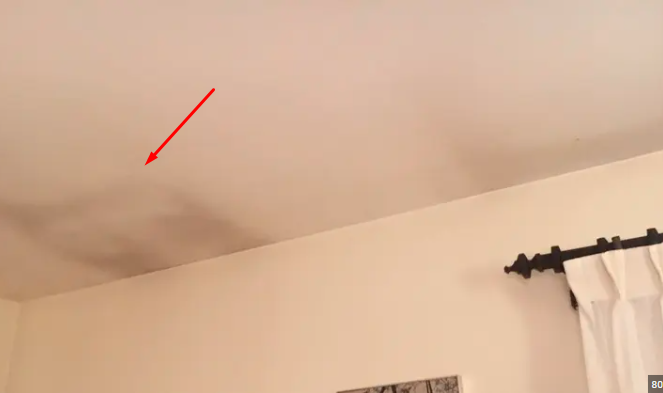
Ceiling ghosting is not dangerous. It won’t hurt your health, and it won’t weaken your ceiling, your drywall, or your roof. It’s a cosmetic problem caused by dust and soot clinging to the coolest spots on your ceiling, usually right along the framing underneath.
The bigger question is what’s causing it, because the same cold spots and damp air that produce ghosting can also set the stage for mold, and mold is a real health risk.
What is ceiling ghosting?
Ceiling ghosting is a pattern of dark, dusty streaks or lines that trace the shape of the framing hidden behind your drywall, usually the ceiling joists or roof rafters. It gets its name because the outline can look like a faint shadow of the structure underneath, almost like the building’s skeleton showing through.
The cause comes down to temperature and dust. Wood, metal studs, and drywall fasteners conduct heat differently than the insulation around them. Where insulation is thin, compressed, or missing, that spot on the ceiling runs slightly colder than the rest.
Warm indoor air holds moisture, and when it hits that cold patch, a thin film of condensation forms. Dust, soot, and other fine particles floating in the air stick to that damp film the way lint sticks to a wet sleeve. Over months, the particles build up into a visible stain that lines up exactly with the framing above.
Common indoor sources feed this process: candles, cooking oil, fireplaces, cigarettes, and a dirty HVAC filter all add fine particles to the air. The more of these you have running, combined with cold spots from gapped insulation, the faster ghosting shows up.
Why ceiling ghosting isn’t dangerous on its own
Ghosting is surface deep. The particles sit on top of the paint, not inside the drywall, so they don’t rot the material, feed on it, or spread through it the way mold does.
It doesn’t release anything harmful into the air, and it doesn’t compromise the strength of your ceiling or the framing above it. In most cases, it’s a sign that your home could use better insulation or airflow, not a sign that anything is failing.
That’s also why cleaning it is usually simple. A dry sponge, a light vacuum pass, or a wipe with mild detergent and water will lift most ghosting stains. Stubborn marks may need a stain-blocking primer before repainting.
What ceiling ghosting can be a sign of
Even though ghosting itself is harmless, it’s a signal worth paying attention to. It usually means one or more of these are happening in your home:
- Gaps or thin spots in the attic or ceiling insulation, letting cold air reach the drywall
- Indoor humidity that’s running higher than it should, especially in winter
- Weak ventilation in the kitchen, bathroom, or attic
- A furnace or HVAC filter that hasn’t been changed in a while
None of these are dangerous by themselves, but they do waste energy and make a home less comfortable. Gaps around studs, joists, and rafters let heat bypass insulation entirely, a problem called thermal bridging, and sealing and insulating those areas evenly is what stops it. The Department of Energy’s guide to home insulation breaks the process down room by room.
Could it actually be mold?
This is the real question behind “is ceiling ghosting dangerous,” because mold, unlike ghosting, can genuinely affect your health. The good news is the two are easy to tell apart once you know what to look for.
Ghosting forms straight lines or geometric patterns that match the framing behind the wall. It wipes off as a dry, gray or black smudge, and it doesn’t carry a smell. Mold looks different. It spreads in irregular, patchy shapes rather than straight lines, and it often looks fuzzy, spotty, or slightly raised rather than flat.
It usually comes with a musty odor, and it needs standing moisture, from a leak, condensation that never fully dries, or long-term dampness, rather than the brief condensation that causes ghosting.
If what you’re looking at is genuinely mold, it’s worth taking seriously. For people who are sensitive to it, mold exposure can trigger allergic reactions like sneezing and a runny nose, irritate the eyes and throat, and set off asthma attacks.
People with weakened immune systems or chronic lung conditions face a higher risk of lung infections from ongoing exposure. EPA’s guide to mold and health covers the full range of symptoms and who’s most at risk.
When to call a professional
If you’re not sure whether you’re looking at ghosting or mold, or if the stain has a musty smell, feels damp, or keeps spreading, it’s worth getting a professional opinion rather than guessing.
An inspector can use surface sampling or thermal imaging to confirm what’s actually on your ceiling and check for hidden moisture behind the drywall that you can’t see from the room below.
This matters most if the home has had a past leak, a flood, or an area that stays damp no matter how often you air it out.
How to get rid of ceiling ghosting for good
Painting over ghosting without fixing the cause almost always brings the stain back within a year or two. A longer-lasting fix works through the actual source:
- Clean the existing stains with a dry sponge or a mild detergent solution before doing anything else.
- Add or upgrade insulation at the framing points where ghosting appears, so the ceiling no longer runs colder there than everywhere else.
- Keep indoor humidity below about 55 percent in winter, using a simple humidity gauge to check it.
- Run exhaust fans in the kitchen and bathroom whenever you cook or shower.
- Replace HVAC filters on a regular schedule so fewer particles are circulating in the first place.
- Repaint with a stain-blocking primer once the underlying cause is handled.
Conclusion
Ceiling ghosting on its own is not dangerous. It’s a cosmetic issue caused by dust settling on cold spots along your ceiling framing, and it won’t harm your health or your home’s structure. What matters is the cause: gaps in insulation, high humidity, or weak ventilation.
Fix those, clean the stains, and repaint, and the marks should stay gone. If a stain looks patchy, smells musty, or keeps spreading, treat it as possible mold and get it checked.
Frequently asked questions
Does ceiling ghosting mean I have mold?
Not necessarily. Ghosting forms straight lines that follow the framing and wipes off dry with no smell. Mold spreads in irregular, fuzzy patches and usually smells musty, so a patchy, smelly stain is worth checking separately.
Will ceiling ghosting go away on its own?
No. It will keep returning until the cold spot and particle source behind it are addressed. Cleaning or repainting without fixing the insulation or humidity issue only hides it temporarily.
Is it safe to clean ceiling ghosting myself?
Yes, in most cases. A dry sponge, a vacuum, or mild detergent and water is enough. If you suspect mold instead, wear gloves and a mask, or have a professional check it first.
Can ceiling ghosting damage my ceiling or roof?
No. It’s a surface-level buildup of dust and soot, not decay or rot, so it doesn’t weaken drywall, framing, or roofing materials on its own.
Why does ceiling ghosting follow straight lines?
Because it traces the framing behind the drywall. Joists, rafters, and studs conduct heat differently than the insulation around them, creating cold stripes that attract particles in that exact pattern.
Related Articles
How Many Bundles of Shingles for an 8×10 Roof?
What Is the Minimum Pitch for a Metal Roof?
Gap Between Wall and Ceiling: What Causes It and How to Fix It
How to Get Wrinkles Out of New Curtains (No Ironing Required)