


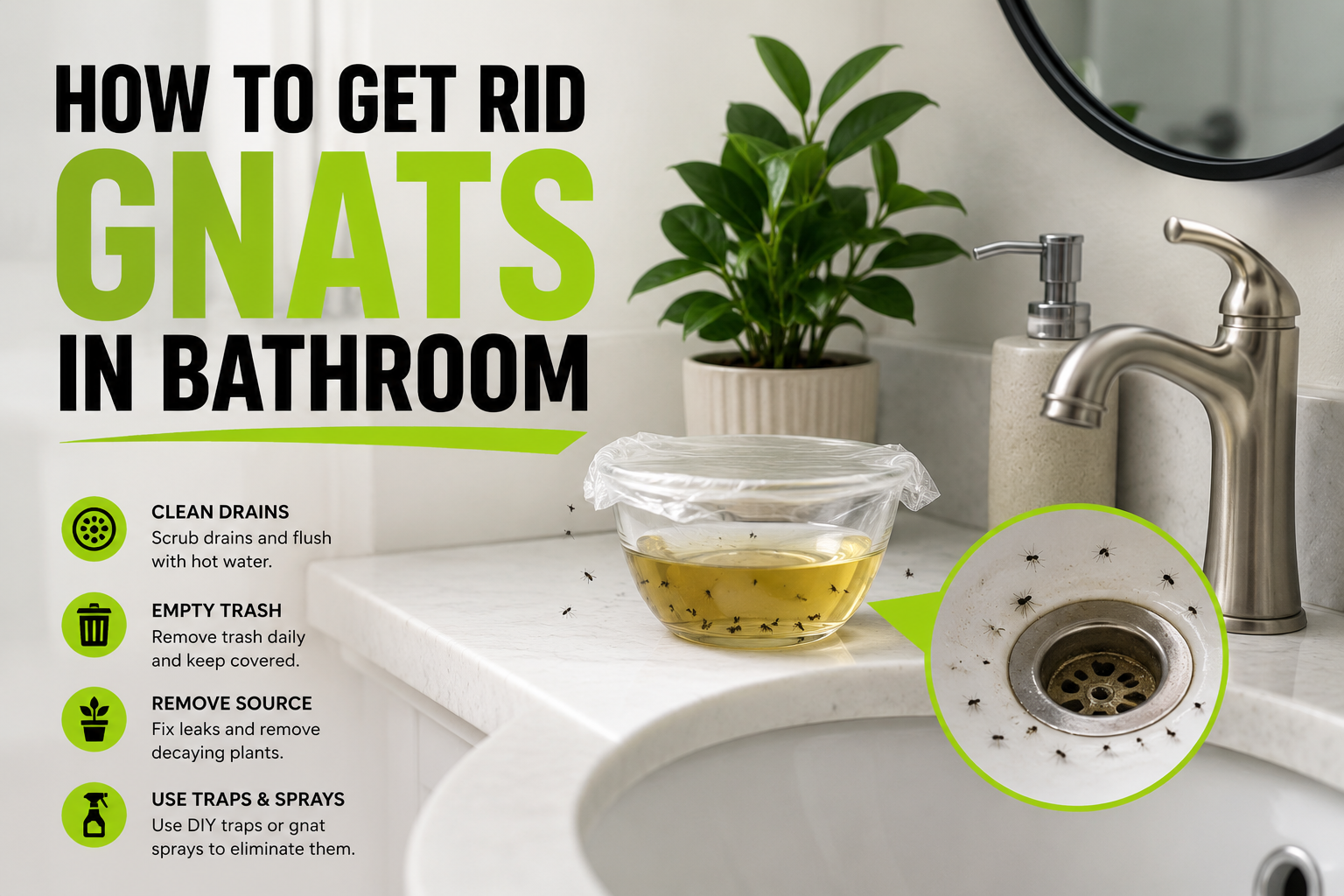
Bathroom gnats are one of those small annoyances that can quickly turn into a bigger headache if ignored. They seem to appear out of nowhere, buzzing near the mirror, resting on damp tiles, or hovering above the drain. While they’re mostly harmless, their presence usually signals that something in your bathroom needs attention.
This article breaks down exactly how to get rid of gnats in bathroom spaces using simple, budget-friendly methods. You’ll learn what causes them, how to identify the type you’re dealing with, step-by-step removal techniques, natural remedies, store-bought options, and long-term prevention strategies so they don’t come back.
Understanding the Problem
Before jumping into solutions, it helps to understand what you’re actually dealing with. Not all small flying bugs in the bathroom are the same, and knowing the difference can save you time and effort.
Types of Gnats Found in Bathrooms
There are generally three types of tiny flying insects that people mistake for one another in bathrooms:
- Drain flies (moth flies): Fuzzy, moth-like wings, usually found resting on walls near drains.
- Fruit flies: Small, tan or brown bodies with red eyes, often confused with gnats but usually drawn to organic waste rather than drains.
- Fungus gnats: Thin, mosquito-like bodies, typically linked to overwatered plants or damp organic material.
How to Identify Which Type You Have
A simple way to tell them apart is to watch where they gather. If they’re clustering around the drain or sink overflow, drain flies are the likely culprit. If they’re near a trash can or fruit bowl, you’re probably dealing with fruit flies. If there’s a plant nearby with damp soil, fungus gnats are the more likely explanation.
Why Bathrooms Attract Gnats
Bathrooms create the perfect environment for gnats because they offer three things these insects love: moisture, warmth, and organic residue. Drains collect soap scum, hair, skin cells, and other debris over time, which forms a thin layer of buildup called biofilm. This buildup becomes a breeding ground where gnat larvae can develop undisturbed.
Common Causes of Gnats in the Bathroom
Understanding the root cause is the fastest way to solve the problem permanently rather than just treating the symptoms. Here are the most common reasons gnats show up in bathrooms.
| Cause | Why It Attracts Gnats |
|---|---|
| Clogged or dirty drains | Organic buildup (biofilm) provides food and breeding space |
| Standing water | Creates a moist environment ideal for laying eggs |
| Leaky pipes or hidden moisture | Keeps areas damp behind walls or under sinks |
| Overwatered bathroom plants | Damp soil attracts fungus gnats |
| Trash bins and organic waste | Provides food source and odor that draws insects in |
Each of these factors on its own might not cause a major infestation, but combined, they create ideal breeding conditions. That’s why solving the issue usually requires addressing more than one cause at a time.
Signs You Have a Gnat Infestation
Sometimes it’s not obvious at first that you’re dealing with an infestation rather than just a couple of stray bugs. Here are a few signs to watch for.
You might notice small flying insects hovering near the drain, sink, or mirror, especially in the evening or after a hot shower when humidity levels rise. Larvae may also be visible in the drain buildup if you shine a flashlight down the pipe. Many people also report increased gnat activity at night or right after using the shower, since warm, moist air draws them out of hiding spots.
If you’re seeing these signs repeatedly over several days, it’s a strong signal that gnats are breeding somewhere in your bathroom rather than just wandering in from outside.
Step-by-Step: How to Get Rid of Gnats
Now for the part you’ve been waiting for. Below is a practical, step-by-step approach for how to get rid of gnats in bathroom areas using methods that are safe, affordable, and effective.
Cleaning and Unclogging Drains
Start with the most common source: the drain. Pour a kettle of boiling water down the drain to loosen debris. Follow this with a mixture of half a cup of baking soda and half a cup of vinegar. Let the mixture fizz and sit for about 30 minutes, then flush it out with more boiling water. This combination helps break down the organic buildup where gnat larvae live.
Scrubbing Drain Pipes to Remove Biofilm
Boiling water alone often isn’t enough to remove the sticky biofilm coating the inside of the pipe. Use a thin bottle brush or a drain-cleaning brush to physically scrub the inside walls of the drain. This step makes a noticeable difference because it removes the actual breeding material rather than just rinsing the surface.
Making a DIY Gnat Trap
A simple apple cider vinegar trap can help catch any adult gnats still flying around. Fill a small cup with apple cider vinegar and a few drops of dish soap, then cover it with plastic wrap and poke a few small holes in the top. Gnats are drawn to the scent, crawl through the holes, and get stuck in the liquid.
Using a Bleach or Enzyme Drain Cleaner
For drains that are especially dirty, an enzyme-based drain cleaner can be more effective than bleach because it breaks down organic matter without damaging your pipes. Bleach can kill visible bugs on contact but doesn’t always reach the deeper buildup where larvae live, so enzyme cleaners are often a better long-term choice.
Fixing Leaks and Drying Damp Areas
Check under sinks, around the base of the toilet, and near the bathtub for any signs of leaking water. Even small leaks can create the damp conditions gnats need to breed. Use a dehumidifier or simply improve airflow with a fan or open window to help dry out consistently damp spots.
Cleaning Trash Bins and Removing Standing Water
Empty bathroom trash bins regularly, especially if they contain tissues, cotton pads, or other organic waste. Wipe down any surfaces where water tends to pool, such as around the sink base or bathmat area, since standing water is an open invitation for gnats to lay eggs.
Natural and Home Remedies
If you prefer a more natural approach, there are several remedies that work well alongside the steps above.
Essential oils like peppermint, tea tree, and lemongrass are known to repel gnats due to their strong scent. Adding a few drops to a spray bottle with water and misting problem areas can help keep gnats away without introducing harsh chemicals. The vinegar and dish soap trap mentioned earlier is another natural option that’s cheap and easy to set up. Sticky traps, which are small adhesive cards placed near problem areas, can also catch adult gnats passively over time without any daily maintenance.
Chemical and Store-Bought Solutions
For persistent infestations, natural remedies alone might not be enough. Store-bought drain gel cleaners are specifically designed to coat the inside of pipes and slowly break down the organic buildup that natural methods sometimes miss. Insecticide sprays labeled for flying insects can also help eliminate adult gnats quickly, though they should be used sparingly in enclosed spaces like bathrooms.
Pros and cons of chemical treatments:
| Pros | Cons |
|---|---|
| Faster results than natural methods | Can contain harsh chemicals |
| Effective on stubborn buildup | Not ideal for households with pets or kids |
| Widely available at stores | May require repeated use |
| Long-lasting drain protection | Strong odor during and after use |
Preventing Gnats from Coming Back
Getting rid of gnats is only half the job. Keeping them from returning requires a bit of ongoing maintenance. Set a regular drain cleaning schedule, ideally once every couple of weeks, using the boiling water and baking soda method mentioned earlier.
Keep your bathroom as dry and well-ventilated as possible by using exhaust fans during and after showers. A simple weekly cleaning checklist can also help: wipe down surfaces, empty trash bins, check for standing water, and inspect for leaks. If you keep plants in the bathroom, avoid overwatering them, since damp soil is a common breeding ground for fungus gnats.
When to Call a Professional?
In most cases, the steps above will fully resolve a gnat problem within a week or two. However, if gnats keep returning no matter how consistently you clean, it might indicate a bigger plumbing issue, such as a hidden leak inside the wall or a cracked pipe that’s impossible to reach on your own.
A licensed plumber can inspect the area and identify hidden moisture sources that DIY methods can’t fix. If you’ve tried everything and the infestation persists for more than three to four weeks, it’s a good idea to bring in a pest control professional to assess the situation.
Frequently Asked Questions (FAQs)
How long does it take to get rid of gnats? Most bathroom gnat problems clear up within one to two weeks of consistent cleaning and drain treatment, though severe infestations may take a bit longer.
Are bathroom gnats harmful? Generally, no. Bathroom gnats are more of a nuisance than a health risk, though they can be unpleasant to have around, especially in large numbers.
Why do gnats keep coming back after cleaning? This usually means the source of the problem, like drain buildup or hidden moisture, hasn’t been fully addressed. A one-time cleaning often isn’t enough; regular maintenance is key.
Can gnats live in dry drains? No, gnats need moisture to survive and breed. If a drain is completely dry, it’s unlikely to support gnat larvae, though this is uncommon in regularly used bathrooms.
Conclusion
Dealing with gnats in the bathroom doesn’t have to be complicated. By understanding what draws them in, cleaning your drains thoroughly, setting up simple traps, and staying on top of regular maintenance, you can get rid of them for good. The key to permanently solving how to get rid of gnats in bathroom spaces lies in consistency. A few extra minutes of cleaning each week can save you from dealing with a full-blown infestation down the road.
Related Articles
How to Calculate the Square Feet of a Room?
Why Does My Bathroom Sink Smell Like Rotten Eggs? (Causes & Easy Fixes)
How To Clean Cork Flooring? A Complete Step-by-Step Guide
How To Restain Kitchen Cabinets? Step-By-Step Guide For Beginners