


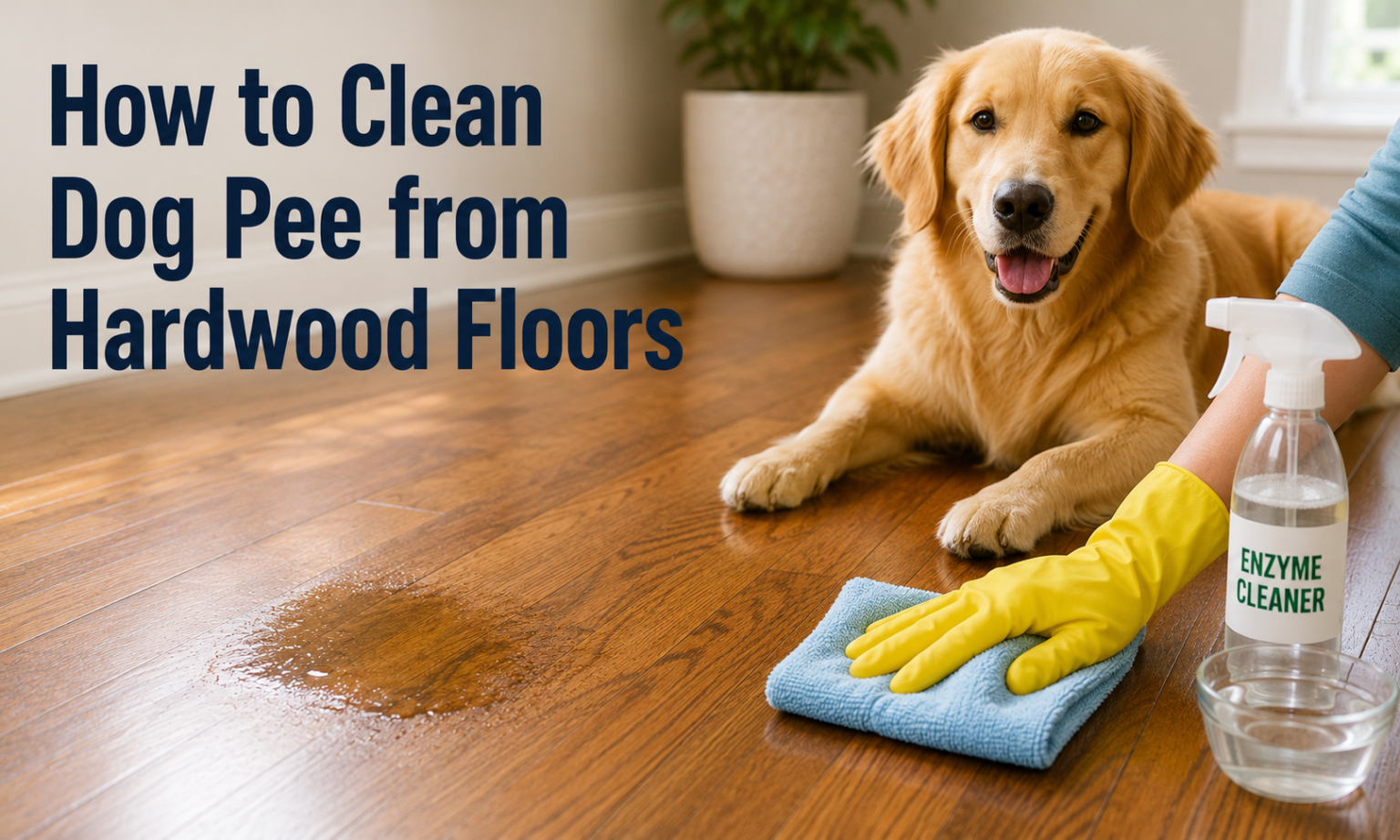
Every dog owner with hardwood flooring eventually deals with an accident on the floor, and the way you respond in the first few minutes makes all the difference. Hardwood is far more absorbent than tile or vinyl, so urine can soak into the wood grain and cause stains, odor, and even structural damage if it is left untreated. T
his guide walks you through the entire process of how to clean dog pee from hardwood floors, covering fresh spills, dried stains, lingering smells, and long-term protection. By the end, you will know exactly what products to use, what mistakes to avoid, and how to keep your floors looking new even with a dog in the house.
Why Dog Urine Damages Hardwood Floors
Dog urine is not just an unpleasant mess; it is a chemical substance that reacts directly with wood fibers and finish. Understanding this reaction helps explain why quick action and the right cleaning method matter so much.
Uric Acid and Wood Penetration
Dog urine contains uric acid crystals that bond tightly with organic material, including wood. Once the liquid seeps past the surface finish, these crystals settle into the grain and become extremely difficult to remove with plain water. This is the main reason old stains keep smelling long after they look dry.
Moisture Damage: Warping and Discoloration
Wood naturally absorbs moisture, and repeated exposure to liquid causes the boards to swell, cup, or warp over time. You may also notice the wood turning a darker gray or black shade in the affected spot, which happens when moisture reacts with the natural tannins inside the wood.
Odor Buildup and Bacterial Growth
Warm, damp environments created by urine are ideal for bacteria to multiply, which is what produces the strong ammonia-like smell. If the area stays humid, such as during rainy weather, the bacteria reactivate and the odor returns even after the spot appears clean.
What You’ll Need Before You Start Cleaning
Having the right supplies ready before an accident happens saves your floor from unnecessary soaking time. Most of these items are affordable and easy to find in any home or local store.
Basic Cleaning Supplies
A simple cleaning kit should include the following:
| Supply | Purpose |
| Paper towels or microfiber cloths | Absorbing fresh urine quickly |
| White vinegar | Neutralizing odor and mild disinfecting |
| Mild dish soap | Breaking down residue on the surface |
| Rubber gloves | Protecting hands during cleanup |
| Soft-bristle brush | Working solution into wood grain gently |
Specialized Products for Odor Removal
Regular household cleaners cannot fully break down uric acid crystals, so an enzymatic cleaner made specifically for pet stains is necessary for complete odor removal. These products contain natural enzymes that digest the acid at a molecular level rather than simply masking the smell.
Step-by-Step Guide to Cleaning Fresh Urine Stains
Acting within the first few minutes of an accident dramatically reduces the chance of permanent staining or lingering odor. Follow these steps in order for the best results.
Blotting and Initial Cleanup
Press paper towels or a dry cloth firmly onto the puddle without rubbing, since rubbing spreads the liquid further into the wood grain. Continue blotting with fresh towels until no more moisture transfers onto the cloth.
Applying a Vinegar Solution
Mix equal parts white vinegar and water in a spray bottle, then lightly mist the affected area rather than pouring it directly. Wipe gently with a damp cloth, since vinegar helps neutralize the ammonia smell while being safe for sealed hardwood surfaces.
Using an Enzymatic Cleaner
After the vinegar treatment, apply an enzymatic cleaner following the instructions on the bottle, usually letting it sit for several minutes. This step targets the uric acid crystals that vinegar alone cannot fully dissolve, preventing the smell from returning later.
Drying and Odor Check
Wipe the area completely dry with a clean cloth and allow it to air out for a few hours before walking on it again. Once dry, smell the spot closely; if any odor remains, repeat the enzymatic cleaner step a second time.
How to Handle Dried or Old Urine Stains
Stains that have been sitting for days or weeks require a more thorough approach than fresh accidents. Wood at this stage may already show discoloration, so the goal shifts from prevention to repair.
Identifying Set-In Stains
Old stains typically appear as dark, slightly raised patches on the wood surface and often carry a musty smell that becomes stronger in humid conditions. Running your finger over the spot may also reveal a rough or slightly tacky texture compared to the surrounding floor.
Deep Cleaning with Baking Soda
Sprinkle baking soda generously over the dried stain and let it sit for a few hours to absorb trapped odor and moisture from within the wood. Afterward, vacuum the powder and follow up with an enzymatic cleaner to finish breaking down any remaining residue.
When to Sand and Refinish
If the stain has darkened the wood permanently or the finish has bubbled, light sanding followed by a fresh coat of matching stain and sealant is usually required. This process restores both the appearance and the protective barrier of the flooring.
Removing Lingering Odor Completely
Even after visible cleaning, urine odor can resurface if the source is not fully eliminated. This section explains why that happens and how to stop it for good.
Why Odor Keeps Coming Back
Humidity and temperature changes cause dried uric acid crystals to reactivate, releasing the smell again even though the floor looks spotless. This is common in homes without proper ventilation or in seasons with higher moisture in the air.
Best Odor-Neutralizing Methods
Using a UV blacklight in a dark room can help locate hidden or dried spots that are invisible under normal light, allowing you to target them directly with enzymatic cleaner.
Combining this with periodic baking soda treatments and good airflow keeps the odor from returning long-term.
Mistakes to Avoid When Cleaning Dog Urine
Many well-meaning cleaning attempts actually make hardwood damage worse. Knowing what not to do is just as important as knowing the correct steps.
Cleaning Products to Never Use
Ammonia-based cleaners should be avoided because their smell resembles urine and can encourage dogs to mark the same spot again. Bleach and harsh chemical cleaners should also be skipped, as they strip the wood’s protective finish and can discolor the surface permanently.
Cleaning Habits That Cause More Damage
Rubbing a fresh stain instead of blotting pushes the liquid deeper into the grain and widens the affected area. Similarly, using excessive water or steam cleaners on hardwood introduces more moisture than the wood can safely handle, increasing the risk of warping.
Protecting Your Hardwood Floors Long-Term
Prevention is always easier than repair, especially when it comes to wood flooring. A few simple habits can significantly reduce future accidents and damage.
Preventive Measures Around the House
Placing washable rugs or mats in areas where your dog spends the most time adds a protective buffer against accidents. Applying a quality floor sealant every couple of years also strengthens the wood’s resistance to moisture penetration.
Training and Habit Building
Consistent potty training and a predictable bathroom schedule reduce the frequency of indoor accidents significantly. Keeping cleaning supplies within easy reach also ensures that any accident is treated within minutes rather than hours.
When to Call a Flooring Professional?
Not every stain can be handled with home remedies, especially when damage has reached the deeper wood layers. If you notice persistent warping, a smell that returns no matter what you try, or finish that has visibly cracked or bubbled, it is time to consult a flooring specialist.
Professionals can assess whether the affected boards need spot refinishing or full replacement, which is often more cost-effective than repeated DIY attempts on severely damaged areas.
Frequently Asked Questions
Does vinegar really remove the smell?
Vinegar neutralizes odor on the surface but does not fully break down uric acid, so it works best when paired with an enzymatic cleaner for complete odor removal.
Can urine stains be permanently removed?
Fresh stains can usually be removed completely with prompt cleaning, while older, set-in stains may require sanding and refinishing to fully restore the wood’s original look.
Is hardwood a bad choice for dog owners?
Hardwood can work well for dog owners as long as accidents are cleaned quickly and the floor is properly sealed and maintained.
How often should I deep clean if I have a dog?
A monthly deep clean with baking soda and enzymatic products helps catch hidden spots before they turn into lingering odor problems.
Conclusion
Cleaning dog pee from hardwood floors comes down to speed, the right products, and consistent maintenance. Blotting fresh accidents immediately, following up with vinegar and enzymatic cleaners, and addressing old stains with baking soda or professional refinishing will keep your floors protected for years.
Combine these cleaning habits with simple prevention steps like rugs, sealants, and consistent training, and your hardwood floors can stay in great condition even with a dog at home.
Related Articles
How to Clean Bathroom Mats: A Complete Step-by-Step Guide
How to Stain Wood Floors: A Step-by-Step Guide