


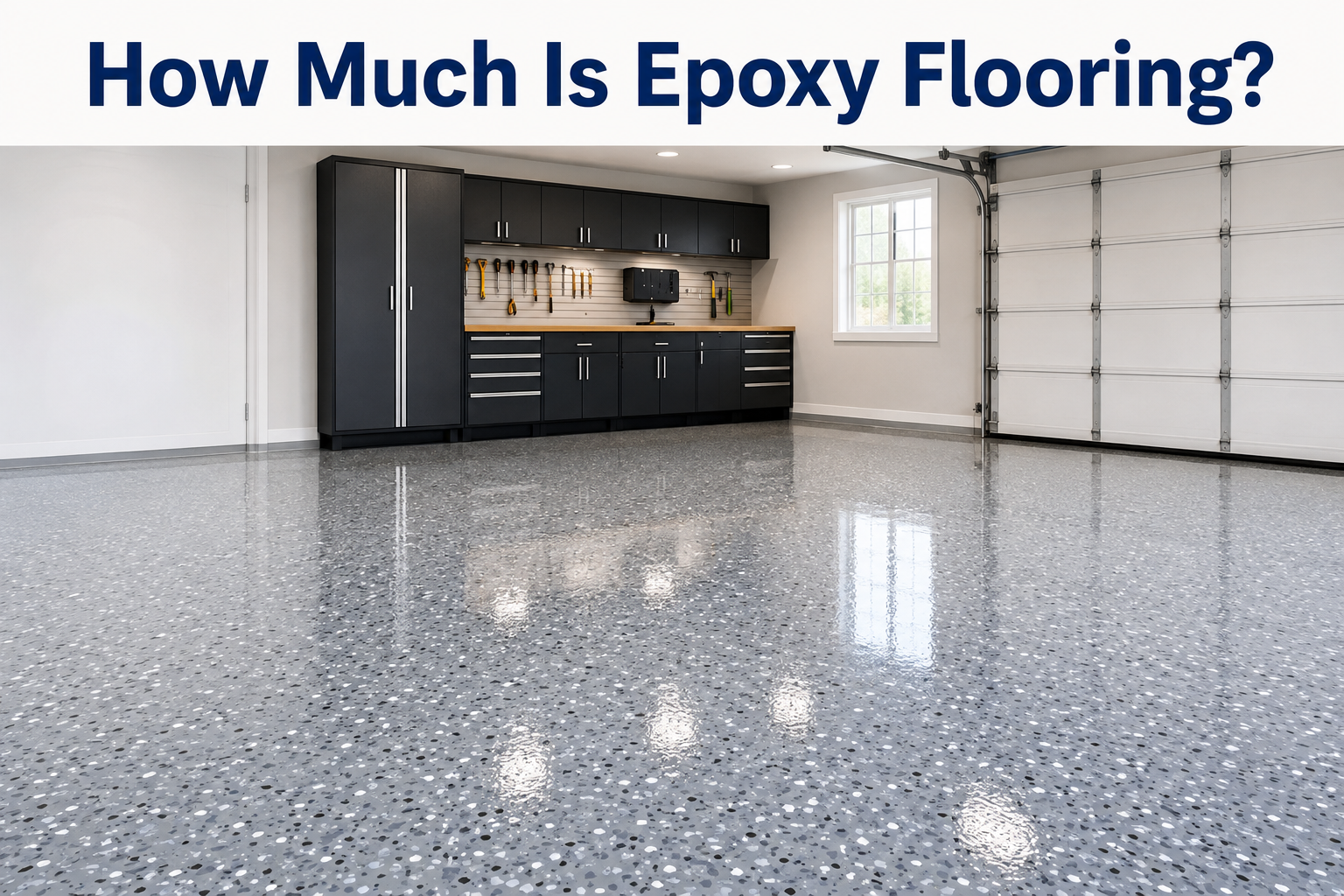
Epoxy flooring costs about $3 to $12 per square foot installed by a professional, including materials and labor. Most homeowners land near $7 per square foot for a solid mid-range system. For a standard two-car garage, that usually works out to somewhere between $1,200 and $6,000 total. If you do it yourself with a kit, you can spend far less, often $100 to $600, but the floor will not last nearly as long.
That is a wide range, and the reason it is so wide matters more than the average. The same 500-square-foot garage can come in at $1,500 or $6,000 depending on the condition of your concrete and the coating system you pick. This guide breaks the number down so you can build a realistic budget for your own space.
Epoxy flooring cost per square foot
Per square foot is the fastest way to anchor a rough estimate. The catch is that “epoxy” covers everything from a thin water-based paint to a heavy 100 percent solids system with a polyaspartic topcoat. Those are different products at very different prices, even though both get called an epoxy floor.
Here is how the common systems compare, installed by a professional.
| Epoxy system | Cost per sq ft (installed) | Typical lifespan |
| Water-based epoxy | $3 – $5 | 3 – 5 years |
| Solid color (100% solids) | $5 – $8 | 10 – 20 years |
| Decorative flake broadcast | $5 – $10 | 10 – 15 years |
| Metallic epoxy | $8 – $15 | 10 – 20 years |
| Polyaspartic / polyurea topcoat | $6 – $12+ | 15 – 20 years |
Notice how price tracks with how long the floor lasts. A cheap water-based coat is easy on the budget today but may need redoing in a few years, while a 100 percent solids or polyaspartic system costs more up front and holds up for well over a decade. When you compare quotes, the number that matters is cost per year of service, not just the sticker price.
| Rule of thumb: for a mid-range professionally installed floor, budget around $7 per square foot. Then adjust up for metallic finishes and heavy prep, or down for a plain solid color on good concrete. |
What epoxy flooring costs by space size?
Square footage is the first thing a contractor asks about, so it helps to know the ballpark totals for common spaces. These figures are for professional installation of a solid or flake system, before any heavy repairs.
Two-car garage (about 400 to 600 sq ft). This is the most common project and the usual reference point. Expect roughly $1,200 to $6,000, with the U.S. average sitting around $2,400. A basic paint-grade job can start near $1,200, while a premium system with diamond grinding, flake, and a polyaspartic topcoat typically lands between $4,000 and $5,500.
One-car garage (about 200 to 300 sq ft). A smaller footprint means a smaller bill, usually $700 to $2,900. The per-square-foot rate often runs a little higher on small jobs, since setup and prep costs are spread over less area.
Three-car garage (about 700 sq ft). Plan for roughly $2,200 to $9,500 depending on the system. Larger floors do get a slight per-foot discount because materials and labor scale more efficiently.
Basement. Basements often use lighter-duty water-based systems since they see foot traffic rather than car tires, which can keep the per-foot cost down. Bundling a basement with a garage in the same visit is usually cheaper than booking them separately.
What drives the price up or down?
Two projects of the same size can differ by thousands of dollars. These are the factors that move the number, roughly in order of impact.
Surface preparation. This is the single biggest swing, and the part people forget. A floor that is clean, dry, and sound is cheap to coat. One that needs diamond grinding, oil-stain removal, crack filling, or old-coating stripping adds real labor. On a professional quote, prep and labor are usually the majority of the cost, not the resin itself.
The coating system. As the table above shows, a water-based coat and a polyaspartic system sit at opposite ends of the price scale. Choosing the right system for how the floor will actually be used matters more than chasing the lowest number.
Decorative extras. Color flakes, quartz, metallic pigments, multiple colors, custom logos, and anti-slip additives all add cost. Metallic finishes in particular add several dollars per square foot because they take skill and extra layers to install well.
Concrete condition and repairs. If the slab is badly cracked or has moisture problems, you may need resurfacing or repairs before any coating goes down, which is a separate line item. This is why a real quote needs a site visit, not just a square-foot count.
Your location. Labor rates vary by region. Big coastal metros tend to run higher than the national average, so the same floor can cost noticeably more in one city than another.
DIY kit vs professional installation
This is where the biggest cost decision lives, and the honest answer is that the two options are not really the same product.
A DIY kit from a home improvement store costs about $100 to $600 for a garage-sized space, and boxed water-based kits for a two-car garage often run $130 to $250. Add tools you may not own, like a stiff brush, roller, extension pole, and possibly a rented grinder, and a typical DIY project lands somewhere between $300 and $1,500 all in. The trade-off is durability: DIY water-based floors commonly last about 3 to 5 years, and they can peel early if the concrete was not prepped properly.
Professional installation costs more, usually the $3 to $12 per square foot covered above, but the price buys mechanical diamond grinding, thicker coatings, an experienced crew, and often a warranty. A well-installed professional floor lasts 10 to 20 years. Some premium coatings like polyaspartic also cure fast, sometimes within a day, though their short working time is exactly why they are best left to pros.
A simple way to think about it: doing a two-car garage yourself might cost a few hundred dollars in materials versus a few thousand from a contractor, but the professional version typically lasts three to four times longer and includes the grinding that makes a coating actually stick. If the floor sees heavy vehicle traffic, the pro route usually wins on cost per year.
How to save without buying a floor that peels?
You can trim the bill without gambling on a floor that fails early. A few practical moves:
- Get at least three quotes. Ranges are wide, so competing bids for the same scope protect you from overpaying.
- Bundle spaces. Coating the garage and basement in one visit costs less than two separate jobs.
- Skip extras you do not need. Custom logos, multiple colors, and heavy metallic effects add up fast. Decide which features actually matter to you.
- Prep what you can yourself. Clearing the space and doing a thorough clean before the crew arrives can shave some labor, if your contractor allows it.
- Buy quality once. A cheap kit that fails in two years costs more over time than a system that lasts fifteen. Spend where it counts, which is usually prep and the coating itself.
Before you commit, it is worth comparing a few detailed cost breakdowns for your region. Guides like HomeGuide’s epoxy flooring cost data collect real project prices reported by homeowners, which helps you sanity-check any quote you receive.
Conclusion
Epoxy flooring costs roughly $3 to $12 per square foot installed, or about $1,200 to $6,000 for a typical two-car garage, with most people near $7 per square foot. The final number comes down to two things: how much prep your concrete needs and which coating system you choose. Get a few quotes that spell out the prep, match the system to how you will use the floor, and you will end up with a fair price and a floor that lasts.
Frequently asked questions
How much does it cost to epoxy a 2-car garage?
Professional installation for a two-car garage usually runs $1,200 to $6,000, averaging around $2,400. A basic solid color sits at the low end; a premium flake or metallic system with diamond grinding lands at the top.
Is epoxy flooring cheaper than tile or hardwood?
Often, yes. At roughly $3 to $12 per square foot installed, epoxy tends to cost less than hardwood or many tile installs, while resisting stains and wear. It is most popular for garages, basements, and high-traffic areas.
Why is professional epoxy so much more than a DIY kit?
You are paying for surface prep and labor, not just resin. Pros use diamond grinding and thicker coatings that last 10 to 20 years, while DIY kits often last 3 to 5. Most of a quote is prep and labor.
How long does an epoxy floor last?
A professionally installed solid or polyaspartic system lasts about 10 to 20 years. Water-based DIY coatings typically last 3 to 5 years, and can fail sooner if the concrete was not properly ground and cleaned first.
Does the price include preparing the concrete?
It should, but always confirm. Prep like grinding, cleaning, and crack repair is the biggest cost driver, so a quote that leaves it out can look cheap and then balloon. Ask for prep to be itemized.
Related Articles
Can You Paint Ceiling Tiles? A Complete Guide (Tips, Costs & Steps)
How to Calculate the Square Feet of a Room?
How To Clean Cork Flooring? A Complete Step-by-Step Guide
Are Toilet Seats Universal? Complete Sizing, Fitting & Buying Guide