


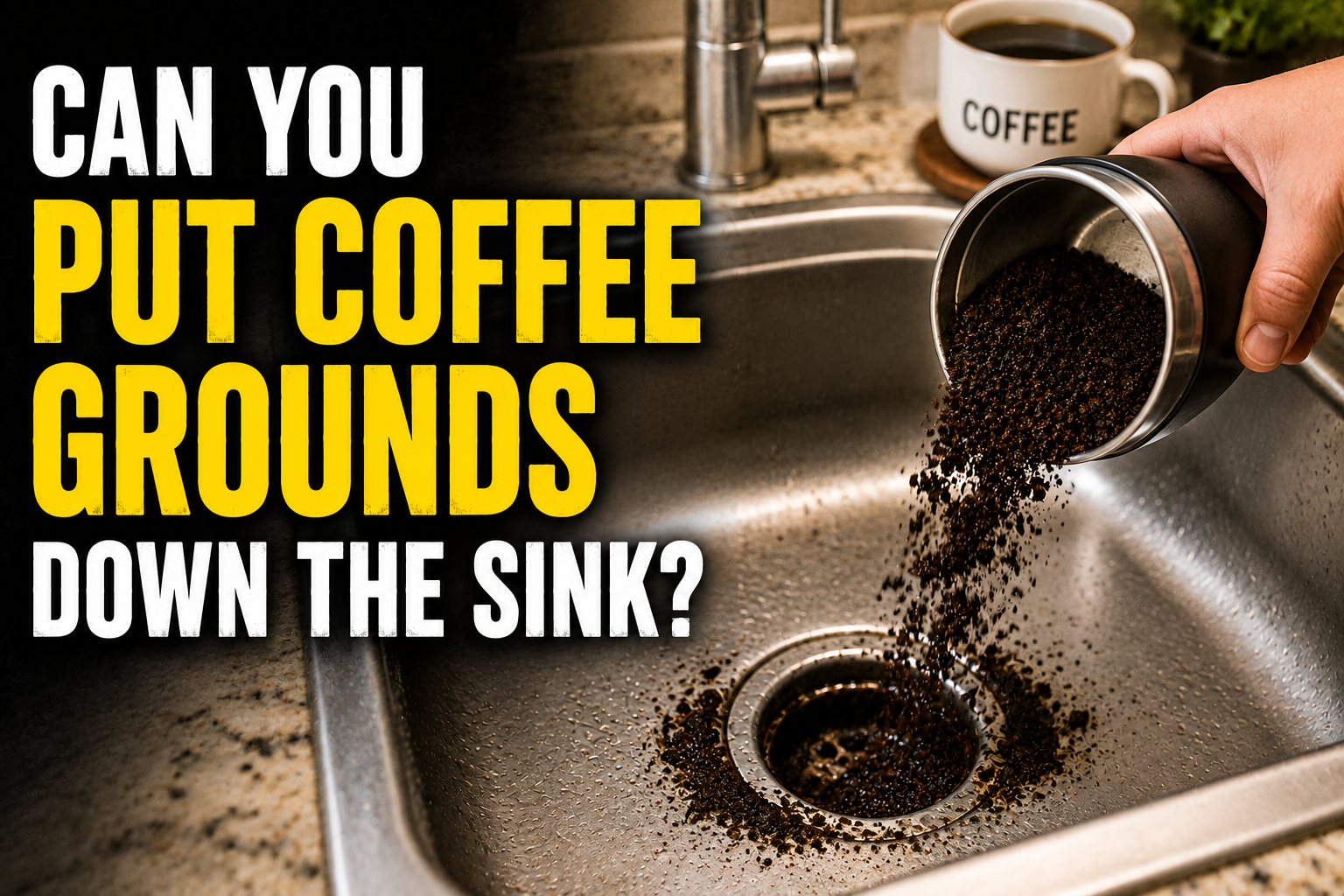
No, you should not put coffee grounds down the sink. They look small and harmless, but they don’t dissolve in water. Instead, they sink, clump together, and settle in the bends of your pipes, where they mix with grease and soap into a thick sludge that builds up and clogs the drain. This is true whether or not you have a garbage disposal. The safe move is to put used grounds in the trash, compost, or your garden.
That’s the short version. If you’ve been rinsing grounds down the drain for years, or you just want to know why this one food gets singled out, here’s exactly what happens inside your pipes and what to do instead.
Why coffee grounds clog your drain
The problem starts with one simple fact: coffee grounds don’t break down in water. If you’ve ever cleaned out a French press or a moka pot, you already know this. The grounds settle at the bottom and stay there, heavy and packed together. They do the same thing inside your plumbing.
Grounds are denser than water, so they don’t float away with the flow. They sink to the lowest points in your drain system, especially the U-shaped bend under your sink called the P-trap. That bend is designed to hold a little standing water to block sewer gases, which makes it the perfect trap for anything heavy. Grounds collect there and stay put.
It takes a lot of water pressure to force a clump of grounds past that P-trap, and since they don’t dissolve, they simply wait there for the next batch to join them. Each rinse adds a little more. What starts as a thin layer becomes a packed plug, and because the P-trap sits right under the sink, the clog forms in the exact spot that’s most prone to trapping debris in the first place.
On their own, a small amount of grounds might eventually wash through. The real trouble is what they join up with. Your pipe walls already carry a film of grease, cooking oils, soap scum, and food residue. Coffee grounds cling to that film and to each other, and the mix hardens into a dense, sticky sludge. Over time that sludge narrows the pipe, slows the water, and starts to smell. Keep the habit up and it can block the pipe completely, leaving you with a slow drain or a full backup and a repair bill.
Plumbers see this constantly. As Mr. Rooter Plumbing explains, unlike most foods, coffee grounds clump together in water rather than breaking down, so they build up inside drains and stop them doing their job. It’s one of the most common causes of kitchen clogs.
What about a garbage disposal?
A garbage disposal doesn’t make coffee grounds safe for your drain. This is the most common misunderstanding, so it’s worth being clear: a disposal chops and shreds food, it doesn’t dissolve it. When you run grounds through one, you just get finer grounds.
If anything, that can make things worse. The smaller particles slip further down the pipe, past the disposal and beyond the reach of a basic sink snake, and settle deeper in the system. So a clog that forms there is harder to find and harder to clear. Plumbers who disagree about plenty of other disposal do’s and don’ts tend to agree on this one: coffee grounds are a bad idea for a disposal.
The myths worth clearing up
A few old wives’ tales keep this habit alive. None of them hold up:
- “Hot water flushes them through.” Hot water might carry off a few loose particles in the moment, but it doesn’t stop grounds from settling, and it won’t dissolve them. If your drain already has grease and buildup, hot water can’t undo that.
- “Grounds clean the pipes and freshen the drain.” This one’s backward. Grounds don’t scrub your pipes clean, they add to the buildup that lines them. Any fresh coffee smell is short-lived, and the sludge that follows smells far worse.
- “They break down like other food.” They don’t. That’s the whole issue. Most food waste softens and disperses in water, while coffee grounds stay granular and pack together.
What to do if you’ve already been doing it
If you’ve been putting grounds down the sink and the drain is slowing down, act before it stops completely. Try these steps in order, from gentlest to strongest:
- Flush with plenty of water first. If you only just rinsed a small amount down, running enough water may carry loose grounds through before they settle.
- Try a plunger. A cup plunger over the drain can loosen a soft clog near the top and get water moving again.
- Use baking soda and vinegar. Pour about a cup of baking soda into the drain, follow with a cup of white vinegar, cover the drain to hold in the fizzing reaction, wait an hour, then flush with hot water. This is a food-safe way to break up greasy buildup around the grounds.
- Snake the drain. A hand-operated drain snake, or even a straightened wire coat hanger, can push through or pull back a blockage that’s within reach.
- Call a plumber. If the clog is deep or won’t clear, it’s time for a professional. A packed coffee-ground clog is often too dense for DIY fixes, and a plumber can locate it with a drain camera and clear it properly.
One thing to avoid: harsh chemical drain cleaners. They’re often too weak to cut through a dense coffee-and-grease clog, and their corrosive nature can damage pipes over time, especially with repeated use. The fizzing baking-soda method is gentler and safer for a kitchen line.
Does an occasional stray spoonful matter?
Realistically, a few grounds that slip off a spoon or rinse out of a cup now and then are not going to wreck your plumbing. If that happens, just run enough water to move them along. The danger is the routine, not the rare accident. Dumping the grounds from your daily brew down the sink, day after day, is what builds the clog. A stray pinch is fine; a habit is what causes damage.
A simple habit that prevents the problem
The easiest fix is to stop grounds from reaching the drain at all. Keep a small bowl, jar, or dedicated container next to your coffee maker, and knock your used grounds straight into it instead of rinsing the filter or press over the sink. Empty it into the compost or trash when it fills up. A fine mesh sink strainer over the drain adds a second line of defense, catching stray grounds along with other food bits before they slip through.
If clogs are a recurring worry in your kitchen, it’s also worth knowing that some P-traps are made with a cleanout plug at the lowest point, which makes clearing out settled debris far easier. It’s a small detail, but it turns a messy job into a quick one if buildup ever does happen.
Better ways to dispose of coffee grounds
The good news is that used grounds are genuinely useful, so there are better places for them than your trash even, let alone your drain. Try these:
- Compost them. Coffee grounds are high in nitrogen, which makes them a great addition to a compost pile. They break down into rich material for your garden.
- Feed your garden. You can sprinkle grounds directly onto soil as a mild fertilizer, adding nutrients like nitrogen, potassium, and phosphorus. Use them sparingly, since too much can make soil too acidic. They can also help deter pests like ants and slugs.
- Use a food waste bin. If your area offers a municipal food scraps or organics bin, grounds can go straight in.
- Deodorize. A small open container of dry grounds in the fridge or a closet absorbs odors.
- Scrub with them. A pinch of grounds makes a gritty, natural scrub for stuck-on food on pots and pans, or for getting stubborn smells off your hands.
- Just bin them. If none of the above fits your routine, the trash is still fine. Seal them in a bag so they don’t attract pests, and you’re done.
Contractors recommend the same range of options. In advice shared via Martha Stewart, the suggested destinations for used grounds are a municipal food waste bin, a compost pile, garden fertilizer, or simply the trash, anywhere but the sink.
The bottom line
Coffee grounds don’t belong in the sink. They don’t dissolve, they sink and gather in the bends of your pipes, and they bond with grease into a sludge that clogs drains and smells. A garbage disposal doesn’t fix that, and neither does chasing them with hot water.
If you’ve already got a slow drain, work from a plunger and baking soda up to a snake or a plumber. Better yet, break the habit and send your grounds to the compost, the garden, or the trash. Your morning coffee is worth keeping. Your pipes are the part you want to protect.
Frequently asked questions
Can I put coffee grounds down the sink if I run hot water?
No. Hot water may push a few loose particles along, but it won’t dissolve the grounds or stop them settling in your pipes. Grounds don’t break down in water at any temperature, so the hot-water trick doesn’t prevent clogs.
Are coffee grounds safe for a garbage disposal?
No. A disposal grinds grounds finer but doesn’t dissolve them. The smaller particles can travel deeper into your pipes and form clogs that are harder to reach and clear, so it’s best to keep grounds out of the disposal too.
What dissolves coffee grounds in a drain?
Nothing dissolves them cleanly, since they don’t break down in water. To clear a clog, break up the surrounding grease with baking soda and vinegar followed by hot water, or physically remove the blockage with a plunger or drain snake.
Can coffee grounds go down the toilet instead?
It’s not a good idea. Even though a toilet drain is wider, coffee grounds still clump and can build up in the pipes. The trash, compost, or garden remains the better choice.
What should I do with used coffee grounds?
Compost them, use them as a light garden fertilizer or pest deterrent, put them in a food waste bin, or throw them in the trash. Grounds are high in nitrogen, so gardeners in particular can put them to good use.
Related Articles
Can I Use Ceiling Paint on Walls? Full Guide With Pros, Cons & Tips
How Many Bundles of Shingles for an 8×10 Roof?
How to Measure a Toilet? A Complete Step-by-Step Guide
What Is the Minimum Pitch for a Metal Roof?
How Long Does It Take To Do A Bathroom Renovation? Full Timeline Guide