


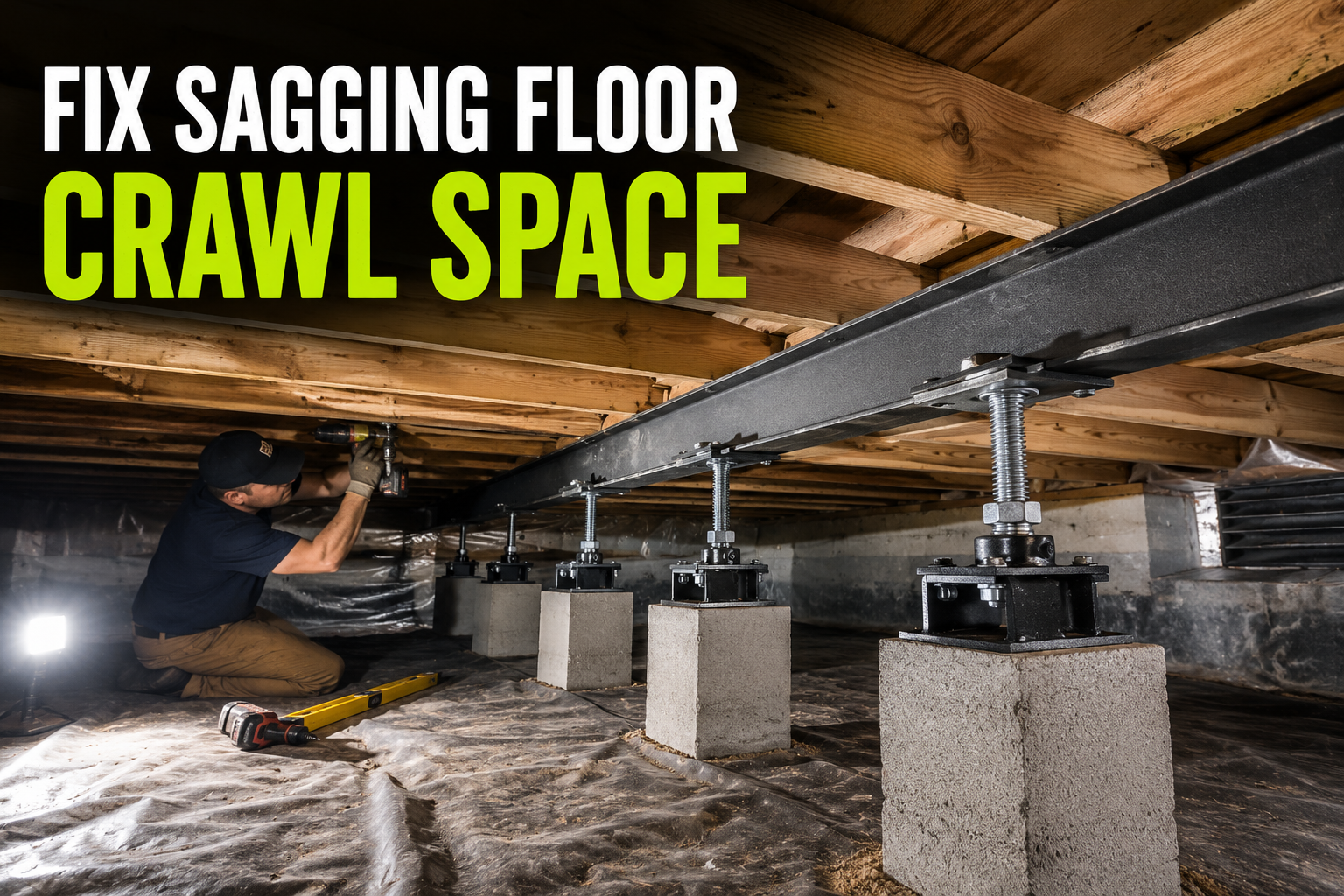
If you’ve noticed dips in your floor, doors that stick for no reason, or a slightly bouncy feeling when you walk across a room, there’s a good chance the problem is hiding beneath your feet. Homeowners who deal with this issue often search for ways to fix a sagging floor crawl space problem, and the good news is that in most cases, it’s a very fixable issue once you understand what’s causing it.
This guide walks you through everything from spotting the warning signs to actually repairing the floor, so you can decide what to tackle yourself and when to call in a professional.
Signs You Have a Sagging Floor
Before jumping into repairs, it helps to confirm that what you’re dealing with really is a sagging floor problem rooted in the crawl space, rather than something else entirely, like a settling foundation on the exterior walls. A sagging floor rarely announces itself all at once. Instead, it shows up gradually through small annoyances that many people brush off for months before realizing they’re connected.
Here are the most common signs to watch for:
- Floors that feel uneven, spongy, or bouncy when you walk across them
- Doors and windows that stick, jam, or no longer latch properly
- Visible dips or low spots, especially noticeable if you roll a marble or ball across the floor
- Cracks appearing in walls, ceilings, or drywall seams
- Widening gaps between the flooring and the baseboards
- A noticeable slope when you place a level on the floor
If you’re spotting two or more of these signs in the same area of your home, it’s a strong indication that something underneath — most likely in the crawl space — needs attention.
Common Causes of Sagging Floors in Crawl Spaces
Understanding the root cause is the most important part of any repair, because patching the surface without fixing the underlying issue only means the problem returns later. The table below breaks down the most frequent culprits behind a sagging floor.
| Cause | Description |
|---|---|
| Rotted or damaged joists | Wood joists exposed to moisture over time lose strength and begin to sag or crack |
| Undersized support beams | Beams that were never strong enough for the load they carry, common in older homes |
| Deteriorated support posts | Wood posts that rot, shift, or sink into the soil beneath them |
| Poor or missing footings | Posts resting directly on dirt instead of solid concrete pads |
| Excess moisture and humidity | Damp crawl space air speeds up wood decay and encourages mold growth |
| Termite or pest damage | Insects hollow out structural wood, weakening it from the inside |
| Foundation settling | Shifting soil beneath the home’s foundation can pull structural elements out of alignment |
In many homes, it’s not just one of these factors but a combination — for example, excess humidity that eventually leads to rot, which then causes a support post to fail.
Why Moisture Is Often the Root Problem
If there’s one factor that shows up again and again in crawl space repairs, it’s moisture. Wood and water simply don’t mix well over the long term. When a crawl space stays damp, humidity gets absorbed into the joists, beams, and posts, slowly breaking down the wood fibers and making them far more vulnerable to sagging under weight. This is also the ideal environment for mold, mildew, and wood-eating pests to thrive.
Poor drainage around the foundation, missing gutters or downspouts that direct water away from the house, and the absence of a vapor barrier on the crawl space floor are the usual suspects. You’ll often notice a musty smell, visible mold spots, or condensation on pipes and wood surfaces when moisture is the underlying issue. Addressing this is not optional — if you skip it and go straight to structural repairs, you’re likely to be back in the crawl space fixing the same problem again within a few years.
How to Inspect a Crawl Space for Sagging Floor Issues
A proper inspection doesn’t require fancy equipment, but it does require some patience and a willingness to get a little dirty. Before heading in, wear old clothes, knee pads if you have them, a dust mask, and bring a strong flashlight or headlamp.
Once inside, here’s what to check:
- Look at the joists and beams for any visible bowing, cracking, splitting, or soft, spongy wood.
- Press a screwdriver into suspect wood — if it sinks in easily, that’s a sign of rot.
- Check support posts for tilting, shifting, or gaps between the post and the beam above it.
- Inspect footings to see if posts are sitting on solid concrete or directly on soil.
- Look for water stains, standing water, or damp soil, which point to a drainage problem.
- Check for a vapor barrier — a plastic sheeting layer over the ground — and note if it’s missing, torn, or bunched up.
- Take photos and rough measurements of anything concerning, especially if you plan to call a contractor later.
Taking your time here pays off, since an accurate diagnosis is what determines whether the fix is a simple support post or a more involved joist replacement.
Step-by-Step Guide to Fix a Sagging Floor Crawl Space Problem
Once you know what’s causing the sag, the actual repair process generally follows the same sequence, whether you’re doing it yourself or hiring a contractor. The goal is always to stabilize the moisture environment first, then rebuild or reinforce the structure.
| Step | What It Involves |
|---|---|
| 1. Control moisture | Install a vapor barrier, improve drainage/grading, and add a dehumidifier or sump pump if needed |
| 2. Pour proper footings | Set concrete pads beneath support posts instead of letting them rest on bare soil |
| 3. Install support jacks | Place adjustable steel jack posts on the new footings under the main beam |
| 4. Repair or sister joists | Reinforce weakened joists with new lumber bolted alongside them, or replace severely rotted ones |
| 5. Level the floor gradually | Raise the sagging area slowly, about 1/8 inch per week, to avoid cracking walls or ceilings |
| 6. Treat for pests | Apply termite or pest treatment if insect damage was found during inspection |
| 7. Recheck and finalize | Use a laser level or straightedge to confirm the floor is even before closing up |
The single biggest mistake homeowners make is trying to jack the floor back into place too quickly. Wood, drywall, and plaster need time to adjust; raising a sagging area too fast can crack walls, pop nails, or even damage plumbing lines running through the joists. Patience during the leveling stage makes a huge difference in the final result.
DIY vs. Hiring a Professional
Not every sagging floor repair needs a licensed contractor, but some absolutely do. It largely comes down to the severity of the damage and how comfortable you are working in tight, often uncomfortable crawl space conditions.
| Factor | DIY-Friendly | Call a Professional |
|---|---|---|
| Minor sag, single joist | Often manageable with basic tools | — |
| Multiple joists rotted or broken | — | Recommended |
| Foundation cracks visible | — | Structural engineer needed |
| Simple jack post installation | Often manageable | — |
| Load-bearing wall involved | — | Recommended |
| Uncertainty about proper footing size/placement | — | Recommended |
If you’re dealing with widespread rot, cracks in the foundation itself, or any load-bearing wall sitting above the affected area, it’s worth paying for a structural engineer’s assessment before doing anything else. Getting this step wrong can compromise the safety of the entire home.
Cost of Fixing a Sagging Floor
Repair costs vary widely depending on the size of the affected area, the extent of the damage, and whether moisture control work is also needed. As a general guide:
- Minor repairs (a single support post or small joist reinforcement) tend to be the most affordable and quickest to complete.
- Moderate repairs involving multiple joists or a full beam replacement cost more due to material and labor time.
- Major repairs that include foundation work, extensive moisture control, or engineering oversight sit at the top of the price range.
Additional cost factors include the size of the crawl space, accessibility (tight spaces take longer to work in), regional labor rates, and whether pest damage requires separate treatment. It’s usually smart to get a couple of quotes from local contractors, since prices can differ significantly based on location and the scope of the repair.
Preventing Future Sagging Floors
Once you’ve gone through the effort to fix a sagging floor crawl space issue, the last thing you want is to repeat the process a few years down the line. A little ongoing maintenance goes a long way:
- Schedule a crawl space inspection once or twice a year, especially before and after rainy seasons
- Keep gutters clean and make sure downspouts direct water well away from the foundation
- Maintain a proper vapor barrier and replace it if it becomes torn or worn
- Monitor humidity levels inside the crawl space and use a dehumidifier if it consistently runs high
- Arrange periodic pest inspections, particularly in regions prone to termites
- Address small cracks or moisture spots as soon as you notice them rather than waiting
These habits are far cheaper and easier than another full structural repair, and they protect the investment you’ve already made.
Frequently Asked Questions
How much sag is too much? A slope of more than 1 inch over 20 feet is generally considered significant and worth addressing. Anything noticeable to the eye or felt underfoot is worth at least having inspected.
Can I fix a sagging floor myself? Minor cases, such as installing a single jack post on a properly poured footing, are often within reach for a handy homeowner. Anything involving multiple joists, foundation cracks, or load-bearing walls is safer left to a professional.
How long does crawl space repair take? Minor repairs might be finished in a day or two, while larger projects involving multiple support posts, joist replacement, and moisture control can take a week or more.
Will homeowners insurance cover this? It depends on the cause. Damage from a sudden event like a burst pipe may be covered, but gradual issues like long-term rot or settling are typically considered a maintenance issue and excluded.
How do I know if it’s a foundation issue or a joist issue? Foundation problems usually show up as diagonal cracks in exterior walls or doors/windows misaligned throughout the entire house, while joist issues tend to be localized to one room or section of flooring. A professional inspection can confirm which one you’re dealing with.
Conclusion
A sagging floor is one of those problems that only gets more expensive and more difficult to fix the longer it’s ignored, but it’s also one of the more straightforward structural issues to resolve once you understand the cause.
Start by getting into the crawl space and identifying whether moisture, rot, a failing post, or a combination of factors is behind the sag, then work through the repair steps in order — moisture control first, structural reinforcement second, and careful, gradual leveling last.
Minor cases are well within reach for a confident DIYer with the right tools and patience, while anything involving foundation cracks, load-bearing walls, or widespread damage is worth handing to a structural engineer or experienced contractor. Either way, catching the problem early and following through with proper repairs will keep your floors solid, level, and worry-free for years to come.
Related Articles
French Drain Basement Systems: The Complete Homeowner’s Guide
Why Is My Toilet Bubbling? Causes, Fixes & When to Call a Plumber