


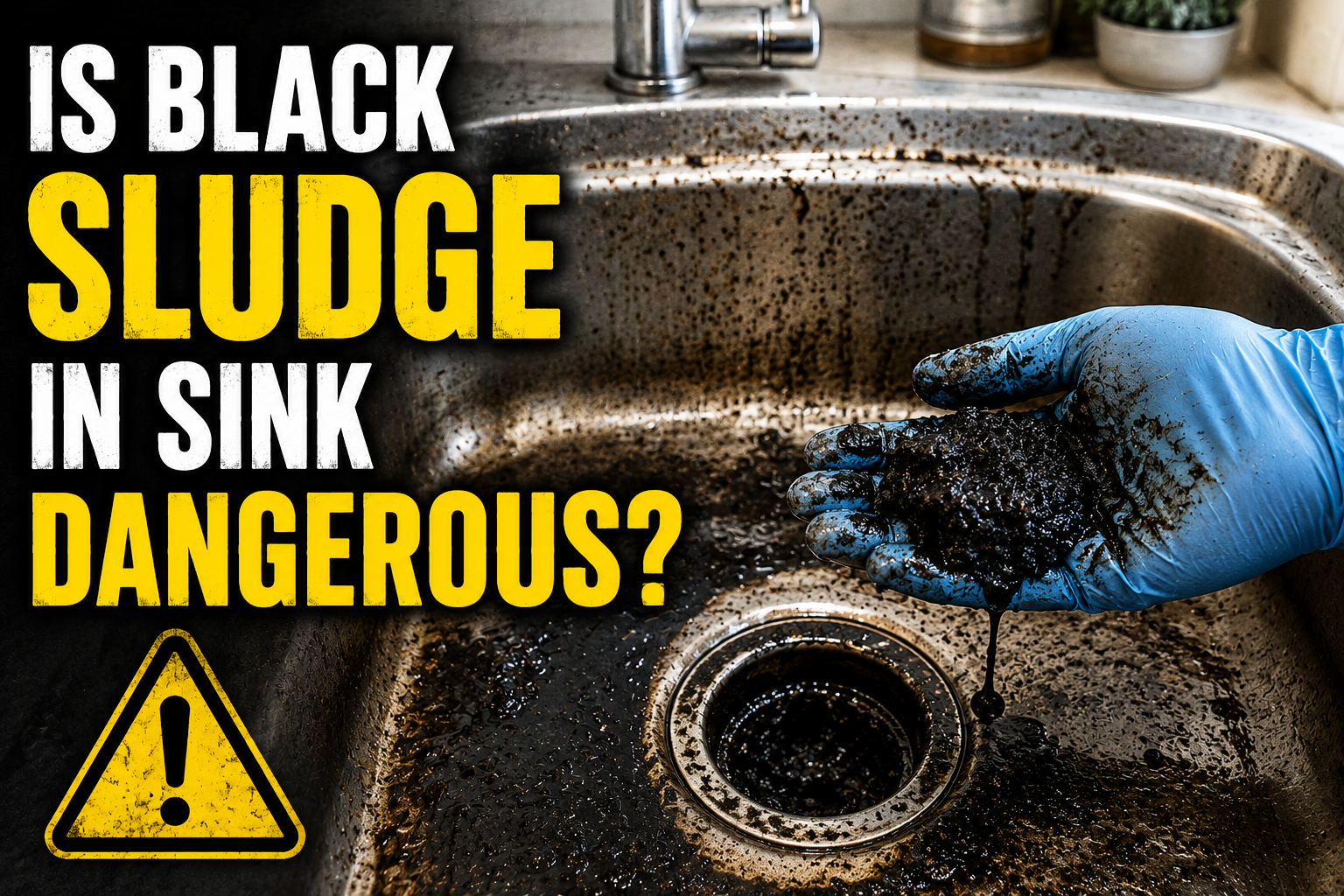
Black sludge in your sink is not immediately toxic, so a healthy adult who spots it and cleans it up has little to worry about. That said, it isn’t harmless either. The gunk is a living colony of bacteria and mold, and it can pose real risks if it gets into an open cut, is swallowed, or builds up heavily over time, especially for people with asthma, allergies, or weakened immune systems. It’s also a sign your drain needs attention. The right response isn’t panic. It’s cleaning it out promptly and stopping it from coming back.
Here’s what the black stuff actually is, when it’s worth worrying about, and how to get rid of it for good.
What black sludge actually is
That dark, slimy coating has a name that plumbers and microbiologists use: biofilm. It isn’t a single substance but a whole ecosystem. Bacteria settle on the inside of your pipes, feed on the organic gunk washing past, and secrete a sticky protective layer that traps more debris and shelters more microbes. Mold often joins in. The result is the thick black slime you see clinging to the stopper and drain.
What feeds it depends on the sink. In bathroom sinks, hair is the number one culprit, mixed with toothpaste, soap scum, skin oils, and cosmetics. In kitchen sinks, grease and food particles lead the way, and even a garbage disposal leaves small bits behind that cling to the pipe walls. The warm, damp inside of a drain is a perfect breeding ground, which is why the buildup returns if you only clean the surface.
This is also why the sludge is so stubborn. That protective layer the bacteria produce is designed to hold on. It shrugs off a quick rinse and even resists some cleaners, because the microbes underneath are shielded. To actually clear it, you have to break the layer apart, not just splash water over the top of it, which is the thinking behind the removal steps further down.
The real health risks (and who should care most)
This is where honesty matters, because a lot of what’s out there swings between total panic and total dismissal. The truth sits in the middle.
The sludge itself won’t hurt you just by existing in your drain. As one plumbing company that has analyzed drain biofilm samples explains, for most healthy adults, occasional brief exposure to drain biofilm isn’t dangerous. The concern is what lives in it and what happens with more contact.
Here are the risks that are actually worth knowing:
- Harmful bacteria. Drain biofilm can harbor bacteria such as E. coli and Pseudomonas. These can cause problems if they get into an open wound or are accidentally ingested, so don’t handle sludge with cut hands, and don’t let it splash onto dishes or food.
- Mold spores and air quality. Mold growing in the biofilm releases spores that can aggravate asthma and allergies. The decomposition also produces the compounds behind that sewer smell, and chronic exposure to those can cause headaches, fatigue, or nausea in some people.
- Higher-risk groups. People with asthma, allergies, or compromised immune systems are more sensitive to both the spores and the bacteria. In those households, it’s worth staying on top of drain hygiene rather than letting buildup linger.
So the honest bottom line on health: not an emergency for most people, but not something to shrug off, particularly if anyone in the home is more vulnerable or if the buildup is extensive and smelly.
A few simple habits keep the small risk small. Don’t handle drain sludge with bare hands if you have any cuts or scrapes, and wash thoroughly afterward regardless. Keep the gunk well away from anything food-related: don’t rinse it toward dishes drying in the sink, and clean and sanitize the basin after you’ve scrubbed the drain. If the sink is used for food prep, that after-cleaning step matters more, since the same bacteria that are harmless in the pipe are not something you want on a cutting surface.
What the sludge says about your plumbing
Beyond health, black sludge is a message about your pipes. A thin film near the drain opening is normal buildup that everyone gets. But heavier sludge, or sludge that keeps coming back fast, usually means it’s coating the line deeper down.
Watch for these signs that the problem runs deeper than the surface:
- Slow drainage, which means the sludge is narrowing the pipe.
- Odors that return soon after you clean the drain opening, which points to buildup further along the line where you can’t reach.
- Gurgling sounds, which happen when air struggles past a partial blockage.
- Repeated clogs in the same sink, which usually mean a thick layer coating the pipe keeps trapping new debris.
- Black water backing up into the basin, a sign the buildup has become severe and needs prompt attention.
Left alone, sludge holds moisture against the pipe walls and can speed up corrosion, and in older cast iron drains, internal rust gives it more rough surface to cling to. So clearing it isn’t only about looks or smell. It protects the pipe.
How to remove black sludge safely
The good news is that light to moderate buildup is a quick DIY job. Work from the top of the drain down, gentlest first.
- Gear up and ventilate. Put on rubber gloves, and open a window or run a fan. Have a bucket, an old toothbrush or scrub brush, and paper towels ready.
- Clean the stopper and strainer first. This is the fastest win, since a lot of the slime and smell sits right at the top. Remove the stopper (it usually unscrews or pops out, or you disconnect the pivot rod under the sink), and scrub off all the gunk. Wipe removed sludge into the trash rather than pushing it back down.
- Flush with hot water. Pour hot water down the drain in stages to soften greasy residue and soap scum and move it along.
- Use baking soda and vinegar. Pour about half a cup of baking soda into the drain, then slowly add a cup of white vinegar. Let it foam and sit for 10 to 15 minutes. The fizzing reaction helps break up the slime, and vinegar has some antibacterial effect.
- Rinse with boiling water. Follow up with a kettle of boiling water to wash the loosened sludge away. Repeat the process if the drain is still slow.
- Scrub what you can reach. Use the brush inside the drain opening to clear any remaining slime you can get to.
A drain snake or a plunger can help pull out or dislodge deeper buildup. Whatever you plunge or snake up, wipe it into the trash so it doesn’t wash back down. For a fuller walkthrough of these steps, Hunker has a clear guide. One note: go easy on harsh chemical drain cleaners, especially with old pipes or a septic system, since they can damage plumbing and don’t fix the underlying biofilm.
When to call a plumber
DIY handles most cases. Call a professional when the buildup is clearly beyond the surface. That means clogs that come back after repeated cleaning, odors that keep returning, or black water backing up into the sink or tub. These point to sludge deep in the line, or to pipe damage like corrosion and scale that gives the sludge somewhere to keep rebuilding. A plumber can clear the line properly and check the pipe’s condition, which stops the cycle instead of buying a week of relief.
How to prevent black sludge from coming back
Cleaning is only half the battle, because biofilm rebuilds if you feed it. A little routine keeps drains clear:
- Flush weekly. Once a week, pour a kettle of hot water down the drain, or run the baking soda and vinegar treatment, to clear buildup before it hardens.
- Use a drain strainer. A simple mesh strainer catches hair in the bathroom and food bits in the kitchen before they enter the drain, which starves the sludge of its main food.
- Keep grease out of the kitchen sink. Cooking grease and oil cool and stick to the pipes, then trap more debris. Wipe greasy pans and pour used oil into the trash, not the drain.
- Rinse products through. Make sure toothpaste, soap, and hair products get flushed down with plenty of water rather than left to cling.
- Consider an enzyme cleaner. Enzyme-based drain treatments digest organic buildup gently and are safe for pipes and septic systems, making them a good monthly maintenance step.
The bottom line
Black sludge in your sink looks worse than it usually is. It won’t harm a healthy person who cleans it up, but it’s a living mix of bacteria and mold that deserves respect, real caution around cuts, dishes, and vulnerable family members, and prompt removal. It’s also your drain telling you buildup is forming. Clear it with gloves, hot water, and baking soda and vinegar, call a plumber if it keeps returning, and then keep drains clear with a weekly flush and a strainer. Handle it early and it stays a minor chore instead of a health or plumbing headache.
Frequently asked questions
Can black sludge in my sink make me sick?
It’s unlikely from just seeing or briefly touching it, but possible. The biofilm can carry bacteria like E. coli that may cause illness if ingested or if they enter an open wound, and mold spores can trigger asthma or allergy symptoms. Wear gloves, keep it away from dishes, and clean it promptly.
Why does the black sludge keep coming back?
Because the biofilm is likely deeper in the pipe than you can reach. Cleaning only the drain opening leaves the colony intact, so it rebuilds. A deeper clean, plus weekly maintenance and a drain strainer, breaks the cycle. Persistent return may need a plumber.
What’s the best way to get rid of black sludge naturally?
Clean the stopper and strainer by hand, flush with hot water, then pour in baking soda followed by vinegar, let it foam for 10 to 15 minutes, and rinse with boiling water. Repeat if needed. It’s gentle on pipes and effective on light to moderate buildup.
Is black sludge a sign of a broken pipe?
Not always, but it can be. A thin film is normal buildup. Heavy or fast-returning sludge, gurgling, slow drains, or black water backing up can indicate deeper buildup or pipe damage like corrosion, which is worth having a plumber inspect.
Should I use chemical drain cleaner on black sludge?
It’s best avoided as a first step. Harsh chemical cleaners can damage older pipes and septic systems and don’t remove the underlying biofilm, so the sludge returns. Try hot water, baking soda and vinegar, and manual cleaning first, and call a plumber for stubborn cases.
Related Articles
How to Heat a Basement in Winter (Without Wasting Money)
How to Get Super Glue Off a Wood Floor? Without Ruining the Finish
How to Turn Off Water to a Toilet: A Complete Step-by-Step Guide
How Many Bundles of Shingles for an 8×10 Roof?
How Much Does Epoxy Flooring Cost? Complete 2026 Pricing Guide