


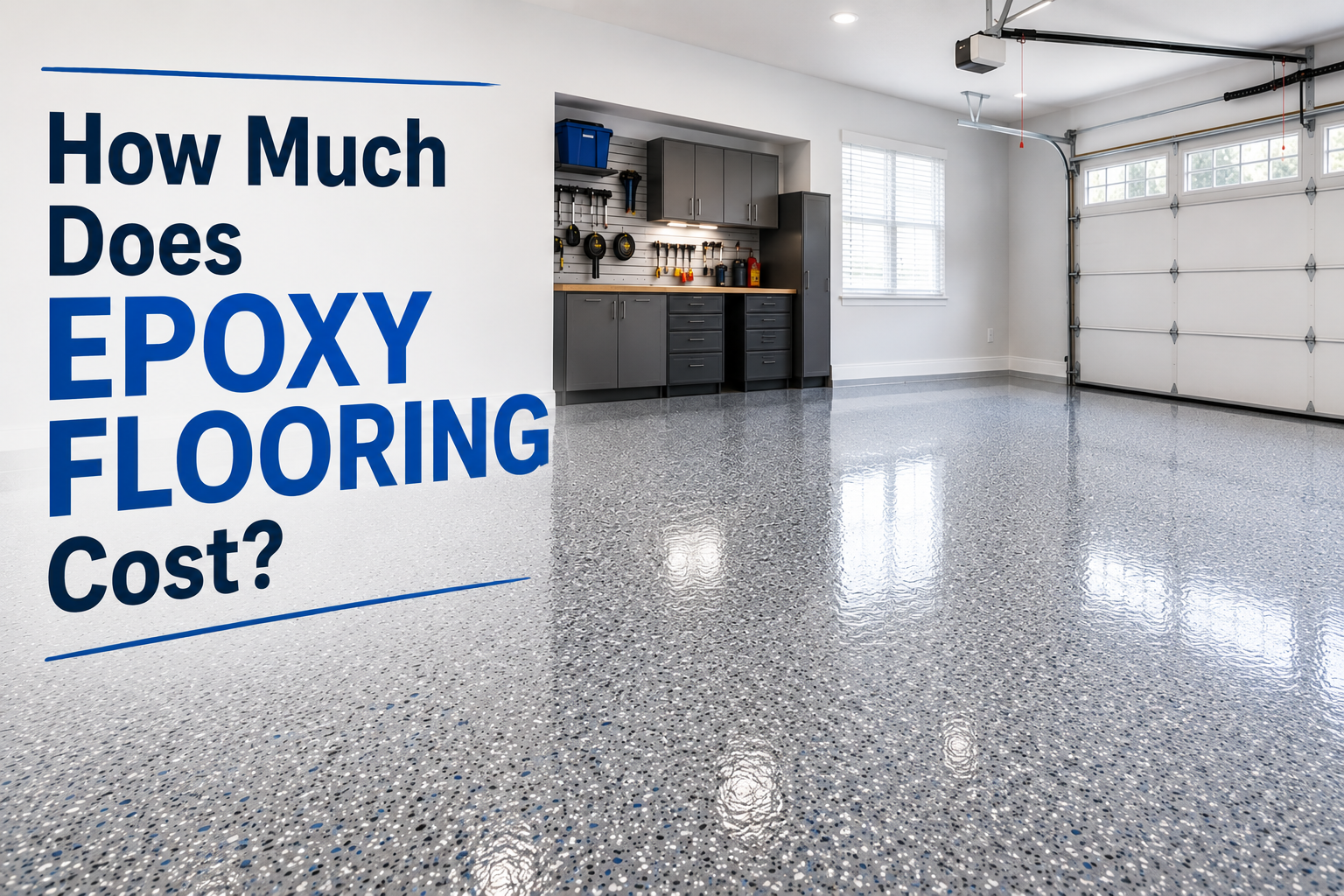
If you have been searching online trying to figure out how much does epoxy flooring cost, you have probably noticed something frustrating: the numbers are all over the place. One website says four dollars a square foot, another says fifteen, and suddenly you are left wondering which figure actually applies to your home or business. The truth is that epoxy flooring pricing depends on a mix of factors, including the type of epoxy used, the size of the area being coated, the condition of your existing concrete, and even where you live.
Epoxy flooring has become one of the most popular flooring choices for garages, basements, warehouses, retail stores, and industrial facilities because it is tough, easy to clean, and visually appealing. But before committing to a project, most homeowners and business owners want a clear answer to one simple question: how much does epoxy flooring cost, realistically, for a space like mine?
This guide breaks everything down in plain language, covering national averages, cost differences between epoxy types and finishes, labor expenses, hidden costs, and practical tips to help you save money without sacrificing quality.
On average, professionally installed epoxy flooring costs between four and ten dollars per square foot, though prices can range from as low as three dollars to as high as eighteen dollars or more depending on the finish and complexity of the job.
Epoxy Flooring Cost Overview
Before diving into the specifics, it helps to look at the bigger picture. Epoxy flooring pricing is generally discussed in terms of cost per square foot, since this makes it easier to compare quotes and estimate a total project budget regardless of the size of the space.
The table below gives a quick snapshot of typical pricing ranges based on installation type.
| Installation Type | Cost Per Square Foot | Typical Total (2-Car Garage, ~500 sq ft) |
|---|---|---|
| DIY Epoxy Kit | $1.50 – $3.00 | $750 – $1,500 |
| Basic Solid Color (Professional) | $3.00 – $7.00 | $1,500 – $3,500 |
| Flake or Chip System | $5.00 – $9.00 | $2,500 – $4,500 |
| Metallic Epoxy | $8.00 – $18.00 | $4,000 – $9,000 |
| Industrial/Commercial Grade | $6.00 – $25.00 | Varies by scope |
As you can see, the answer to how much does epoxy flooring cost really depends on which category your project falls into. A simple garage upgrade with a solid color finish will cost far less than a decorative metallic floor designed to look like flowing marble or lava.
Cost Breakdown by Type of Epoxy
Not all epoxy is created equal, and the chemical formulation used has a direct impact on price, durability, and performance. There are three main categories worth understanding.
Water-Based Epoxy
Water-based epoxy is the most budget-friendly option, often costing as little as fifty cents to two dollars per square foot for materials. It contains fewer harmful fumes during application, making it a popular choice for DIY projects and spaces with limited ventilation. However, it tends to be thinner and less durable than other options, meaning it may need to be reapplied sooner.
Solvent-Based Epoxy
Solvent-based epoxy sits in the middle range, offering better durability than water-based formulas at a moderate price increase. It creates a harder, more chemical-resistant surface, though it does require better ventilation during installation due to stronger fumes.
100% Solids Epoxy
This is considered the industrial-grade standard and is what most professional installers recommend for garages, warehouses, and commercial spaces. Because it contains no water or solvents, every bit of the product cures directly onto the floor, creating a thick, impact-resistant coating. This type typically costs between five and eight dollars per square foot installed, but it also lasts significantly longer than the other two options, often making it the better long-term value.
Cost Breakdown by Finish and Style
Beyond the base chemical formula, the finish you choose plays a major role in the final price tag. This is often where people searching for how much does epoxy flooring cost get surprised, since decorative finishes can double or even triple the base price.
- Solid color epoxy is the simplest and most affordable option, typically ranging from three to seven dollars per square foot. It provides a clean, uniform look ideal for garages and industrial floors.
- Flake or chip systems involve scattering colored vinyl flakes into the wet epoxy before sealing it with a topcoat. This creates a textured, granite-like appearance and usually costs between five and nine dollars per square foot.
- Metallic epoxy uses specialized pigments manipulated with tools to create three-dimensional, marbled, or lava-like visual effects. Because of the skill required, this finish commands the highest price, often between eight and eighteen dollars per square foot.
- Quartz broadcast systems combine colored quartz granules with epoxy resin for a decorative yet highly durable surface, typically priced between seven and fourteen dollars per square foot.
Cost by Project Type
The size and purpose of the space being coated significantly affects total project cost, even when the price per square foot stays the same. Below is a general breakdown by common project types.
Garage Floor Epoxy
Garage floors are the most common residential epoxy project. A one-car garage (roughly 200 to 300 square feet) typically costs between 900 and 2,100 dollars, while a standard two-car garage (400 to 600 square feet) usually falls between 1,600 and 5,800 dollars depending on the finish selected. Larger three-car garages naturally cost more but often benefit from a slightly lower per-square-foot rate due to economies of scale.
Basement Floor Epoxy
Basements often require additional moisture-barrier primer since below-grade concrete is more prone to trapped moisture. This adds roughly fifty cents to a dollar fifty per square foot on top of standard pricing, bringing typical basement epoxy projects to around six to ten dollars per square foot.
Residential Interior Floors
For living spaces like kitchens or basements converted into living areas, epoxy is sometimes chosen for its modern look and easy maintenance, with pricing similar to garage installations but occasionally higher due to more detailed edge work around cabinetry and fixtures.
Commercial and Retail Spaces
Commercial spaces like showrooms, retail stores, and light manufacturing facilities typically range from six to fifteen dollars per square foot, with larger installations benefiting from volume pricing.
Industrial and Warehouse Floors
Industrial environments demand the toughest systems, often requiring thicker application and chemically hardened topcoats designed to withstand forklift traffic and heavy equipment. These systems generally range from eight to twenty-five dollars per square foot depending on the level of durability required.
DIY vs. Professional Installation
One of the biggest decisions affecting how much does epoxy flooring cost is whether you install it yourself or hire a professional crew.
DIY epoxy kits are widely available and typically cost between one dollar fifty cents and three dollars per square foot for materials, or roughly one hundred to five hundred dollars total for a small garage. This is by far the cheapest route, but it comes with tradeoffs. DIY kits often use thinner, lower-grade epoxy that does not last as long as professional-grade coatings, and improper surface preparation is one of the most common reasons DIY epoxy floors peel, bubble, or fail within just a few years.
Professional installation costs more upfront, generally landing between four and fifteen dollars per square foot, but it typically includes proper surface grinding, crack repair, moisture testing, and application of commercial-grade materials with a longer lifespan. For most homeowners, especially those without prior experience working with epoxy resin, professional installation ends up being the more cost-effective choice over time since it reduces the likelihood of needing to redo the floor within a few years.
Factors That Affect Epoxy Flooring Cost
Several variables combine to determine your final price. Understanding these factors can help you interpret quotes more accurately and avoid unexpected costs.
- Square footage of the space – Larger areas often benefit from lower per-square-foot pricing due to bulk material purchasing and efficient labor use.
- Condition of the existing concrete – Cracked, pitted, or previously coated concrete requires additional prep work, which increases cost.
- Surface preparation method – Diamond grinding or shot blasting to properly profile the concrete adds to labor costs but is essential for long-term adhesion.
- Number of coats applied – Multiple layers of primer, base coat, and topcoat increase both material and labor costs but also improve durability.
- Topcoat selection – Polyurethane and polyaspartic topcoats cost more than standard epoxy topcoats but offer superior UV resistance and scratch protection.
- Regional labor rates – Labor costs vary significantly by location, with major metropolitan areas typically charging more than smaller markets.
- Additional features – Moisture barriers, anti-slip additives, and UV-stable coatings for outdoor-facing areas can all add to the final price.
Labor Costs Explained
Many people assume the epoxy material itself is the biggest expense, but that is rarely the case. Labor, particularly surface preparation, typically accounts for forty to sixty percent of the total installed cost. Grinding down old coatings, filling cracks, and properly profiling the concrete so the epoxy can bond correctly takes time and specialized equipment, which is reflected in the labor portion of your quote.
This is also why quotes can vary so widely between contractors in the same city. A crew that skips proper grinding and simply rolls epoxy onto unprepared concrete may quote a lower price, but the resulting floor is far more likely to peel or delaminate within a year or two.
Additional and Hidden Costs to Consider
When budgeting for an epoxy flooring project, it is worth planning for a few extra costs that are not always included in the base per-square-foot quote.
- Concrete repair and crack filling, which can add anywhere from a few hundred to over a thousand dollars depending on the extent of the damage.
- Removal of old flooring, such as tile, carpet, or a failing DIY epoxy coating, which requires additional labor and disposal fees.
- Moisture mitigation systems, especially important for basements or ground-level slabs prone to vapor transmission.
- Furniture and appliance relocation, if the space needs to be cleared before work can begin.
- Curing time delays, since most epoxy floors need anywhere from one to several days to cure before the space can be used again, which may factor into planning around a business closure or vehicle storage.
Epoxy Flooring vs. Other Flooring Options
To fully understand whether epoxy is the right investment, it helps to compare it against other common flooring materials.
| Flooring Type | Typical Cost Per Sq Ft | Durability | Maintenance |
|---|---|---|---|
| Epoxy Flooring | $3 – $18 | High | Low |
| Tile | $7 – $22 | Moderate (prone to cracking) | Moderate |
| Polished Concrete | $5 – $15 | High | Low |
| Vinyl/Other Resin Systems | Varies widely | Moderate to High | Low to Moderate |
Epoxy generally offers a strong balance of upfront cost, durability, and low long-term maintenance, which is a major reason it remains popular for garages, industrial spaces, and commercial facilities.
How to Save Money on Epoxy Flooring
If your budget is tight, there are several practical ways to reduce the overall cost without compromising too much on quality.
Getting quotes from at least three different contractors is one of the easiest ways to ensure you are not overpaying, since pricing can vary significantly even within the same city. Scheduling installation during a contractor’s slower season, often late fall or winter in colder climates, can sometimes lead to discounted rates.
Choosing a simpler finish, such as a solid color coating instead of a decorative metallic system, can cut costs substantially while still providing a durable, attractive surface. Finally, handling minor prep work yourself, such as clearing the space and cleaning the concrete beforehand, can sometimes reduce the labor portion of your quote, though major grinding and crack repair should generally be left to professionals.
How to Get an Accurate Quote
Because so many variables affect how much does epoxy flooring cost for your specific project, it is important to get a detailed, itemized quote rather than relying on a general price range found online.
A reputable contractor should be willing to visit your space in person to assess the condition of the concrete, measure the square footage precisely, and explain exactly what is included in the price, such as the number of coats, the type of topcoat, and any necessary prep work.
Be cautious of quotes that seem unusually low compared to others you have received, as this can sometimes indicate that surface preparation or higher-quality materials are being skipped to cut costs. Asking direct questions about warranty coverage, expected lifespan, and what happens if the floor fails prematurely can help you compare contractors more effectively.
Maintenance and Long-Term Value
While the upfront cost of epoxy flooring is an important consideration, it is equally important to think about long-term value. A properly installed, high-quality epoxy floor can last anywhere from ten to twenty years with minimal maintenance, requiring little more than regular sweeping and occasional mopping to stay in good condition.
Choosing a cheaper material or a rushed installation might save money initially, but if the floor needs to be reapplied within just a few years, those upfront savings quickly disappear. When comparing options, it can be helpful to think in terms of cost per year of expected use rather than just the initial price tag, since a slightly more expensive, professionally installed floor often works out to be the more economical choice over time.
Frequently Asked Questions
Is epoxy flooring worth the cost? For most garages, basements, and commercial spaces, yes. Epoxy offers strong durability, chemical resistance, and a long lifespan compared to many alternative flooring options, making the upfront investment worthwhile for many homeowners and business owners.
How long does epoxy flooring last? A properly installed, professional-grade epoxy floor typically lasts between ten and twenty years, while lower-quality DIY installations may need to be redone within just a few years.
Does epoxy flooring add home value? While epoxy flooring is not always factored directly into home appraisals, a clean, well-finished garage or basement floor can improve buyer impressions and overall presentation, which may indirectly support resale value.
Can epoxy be installed over old epoxy or tile? In some cases, existing epoxy or tile can serve as a base layer if it is properly prepared, but this depends on the condition of the existing surface. A contractor can assess whether removal is necessary or whether the new coating can be applied directly over it.
Conclusion
So, how much does epoxy flooring cost in the end? For most residential projects, you can expect to pay somewhere between four and ten dollars per square foot for professional installation, with DIY kits available for those on a tighter budget starting around one dollar fifty cents per square foot. The final number depends heavily on the type of epoxy, the decorative finish chosen, the condition of your existing concrete, and your local labor rates.
Rather than chasing the lowest possible price, it is worth focusing on getting a detailed, transparent quote from a reputable installer, since proper surface preparation and quality materials make the biggest difference in how long your floor will last. With the right planning, epoxy flooring can be a durable, attractive, and cost-effective investment for garages, basements, and commercial spaces alike.
Related Articles
What Is the Average Height of a Door?
How To Fix Squeaky Hardwood Floors: A Complete Step-by-Step Guide
How To Get Rid Of Mold In Basement? Complete Step-by-Step Guide
How to Get Wrinkles Out of New Curtains (No Ironing Required)