



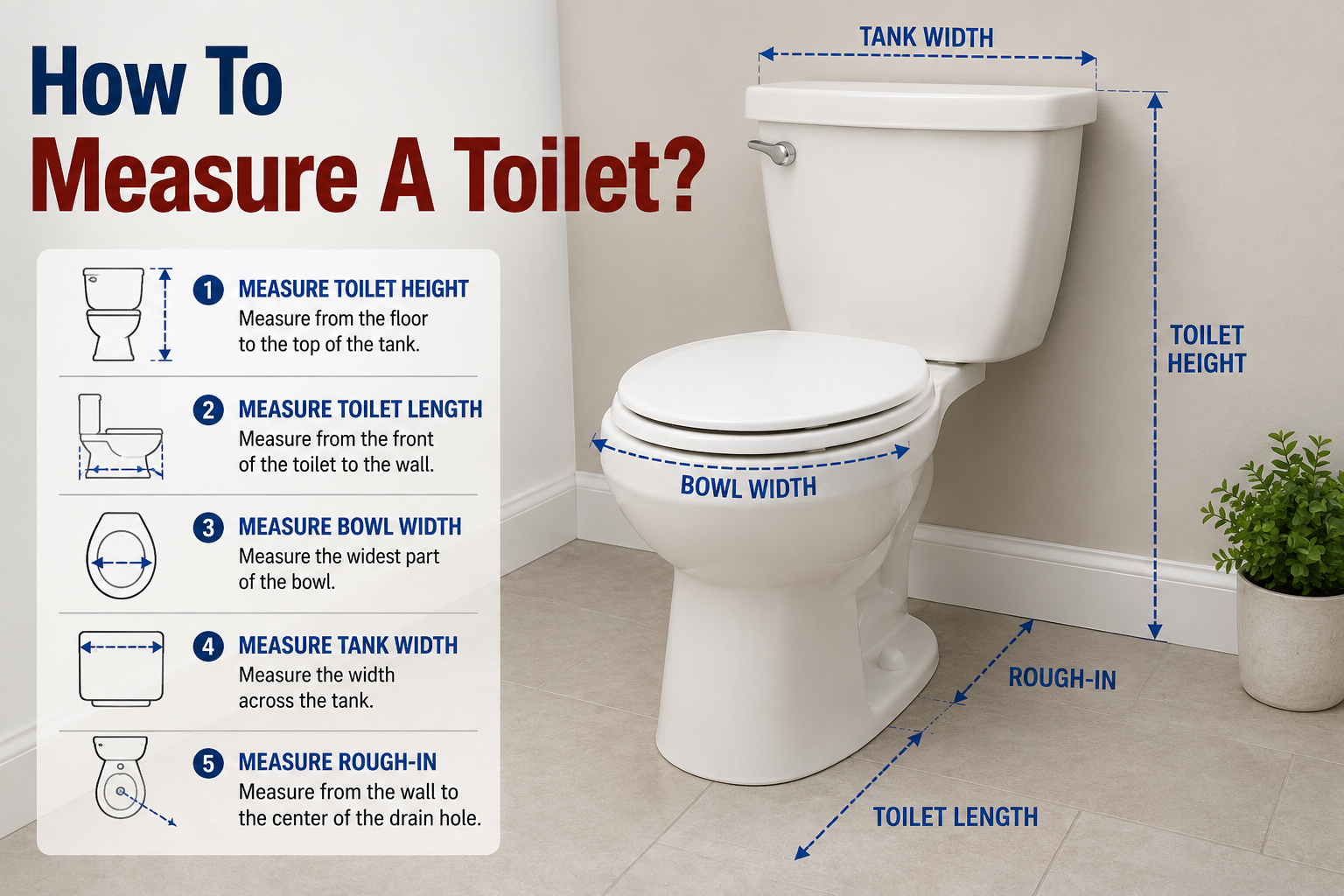
If you have ever stood in a bathroom showroom staring at rows of toilets, wondering which one will actually fit your space, you already know why this question matters so much. Knowing how to measure a toilet properly is the single most important step before you buy a replacement seat, install a brand-new toilet, or plan a bathroom renovation. A toilet that looks perfect in the store can turn into a nightmare if the measurements do not match your existing plumbing setup. The good news is that measuring a toilet is not complicated once you understand which numbers actually matter and where to take them from.
In this guide, we will walk through every measurement you need, explain why each one is important, and show you exactly how to take it using nothing more than a simple tape measure. Whether you are replacing an old seat, installing a new toilet, or simply trying to figure out if a compact toilet will fit your small bathroom, this article will answer the question “how to measure a toilet” from every angle.
Why Measuring a Toilet Correctly Matters
Buying a toilet without measuring first is a bit like buying shoes without knowing your size. It might work out, but more often than not, you will end up with something that does not fit properly, wobbles, or leaves an ugly gap against the wall. Incorrect measurements can lead to a toilet that sits too close to the wall, a seat that does not align with the bowl, or worse, a plumbing rough-in that simply does not match the new unit you purchased.
There are several situations where measuring becomes necessary. You might be replacing a broken toilet seat and need to know whether to buy a round or elongated one. You might be renovating your bathroom and need to know how much floor space the new toilet will take up. Or you might be buying an entirely new toilet and need to match it to the existing plumbing rough-in so that installation goes smoothly. In every one of these cases, a few careful measurements at the start can save hours of frustration later.
To get started, you do not need any specialized tools. A standard tape measure, a pen, and a notepad (or your phone’s notes app) are all you need. A flashlight can also be helpful since the mounting bolts at the base of a toilet are often tucked away in a dim, hard-to-see spot behind the bowl.
Understanding Toilet Types Before You Measure
Before picking up the tape measure, it helps to understand the basic categories of toilets, since this affects which measurements are most relevant to your situation.
Toilets generally come in two structural styles: one-piece and two-piece. A one-piece toilet has the tank and bowl molded together as a single unit, giving it a sleek look and making it easier to clean. A two-piece toilet has a separate tank that is bolted onto the bowl, which is the more traditional and commonly found style in most homes.
Bowl shape is another major factor. Round bowls are more compact and tend to suit smaller bathrooms, while elongated bowls are longer and are generally considered more comfortable, especially for taller users. The shape you choose will directly affect the bowl length measurement you take later.
Finally, there is the question of height. Standard toilets typically sit around 15 inches from the floor to the rim, while comfort height toilets (sometimes called ADA-compliant or chair-height toilets) are taller, usually between 17 and 19 inches. This distinction matters a great deal for households with elderly members, individuals with mobility issues, or anyone who simply prefers a taller seating position.
Tools Required for Measuring a Toilet
You really do not need anything fancy to measure a toilet accurately. Here is a short list of what works best:
- A metal retractable tape measure (cloth or fabric tape measures can stretch and give inaccurate readings)
- A notepad, pen, or your smartphone to jot down numbers as you go
- A flashlight, especially useful if your toilet sits in a dim corner or the mounting bolts are hard to see
- Painter’s tape (optional) to mark measurement points if you are taking several readings
Having these on hand before you begin will make the entire process quicker and prevent you from having to start over halfway through.
Step-by-Step: How to Measure the Rough-In
The rough-in measurement is, without question, the most critical number in the entire process of how to measure a toilet. This measurement determines whether a new toilet will physically connect to your existing plumbing, so getting it wrong can derail an entire installation.
The rough-in refers to the distance from the finished wall behind the toilet to the center of the two mounting bolts that hold the toilet base to the floor. These bolts are usually hidden beneath small plastic caps at the base of the toilet, so you may need to pop those caps off or look closely to spot them.
To measure the rough-in, start by measuring from the wall (not the baseboard, but the actual finished wall surface) to the center of the closest mounting bolt. It is important to measure to the center of the bolt, not to its edge, since even a small error here can mean the difference between a toilet that fits and one that does not.
Most homes in North America use one of three standard rough-in sizes:
| Rough-In Size | How Common It Is | Notes |
|---|---|---|
| 12 inches | Most common by far | Found in the vast majority of modern homes |
| 10 inches | Less common | Typically found in older homes or very small bathrooms |
| 14 inches | Rare | Sometimes found in older or custom-built homes |
If your measurement comes out to something unusual, such as 11.5 or 13 inches, double-check your starting point. A common mistake is measuring from the baseboard instead of the wall itself, which can throw off the reading by an inch or more. If, after double-checking, your rough-in genuinely falls outside the standard sizes, you may need to look for a toilet specifically designed for that unusual dimension, or consult a plumber about adjusting the rough-in during a renovation.
Step-by-Step: How to Measure Bowl Shape and Length
Once the rough-in is confirmed, the next step in measuring a toilet involves the bowl itself. This measurement tells you whether you are dealing with a round bowl or an elongated bowl, and it is essential if you are shopping for a replacement seat or a new toilet.
To measure bowl length, place your tape measure at the center of the two mounting bolts at the back of the bowl and extend it forward to the outermost front edge of the bowl. Do this in a straight line for the most accurate reading.
As a general guide, round bowls typically measure around 16.5 inches from bolt to front edge, while elongated bowls usually measure closer to 18.5 inches. Elongated bowls are longer and more oval in shape, while round bowls are shorter and more circular. Neither shape is inherently better, but they are not interchangeable when it comes to buying a matching seat, so this measurement is essential to get right.
Step-by-Step: How to Measure Seat Width
Seat width is a simpler measurement but still an important one, particularly if you are shopping for a replacement seat rather than an entirely new toilet. To measure seat width, find the widest point of the bowl, usually somewhere in the middle, and measure straight across from one outer edge to the other.
This measurement, combined with the bowl length and shape from the previous step, will give you everything you need to buy a seat that fits properly without any awkward gaps or overhang.
Step-by-Step: How to Measure Toilet Height
Toilet height is measured from the floor up to the top of the bowl rim, not including the seat itself. This is a straightforward vertical measurement, but it carries a lot of practical importance depending on who will be using the toilet.
Standard height toilets generally sit at around 15 inches, which works well for most average-height adults and children. Comfort height toilets, on the other hand, range from about 17 to 19 inches and are designed to make sitting down and standing up easier, which is particularly helpful for elderly individuals, people recovering from surgery, or anyone with joint or mobility concerns. Some households prefer comfort height simply because it feels more like sitting in a regular chair.
When deciding between the two, think about who uses the bathroom most often. A family with young children might find a standard height toilet easier for kids, while a household with older family members may benefit more from the taller comfort height option.
Step-by-Step: How to Measure Tank Width and Length
If you are working with a limited amount of space, measuring the tank becomes especially important. This step is often overlooked, but it can make a real difference in cramped bathrooms or powder rooms where every inch counts.
To measure tank width, simply measure the widest horizontal point of the tank from one outer edge to the other. For tank length (sometimes called depth), measure from the back of the tank to the front, where it meets the bowl. These numbers will help you determine whether a particular toilet model will comfortably fit within your available space, especially if there is a wall, cabinet, or fixture nearby that could interfere.
Measuring for a New Toilet Seat
If your main goal is simply replacing an old, cracked, or worn-out toilet seat, you do not need to worry about the rough-in measurement at all. Instead, focus on three key numbers: bowl shape (round or elongated), bowl length (measured from bolts to the front edge), and the distance between the two seat mounting holes at the back of the bowl.
Here is a quick checklist you can follow when shopping for a new seat:
- Confirm whether your bowl is round or elongated
- Measure the bowl length from the center of the bolts to the front edge
- Measure the distance between the two seat hinge holes
- Check the seat width at the widest point of the bowl
- Compare these numbers against the product specifications before purchasing
Following this simple checklist will help you avoid the common frustration of buying a seat that looks right online but does not actually align with your existing toilet bowl.
Measuring for a New Toilet (Full Replacement)
Replacing an entire toilet requires combining several of the measurements discussed above. At a minimum, you will need the rough-in distance, the bowl shape and length you prefer, and the height that suits your household best.
Beyond the toilet itself, it is also worth measuring the clearance space around the area where the toilet will sit. Building codes generally recommend at least 15 inches of clearance from the center of the toilet to any side wall or fixture, and at least 21 inches of clear space in front of the toilet for comfortable use. If your bathroom door swings inward, it is also worth checking whether it will clear the new toilet, especially if you are upgrading to a larger elongated bowl in a small space.
Taking a few extra minutes to measure this surrounding space, in addition to the toilet itself, will help ensure that the final installation feels comfortable rather than cramped.
Common Mistakes to Avoid When Measuring a Toilet
Even a simple task like measuring a toilet can go wrong if a few small details are overlooked. Some of the most frequent mistakes include:
- Measuring the rough-in from the baseboard instead of the actual finished wall, which throws off the reading
- Forgetting to measure to the center of the mounting bolts, and instead measuring to their outer edge
- Confusing the rough-in measurement with the bowl length measurement, which are two completely different numbers
- Ignoring the thickness of trim, molding, or baseboards, which can subtly shift measurements
- Failing to account for the swing of a nearby door or cabinet when planning for a larger toilet
Being aware of these common pitfalls ahead of time can save you from an inaccurate order and a frustrating return process later on.
Quick Reference Chart
For a fast overview, here is a summary table of the standard measurements discussed throughout this guide.
| Measurement | What It Tells You | Standard Range |
|---|---|---|
| Rough-in distance | Compatibility with existing plumbing | 10, 12, or 14 inches (12 is most common) |
| Bowl length | Round vs elongated bowl shape | Round: ~16.5 inches, Elongated: ~18.5 inches |
| Seat width | Correct seat fit | Varies by bowl shape, measured at widest point |
| Toilet height | Standard vs comfort height | Standard: ~15 inches, Comfort: 17–19 inches |
| Tank width/length | Fit within available space | Varies by brand and model |
| Clearance space | Comfortable installation | 15 inches to side wall, 21 inches in front |
Frequently Asked Questions
What is a standard rough-in size for most toilets? The most common rough-in size in modern homes is 12 inches, though some older or smaller bathrooms may use a 10-inch rough-in instead.
How do I know if I have a 10-inch rough-in? Measure from the finished wall to the center of the rear mounting bolt. If this measurement comes out close to 10 inches rather than 12, you likely have a 10-inch rough-in, which is common in older homes or compact bathrooms.
Can I install a 12-inch toilet on a 10-inch rough-in? Generally, no. A toilet designed for a 12-inch rough-in will not sit correctly on a 10-inch rough-in without modification. It is best to purchase a toilet specifically designed for your measured rough-in size to avoid installation issues.
Do all toilet seats fit all toilets? No. Seats are designed specifically for either round or elongated bowls, and the mounting hole spacing can vary slightly between manufacturers. Always measure your bowl shape and mounting holes before purchasing a replacement seat.
Conclusion
Learning how to measure a toilet does not require any special skills or expensive tools, just a tape measure, a little patience, and attention to detail. By focusing on the key measurements covered in this guide, including the rough-in distance, bowl shape and length, seat width, toilet height, and tank dimensions, you can confidently shop for a new toilet or seat without worrying about a poor fit.
Taking the time to measure carefully before you buy will save you from returns, mismatched parts, and installation headaches down the road. Whether you are simply swapping out an old seat or planning a full bathroom renovation, these simple steps will help ensure that your new toilet fits perfectly the very first time.
Related Articles
How To Raise Water Level In Toilet Bowl? Complete DIY Fix Guide
Can You Paint a Metal Roof? The Complete Answer Homeowners Need
Are Toilet Seats Universal? Complete Sizing, Fitting & Buying Guide
How Much Do Kitchen Cabinets Cost in 2026? Complete Pricing Guide