


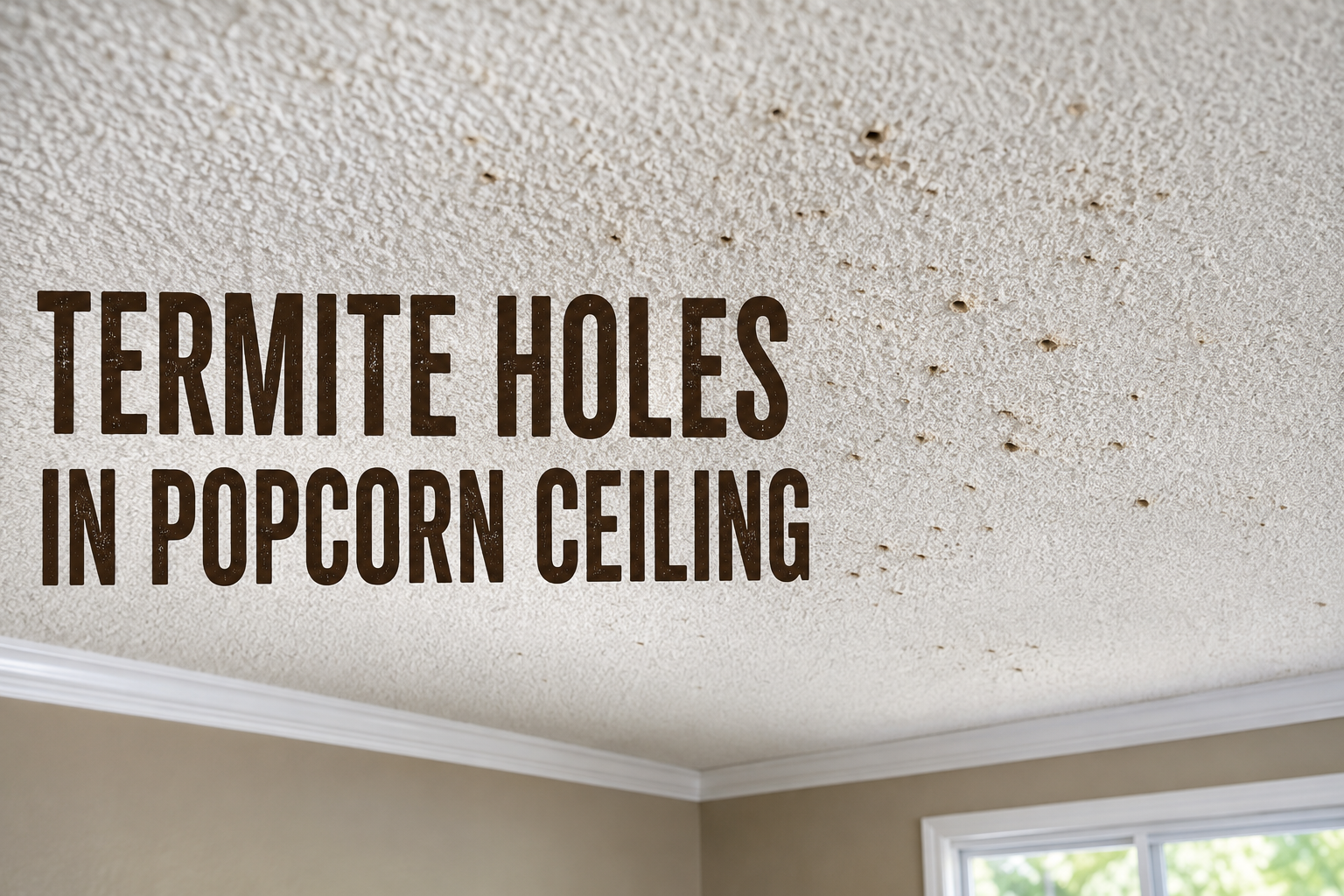
Popcorn ceilings were once a go-to choice for homeowners and builders because of their bumpy, textured look that hid imperfections and muffled sound. While this style has fallen out of fashion, many older homes still have it overhead. Unfortunately, this textured surface can also become a hiding spot for one of the most destructive household pests: termites. Because the rough texture already looks uneven and irregular, tiny termite holes in popcorn ceiling surfaces often go unnoticed until the damage becomes serious.
This guide walks through everything you need to know about identifying, understanding, and dealing with termite holes in popcorn ceiling areas of your home. From spotting the first warning signs to repairing the damage and preventing future infestations, this article covers each stage in simple, easy-to-follow language.
What Are Termite Holes and Why Do They Appear in Ceilings?
Termites feed on cellulose, a fibrous material found in wood, paper, and even some drywall components. As they tunnel through wooden joists, beams, or paper backing above a ceiling, they sometimes break through to the surface, leaving behind small exit holes. These are what most people refer to as termite holes.
Ceilings may seem like an unusual target since termites are often associated with wooden furniture, decks, or foundations. However, attics and ceiling cavities provide dark, undisturbed spaces with wood framing that termites can access relatively easily, especially if there is a moisture source nearby. Once they establish a colony above the ceiling, their feeding activity can eventually create visible openings in the plaster or drywall below, including the textured popcorn coating.
The bumpy nature of a popcorn ceiling actually works in the termites’ favor, at least temporarily. Small holes blend into the uneven texture, making early detection difficult for homeowners who aren’t specifically looking for pest activity.
Types of Termites That Can Affect Ceilings
Not all termite species behave the same way, and understanding the differences can help you figure out what you might be dealing with.
| Termite Type | Common Habitat | Likelihood of Ceiling Damage |
|---|---|---|
| Subterranean Termites | Soil, foundations, wood in contact with ground | Moderate to high if moisture reaches attic or ceiling framing |
| Drywood Termites | Dry wood, attics, roof framing | High, since they don’t need soil contact |
| Dampwood Termites | Moist or decaying wood | Lower, but possible if ceiling has water damage |
Subterranean termites typically travel from the soil through mud tubes to reach wood, so their presence in a ceiling usually indicates a long-established colony or a moisture problem in the attic. Drywood termites, on the other hand, don’t need contact with soil at all. They can fly directly into attic vents or roof gaps and begin colonizing wooden beams, which makes them more directly responsible for termite holes in popcorn ceiling surfaces in many cases.
Signs of Termite Holes in a Popcorn Ceiling
Spotting termite activity early can save you significant repair costs. Here are the most common indicators to look for:
- Small pinholes: These tiny, pepper-sized holes are often the first visible clue, usually clustered in one area rather than spread randomly.
- Frass near the holes: Frass is termite waste that looks like fine sawdust or sand. It often piles up beneath the holes on furniture, floors, or windowsills.
- Mud tubes: Subterranean termites build pencil-thin mud tunnels along walls or ceiling edges to travel safely while avoiding open air.
- Sagging or bubbling texture: As termites hollow out wood and paper backing, the ceiling surface may start to sag, bubble, or feel soft to the touch.
- Hollow sound when tapped: Gently tapping the ceiling near suspected damage may produce a hollow or papery sound instead of a solid thud.
- Discoloration: Yellowish or brownish staining can appear where moisture and termite activity overlap.
- Fine dust accumulation: A light dusting of debris on furniture or floors below, especially without an obvious source, can point to termites working above.
If you notice more than one of these signs at once, it’s a strong indication that the damage is active rather than old or cosmetic.
How to Confirm It’s Termites and Not Something Else?
Ceiling holes and imperfections aren’t always caused by termites. Before assuming the worst, it helps to rule out other common culprits.
Nail pops, for instance, happen when ceiling nails loosen over time and push slightly through the drywall, creating small round bumps or holes that can resemble termite exit points. Moisture damage from roof leaks or plumbing issues can also cause bubbling, staining, and soft spots that mimic termite symptoms.
Other insects, such as carpenter ants or wood-boring beetles, can leave similar-looking holes and frass, though the debris texture often differs slightly from termite droppings.
A simple way to start investigating at home is to use a flashlight to examine the holes closely, checking for the six-sided, pellet-shaped frass unique to drywood termites. Gently tapping the surrounding area and checking the attic side of the ceiling for tunnels or damaged wood can also provide clues. However, because termite damage can be extensive and hidden, it’s always best to bring in a licensed pest control professional to confirm the diagnosis with certainty.
Why Termite Damage in Ceilings Is Dangerous?
Termite holes in popcorn ceiling areas are more than just a cosmetic nuisance. Left untreated, termite colonies can cause serious structural problems over time.
Ceiling joists and attic beams provide critical support for the roof and upper floors of a home. As termites hollow out these structures, their load-bearing strength weakens, which can eventually lead to sagging or, in severe cases, a partial ceiling collapse. Beyond the immediate ceiling area, termite colonies rarely stay contained.
They often spread into nearby wall studs, insulation, and even flooring, turning a small localized problem into a much larger and more expensive one. The longer an infestation goes unnoticed, the more likely it is that repair costs will climb from a simple patch job to a full structural repair.
Causes and Risk Factors
Several conditions make a home more susceptible to termite activity in ceiling spaces:
- Excess moisture and humidity in attics create an inviting environment, especially for dampwood and subterranean termites.
- Wood-to-soil contact anywhere on the property can give subterranean termites an easy entry point toward the structure.
- Old or untreated wood framing lacks the chemical protection that newer construction materials often include.
- Poor attic ventilation traps moisture and heat, both of which termites are drawn to.
- Proximity to existing termite colonies, such as nearby tree stumps, woodpiles, or previously infested structures, increases risk significantly.
Homes in warm, humid climates tend to face a higher overall risk, though termites can be found in a wide range of environments depending on species and local conditions.
How Professionals Diagnose Termite Holes in Ceilings?
Pest control professionals use a combination of visual and technical methods to accurately diagnose termite damage. A thorough visual inspection is usually the starting point, where technicians examine the ceiling, attic framing, and surrounding areas for physical signs of activity. Moisture meters help detect elevated humidity levels within walls or ceiling cavities, which can indicate conditions favorable to termites even before visible damage appears.
Some professionals also use thermal imaging cameras, which can detect temperature differences caused by moisture or void spaces created by termite tunnels, even behind an intact ceiling surface. In many cases, technicians will also inspect the attic and crawl spaces directly, since these areas often reveal the true extent of an infestation more clearly than the finished ceiling below.
Treatment Options
Once termites are confirmed, treatment depends on the species involved and the severity of the infestation.
- Localized spot treatment: Effective for small, contained areas of drywood termite activity, using targeted insecticide application.
- Termiticide barriers: Commonly used for subterranean termites, creating a chemical barrier in the soil around the foundation to block access.
- Bait stations: Placed around the property to attract and eliminate termite colonies over time, often used alongside other methods.
- Fumigation: Reserved for severe or widespread drywood termite infestations, involving tenting the entire structure and using gas fumigants to eliminate the colony.
- Repair or replacement of damaged sections: Necessary once the active infestation is eliminated, to restore the ceiling’s structural integrity and appearance.
A pest control professional can recommend the most appropriate method based on the termite species, the extent of the damage, and the layout of your home.
Repairing a Popcorn Ceiling After Termite Damage
After treatment, repairing the visible termite holes in popcorn ceiling areas typically involves several steps. Damaged texture and drywall are carefully removed to expose the underlying wood framing. If the joists or beams have been significantly weakened, a contractor may need to reinforce or replace them before moving forward with cosmetic repairs.
Once structural integrity is restored, new drywall sections are installed and finished, followed by re-texturing to match the surrounding popcorn pattern as closely as possible. Painting typically follows to blend the repaired area seamlessly with the rest of the ceiling.
One important note: if your home was built before the early 1980s, the original popcorn texture may contain asbestos. Any removal or disturbance of old ceiling material should be tested and handled by professionals trained in asbestos-safe practices to avoid health risks.
Prevention Tips
Preventing future termite problems is far easier and less costly than dealing with repeated infestations. Consider the following practices:
- Schedule regular attic inspections, especially in older homes or humid climates.
- Improve attic ventilation and address any roof leaks promptly to reduce moisture buildup.
- Remove wood debris, mulch, or stumps near the foundation to eliminate easy termite access points.
- Book annual professional termite inspections, even if no visible signs are present.
- Seal cracks, gaps, and vents where termites could potentially enter the structure.
Consistent maintenance and early detection remain the most reliable defense against termite damage returning in the future.
Cost Considerations
Costs associated with termite holes in popcorn ceiling damage can vary widely depending on the extent of the infestation and the type of repair needed.
| Service | Typical Cost Range |
|---|---|
| Termite Inspection | $75 – $150 |
| Localized Spot Treatment | $200 – $500 |
| Termiticide Barrier Treatment | $1,000 – $2,500 |
| Fumigation (Whole Structure) | $1,200 – $3,000+ |
| Ceiling Patch Repair | $300 – $800 |
| Full Ceiling Replacement | $1,500 – $4,000+ |
Costs tend to increase with the size of the affected area, the accessibility of the damage, and whether structural wood replacement is required in addition to cosmetic repairs.
When to Call a Professional? vs. DIY
Minor monitoring, such as periodically checking the attic for early warning signs or keeping an eye on suspicious ceiling spots, can reasonably be done on your own.
However, certain red flags should prompt an immediate call to a licensed pest control company: visible mud tubes, sagging ceiling sections, active swarms of winged termites indoors, or any sign of structural weakness.
Attempting to treat or repair significant termite damage without professional guidance can lead to incomplete treatment, allowing the colony to survive and cause further harm.
Frequently Asked Questions (FAQ)
Can termites really live in a ceiling? Yes. Termites can access ceiling framing through attics, roof gaps, or moisture-damaged wood, making ceilings a realistic target for infestation.
How fast does termite damage spread in ceilings? This depends on the colony size and species, but damage can progress from minor to structurally significant over several months to a few years if left untreated.
Are popcorn ceilings more vulnerable to termites? Not inherently more vulnerable, but their textured surface can mask early signs of damage, allowing infestations to go undetected longer.
How much does it cost to fix termite holes in a ceiling? Costs typically range from a few hundred dollars for small patch repairs to several thousand dollars for extensive structural repair and full ceiling replacement.
Is it safe to remove popcorn ceiling myself? Only if the ceiling has been tested and confirmed free of asbestos, particularly in homes built before the early 1980s. Otherwise, professional removal is strongly recommended.
Conclusion
Termite holes in popcorn ceiling surfaces are easy to overlook but can signal a much larger problem hiding above your head. Recognizing early signs such as pinholes, frass, sagging texture, or hollow sounds can make the difference between a simple repair and a costly structural overhaul.
By understanding the causes, confirming the diagnosis with a professional, choosing the right treatment, and following preventive maintenance practices, homeowners can protect both the appearance and the structural safety of their homes for years to come. Acting early, rather than waiting for damage to worsen, remains the most effective strategy against termite infestations.
Related Articles
How to Clean Mold Under Sink: Complete Step-by-Step Guide
Is Ceiling Paint Different From Wall Paint? Complete Guide
How to Flush Toilet When Water Is Off? Easy Manual Methods That Work
How to Unclog a Kitchen Sink: 8 Easy DIY Methods That Actually Work