


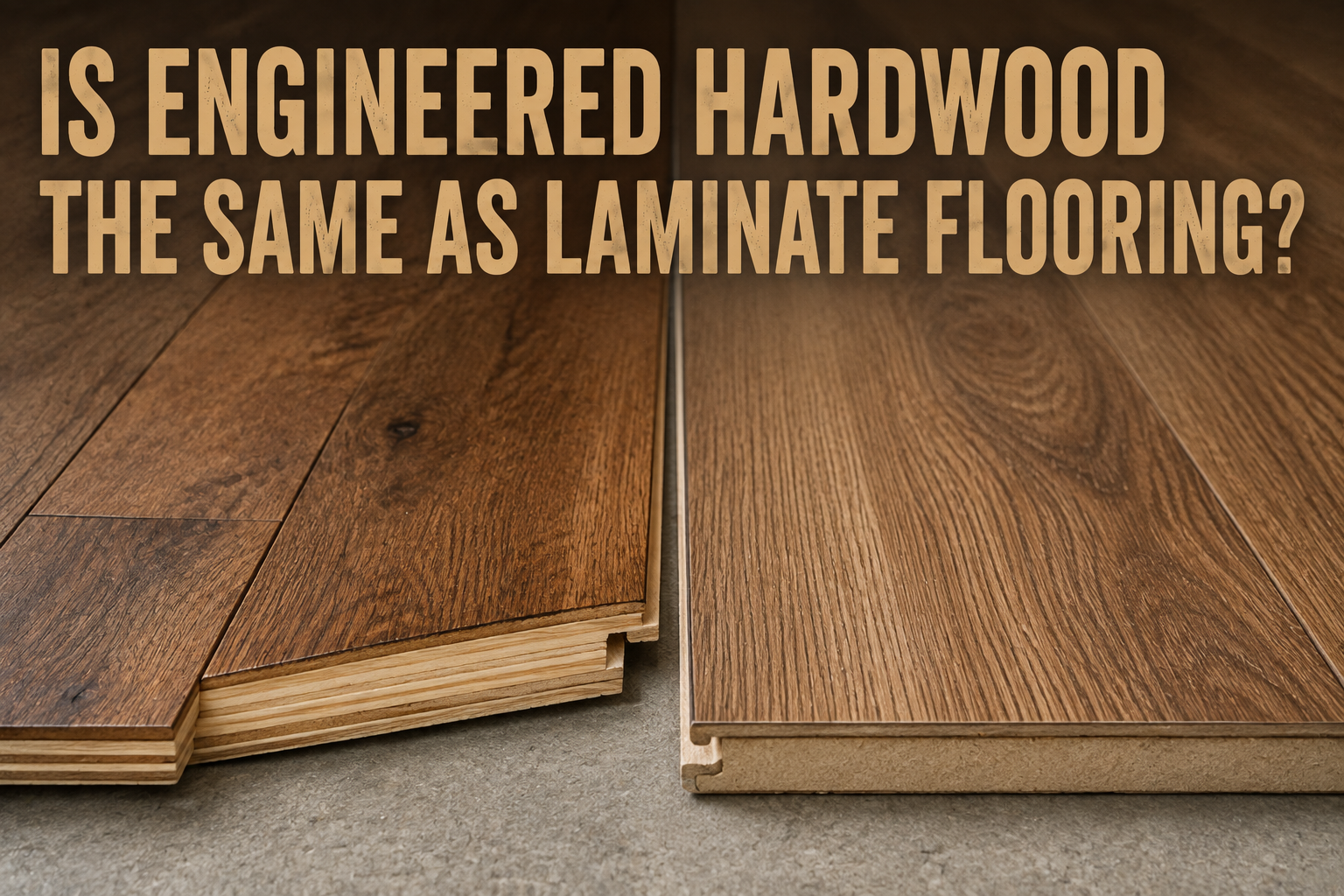
Walk into almost any flooring showroom and you’ll hear the terms “engineered hardwood” and “laminate flooring” tossed around like they mean the same thing. They don’t, but the confusion is understandable. Both come in wide wood-look planks, both click together during installation, and both can look strikingly similar to natural hardwood from a few feet away. This visual overlap is exactly why so many homeowners search for a straight answer to one simple question: is engineered hardwood the same as laminate flooring?
The short answer is no. Engineered hardwood is built around a layer of genuine wood, while laminate is a printed image of wood sitting on top of compressed fiberboard. That single difference in construction ripples out into everything else — how each floor feels underfoot, how long it lasts, how it handles water, what it costs, and even how it affects your home’s resale value.
This guide is written for homeowners, renters, and first-time buyers who are standing in the flooring aisle (physically or mentally) trying to figure out which option actually fits their space, budget, and lifestyle. By the end, you’ll understand not just that engineered hardwood and laminate are different, but exactly why those differences matter for your specific situation.
Quick Answer: Engineered hardwood has a real wood veneer over a plywood or high-density fiberboard core, so it can be lightly sanded and refinished once or twice over its lifespan. Laminate flooring has no real wood at all — it’s a high-resolution photograph of wood sealed under a hard-wearing plastic layer, and once it’s damaged, it has to be replaced rather than refinished.
What Is Engineered Hardwood?
Definition and Composition
Engineered hardwood is a flooring product made of multiple layers of wood bonded together under heat and pressure. The top layer, often called the wear layer or veneer, is a thin slice of genuine hardwood — the same species you’d find in solid wood flooring. Beneath that sits a core made of several layers of plywood or high-density fiberboard (HDF), arranged in a cross-grain pattern that gives the plank extra stability.
Because the core layers run in different directions, engineered hardwood resists the warping and gapping that solid wood floors can suffer from when humidity levels shift. This makes it a practical choice in climates or rooms where solid hardwood might struggle.
How It’s Manufactured
Manufacturing starts with peeling or slicing thin sheets of hardwood veneer from logs. These sheets are graded for color and grain consistency, then bonded onto a pre-built core using strong adhesives and high pressure. The plank is then sanded, and a protective finish — usually a UV-cured urethane or aluminum oxide coating — is applied to guard against scratches and everyday wear. Finally, the edges are milled with a tongue-and-groove or click-lock profile so the planks can be joined during installation.
Common Wood Species Used
The veneer layer can be made from a wide variety of species, each with its own look and hardness level. Some of the most common include:
- Oak — durable, classic grain pattern, widely available
- Walnut — rich, dark tones with a more contemporary feel
- Maple — light, subtle grain, good for bright or minimalist spaces
- Hickory — highly durable with dramatic color variation
- Birch — softer wood, smooth grain, budget-friendly option among real woods
Where It’s Typically Used
Engineered hardwood is popular in living rooms, bedrooms, dining rooms, and hallways — essentially anywhere a homeowner wants the warmth and authenticity of real wood. It’s also increasingly used in kitchens, since its layered construction handles minor humidity changes better than solid hardwood, though standing water is still a concern.
What Is Laminate Flooring?
Definition and Composition
Laminate flooring is a synthetic product designed to mimic the appearance of wood, stone, or tile without using any of those natural materials on its surface. It’s built from four main layers: a bottom backing layer for stability and moisture resistance, a core layer of high-density fiberboard, a decorative layer that’s a photographic image of wood grain, and a top wear layer made of a clear, hard-wearing resin such as melamine or aluminum oxide.
Because the visible “wood” is actually a printed photograph, laminate can replicate almost any wood species, color, or even exotic finishes that aren’t naturally available, all at a lower price point.
How It’s Manufactured
Laminate production begins with the fiberboard core, which is manufactured under high pressure to be dense and stable. The photographic decorative layer is then fused to the core using heat and pressure, followed by the protective wear layer on top. This entire sandwich is pressed together so tightly that the layers become essentially inseparable, which is part of why laminate is so resistant to scratching and fading.
Design Styles
Laminate’s biggest strength is variety. Because the surface pattern is printed rather than natural, manufacturers can produce:
- Wood-look planks in oak, hickory, walnut, or exotic species
- Tile-look laminate with grout-line patterns
- Stone-look laminate resembling slate or marble
- Textured finishes that mimic hand-scraped or wire-brushed wood
Where It’s Typically Used
Laminate is a go-to for high-traffic areas like hallways, living rooms, home offices, and basements, and it’s especially popular in rental properties and budget renovations. Newer waterproof laminate lines have also made their way into kitchens and even bathrooms, though this depends heavily on the specific product’s water rating.
Key Differences at a Glance
For anyone short on time, here’s a side-by-side comparison table answering the core question, is engineered hardwood the same as laminate flooring, in a single glance.
| Feature | Engineered Hardwood | Laminate Flooring |
|---|---|---|
| Material | Real wood veneer over plywood/HDF core | Printed image layer over fiberboard core |
| Appearance | Natural wood grain, unique per plank | Consistent, repeatable printed pattern |
| Durability | Moderate to high; depends on wear layer thickness | High scratch resistance from resin wear layer |
| Lifespan | 20–30+ years with care | 10–20 years |
| Water Resistance | Moderate; not fully waterproof | Varies; some waterproof options available |
| Refinishing | Can be sanded/refinished 1–2 times | Cannot be refinished; must be replaced |
| Installation | Click-lock, glue-down, or nail-down | Mostly click-lock, floating installation |
| Cost (per sq. ft.) | $4–$12+ | $1–$5 |
| Resale Value Impact | Generally positive, seen as “real wood” | Neutral to slightly lower buyer appeal |
Appearance & Feel
Real Wood Grain vs. Printed Image
One of the clearest distinctions between the two comes down to authenticity. Engineered hardwood’s surface is genuine wood, so every plank carries the natural imperfections, grain variation, and color depth that only real timber can produce. Laminate, on the other hand, uses a high-resolution photograph of wood grain. Modern printing technology has gotten remarkably good, and at a glance, many laminate floors can pass for the real thing — but the pattern often repeats across planks in a way that real wood never does.
Texture and Underfoot Feel
Engineered hardwood tends to feel slightly warmer and softer underfoot, a quality that comes from the natural wood fibers in the top layer. Laminate feels harder and cooler, since you’re essentially standing on compressed fiberboard sealed under plastic resin. Some higher-end laminate lines add embossed textures that mimic wood grain to the touch, which narrows this gap but doesn’t fully close it.
Authenticity and Natural Variation
Because no two trees are identical, engineered hardwood planks show subtle differences in tone and grain from piece to piece, giving a floor visual depth and a sense of natural randomness. Laminate’s printed pattern is designed to look varied, but manufacturers typically work from a limited set of repeating images, so a sharp eye can sometimes spot the same grain pattern reappearing across a large room.
Durability & Lifespan
Scratch and Dent Resistance
Laminate generally has the edge when it comes to surface scratches, thanks to its tough resin wear layer, which is often rated using the AC (Abrasion Class) system — higher AC ratings mean better resistance to scuffs and scratches. Engineered hardwood’s wood surface is more prone to scratching and denting from heavy furniture, pet claws, or dropped objects, though a thicker veneer with a durable finish can hold up well.
Wear Layer Comparison
The wear layer is the protective top coat on both products, but it functions differently. On engineered hardwood, the wear layer is a finish (often polyurethane or aluminum oxide) applied over the real wood veneer, and its thickness — combined with the veneer’s own thickness — determines how many times the floor can be sanded down and refinished. On laminate, the wear layer is a hard resin bonded directly to the printed design layer, and once it’s breached or worn through, there’s no wood underneath to sand or repair.
Expected Lifespan
With proper care, engineered hardwood can last anywhere from 20 to 30 years or more, especially if it’s refinished periodically. Laminate flooring typically lasts 10 to 20 years, depending on foot traffic and the quality of the product. Neither figure is set in stone, but they give a useful baseline for planning a renovation budget over the long term.
How Household Traffic and Pets Affect Longevity
Homes with children, large pets, or heavy foot traffic put more strain on flooring regardless of type. Laminate’s scratch-resistant surface often performs better against pet claws in the short term, but because it can’t be refinished, deep gouges or moisture damage mean full replacement. Engineered hardwood may show wear sooner in high-traffic zones, but a sand-and-refinish job can restore its appearance without tearing out the whole floor.
Water & Moisture Resistance
Engineered Hardwood’s Moisture Tolerance
Engineered hardwood handles humidity better than solid hardwood thanks to its cross-layered core, but it’s still real wood at its surface, which means standing water, leaks, or high humidity for extended periods can cause warping, cupping, or staining. It’s generally considered moisture-resistant rather than waterproof.
Laminate’s Water Resistance
Traditional laminate flooring is vulnerable to swelling if water seeps into the seams between planks, since the fiberboard core absorbs moisture readily. However, the flooring industry has responded with waterproof and water-resistant laminate lines that use denser cores and sealed edges, making them a viable option for moisture-prone areas — though it’s important to check a specific product’s water rating rather than assuming all laminate is waterproof.
Best and Worst Rooms for Each
| Room | Engineered Hardwood | Laminate Flooring |
|---|---|---|
| Living Room / Bedroom | Excellent choice | Excellent choice |
| Kitchen | Good, with care around spills | Good, especially waterproof lines |
| Bathroom | Not recommended | Only if rated waterproof |
| Basement | Not recommended (moisture risk) | Good, especially waterproof lines |
| Laundry Room | Not recommended | Only if rated waterproof |
Installation Process
Installation Methods
Engineered hardwood can be installed using click-lock floating methods, glued directly to the subfloor, or nailed/stapled down, depending on the product and subfloor type. Laminate is almost always installed as a floating floor using a click-lock system, where planks snap together without being attached to the subfloor beneath.
DIY-Friendliness
Laminate is widely considered the more beginner-friendly option. Its click-lock floating installation doesn’t require nails, glue, or specialized tools, making it a popular weekend DIY project. Engineered hardwood can also be installed as a floating floor, but glue-down or nail-down methods require more skill and equipment, which often means hiring a professional.
Subfloor Requirements
Both flooring types need a flat, clean, and dry subfloor for best results. Engineered hardwood is somewhat more forgiving over concrete or radiant heating systems (always check manufacturer specifications), while laminate typically requires a foam or felt underlayment to cushion the floating planks and reduce noise.
Installation Time and Cost
Because laminate installation is simpler, it generally takes less time and costs less in labor, especially for DIY installers. Engineered hardwood installation, particularly glue-down or nail-down methods, takes longer and often costs more in professional labor fees, though the floating click-lock version of engineered hardwood narrows this gap considerably.
Maintenance & Cleaning
Daily and Weekly Care Tips
Both flooring types benefit from regular sweeping or vacuuming to remove grit that can scratch the surface, along with occasional damp mopping using a manufacturer-approved cleaner. Doormats at entrances and felt pads under furniture legs go a long way in protecting either floor from scratches and dents.
Products to Avoid
Steer clear of steam mops, excessive water, and harsh ammonia-based or abrasive cleaners on both engineered hardwood and laminate, since these can dull the finish or seep into seams and cause swelling. Wax-based cleaners should also be avoided unless specifically recommended by the manufacturer.
Refinishing and Repair
This is where engineered hardwood clearly separates itself from laminate. Because it has a genuine wood veneer, engineered hardwood can typically be lightly sanded and refinished one to two times over its life, allowing homeowners to remove scratches, restore shine, or even change the stain color. This refinishing ability is a major reason people ask, is engineered hardwood the same as laminate flooring — because laminate simply doesn’t offer this option.
What Happens When Laminate Gets Damaged
Since laminate’s surface is a printed layer rather than real material, sanding it would simply remove the image and expose the fiberboard core underneath. Damaged laminate planks are usually addressed by replacing the individual plank (if the flooring was installed with spares in mind) or, in more extensive cases, replacing sections of the floor entirely.
Cost Comparison
Material Cost Per Square Foot
Laminate flooring is generally the more budget-friendly option, typically ranging from about $1 to $5 per square foot for materials. Engineered hardwood costs more, usually falling between $4 and $12 or higher per square foot, depending on the wood species, veneer thickness, and finish quality.
Installation Cost
Labor costs follow a similar pattern. Laminate installation labor tends to run lower because the floating click-lock method is faster and requires less specialized skill. Engineered hardwood installation, especially glue-down or nail-down methods, often costs more in labor due to the additional time and expertise involved.
Long-Term Cost Considerations
While laminate wins on upfront price, it’s worth factoring in the full lifespan. Since laminate can’t be refinished, it will likely need full replacement sooner. Engineered hardwood’s higher initial cost can be offset over time by its ability to be refinished rather than replaced, potentially making it more cost-effective over a 20-to-30-year horizon.
Budget-Friendly Tips
- Compare per-square-foot pricing including underlayment and trim
- Ask about remnant or discontinued lines for savings on either material
- Factor in labor costs, not just material costs, when comparing quotes
- Consider engineered hardwood with a thinner veneer for a lower price point if refinishing isn’t a priority
Environmental Impact
Sustainability of Engineered Hardwood
Engineered hardwood uses less solid wood than traditional hardwood flooring since only a thin veneer layer is real timber, making it a somewhat more resource-efficient use of hardwood trees. Sourcing from responsibly managed forests further reduces its environmental footprint.
Laminate’s Material Makeup and Recyclability
Laminate is made primarily from wood byproducts and resins, and some manufacturers now offer laminate with recycled content in the core layer. However, because laminate combines several bonded materials, it can be more difficult to recycle at the end of its life compared to natural wood products.
Certifications to Look For
When sustainability matters to your purchasing decision, look for labels such as FSC (Forest Stewardship Council) certification, which indicates responsibly sourced wood, and GREENGUARD certification, which indicates low chemical emissions — both are relevant when shopping for either engineered hardwood or laminate.
Resale & Home Value
Buyer Perception
Real estate agents and homebuyers often perceive engineered hardwood as a premium, “real wood” feature, similar to how they view solid hardwood floors. Laminate, while attractive and functional, is generally perceived as a budget-friendly alternative rather than a luxury upgrade.
Impact on Property Value
Because of this perception gap, engineered hardwood tends to have a more favorable impact on resale value, particularly in higher-end markets where buyers expect natural materials. Laminate rarely hurts a home’s value, but it typically doesn’t add the same premium that engineered hardwood can.
Real Estate Market Preferences
Preferences can vary by region and price point. In starter homes or rental-focused markets, laminate’s durability and low maintenance may be seen as a practical plus. In move-up or luxury markets, engineered hardwood is often expected as a baseline feature in main living areas.
Which One Should You Choose?
Best for High-End or Long-Term Homes
If you’re planning to stay in your home for decades, want the authentic look and feel of real wood, and are comfortable with a higher upfront investment, engineered hardwood is generally the stronger long-term choice — especially in living rooms, bedrooms, and formal spaces.
Best for Budget, Rental, or High-Moisture Areas
If you’re working with a tighter budget, furnishing a rental property, or flooring a basement, laundry room, or another moisture-prone space, laminate (particularly a waterproof line) is often the more practical and cost-effective solution.
Quick Decision Checklist
- Want real wood underfoot and the option to refinish later? Choose engineered hardwood.
- Need the most budget-friendly option? Choose laminate.
- Flooring a basement or moisture-prone room? Choose waterproof laminate.
- Planning to sell your home in a higher-end market? Choose engineered hardwood.
- Doing a DIY weekend project? Choose laminate.
- Want a floor that can be sanded and restyled over time? Choose engineered hardwood.
Frequently Asked Questions (FAQ)
Is engineered hardwood the same as laminate flooring? No. Engineered hardwood has a genuine wood veneer on top of a plywood or fiberboard core, while laminate flooring uses a printed photographic layer of wood grain over a fiberboard core with no real wood present.
Can laminate be mistaken for real wood? Visually, yes — especially higher-end laminate with embossed textures and realistic printing. However, the underfoot feel, weight, and inability to be refinished usually give it away on closer inspection.
Which lasts longer, engineered hardwood or laminate? Engineered hardwood typically lasts longer, often 20 to 30 years or more with proper care and periodic refinishing, compared to laminate’s typical 10-to-20-year lifespan.
Can either flooring be installed over radiant heating? Many engineered hardwood and laminate products are compatible with radiant heat systems, but this depends entirely on the specific product, so always check the manufacturer’s specifications before installation.
Which is better for pets and kids? Laminate’s tough resin wear layer often resists scratches from claws and toys better in the short term, but engineered hardwood’s ability to be sanded and refinished means surface damage isn’t necessarily permanent.
Conclusion
So, is engineered hardwood the same as laminate flooring? Not even close, despite how similar they might look in photos or showroom displays. Engineered hardwood is built around a layer of genuine wood, giving it a natural look, a warmer feel underfoot, and the ability to be sanded and refinished as it ages. Laminate flooring, by contrast, relies on a printed image of wood sealed under a durable resin layer, making it more affordable, highly scratch-resistant, and often easier to install — but not repairable in the same way once it’s damaged.
Neither option is universally “better.” The right choice comes down to your priorities: budget, room location, moisture exposure, how long you plan to stay in your home, and how important the feel of real wood is to you. Engineered hardwood tends to make sense for long-term homeowners who want an authentic, refinishable floor in main living spaces, while laminate is often the smarter pick for budget-conscious renovations, rental properties, and moisture-prone rooms.
Whichever direction you lean, take the time to compare samples in person, check water-resistance ratings carefully, and get quotes that include both materials and installation labor. A well-informed choice today will save you both money and headaches for years to come.
Related Articles
How Long Does It Take To Do A Bathroom Renovation? Full Timeline Guide
Storm Damage Roof Repair: The Complete Homeowner’s Guide
What Nap Roller Is Best for Ceilings? Guide to Choosing the Right Roller Nap Size