


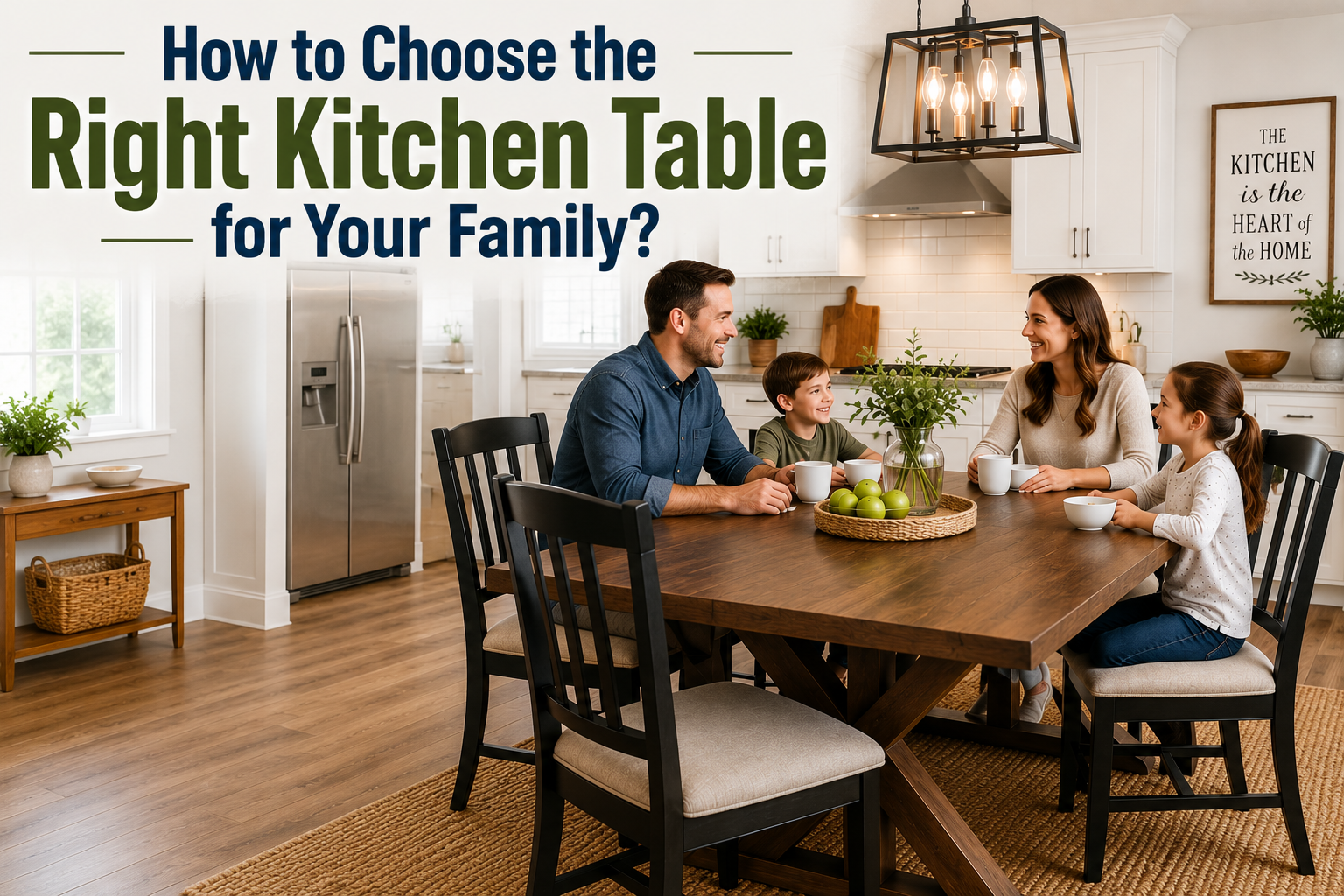
Choosing the right kitchen table starts with two questions: how much room do you have, and how many people sit down to eat? Get those right and the rest falls into place. As a rule, allow about 24 inches of table edge per person and leave at least 36 inches of clear space around the table so chairs pull out and people can walk past. Then pick a shape that suits your room and a material tough enough for daily family life. This guide walks you through each step in order.
Start with your space, not the table
The most common reason a table gets returned is not a defect. It is size. A table that looked right online swallows the room, chairs scrape the wall, and nobody can walk behind a seated child. So before you fall for a finish or a leg style, measure.
Measure the length and width of your dining area. Then subtract clearance from both dimensions to find the largest table that will actually work. You want at least 36 inches between the table edge and the nearest wall or furniture on every side. That gap is what lets a chair slide out and a person squeeze past while someone is seated. In a tight kitchen you can drop to about 30 inches, but movement gets cramped. In a busy, open-plan space, aim for 42 to 48 inches so the walkway stays clear.
Before you buy, map the table’s footprint on the floor with painter’s tape, and tape out the chairs pulled out too. Standing inside that outline tells you more in five minutes than any product photo. It is the single best way to avoid buying a table that is too big.
Match the size to your family
Once you know your maximum footprint, size the table to the people who use it. The guideline is simple: give each person about 24 inches of table edge so they have room for a plate, a glass, and their elbows without bumping a neighbor. A little less works for young kids, a little more feels generous for adults.
Here is roughly how seating maps to table size:
| Seats | Rectangular length | Round diameter |
| 4 people | 48 inches | 36 to 44 inches |
| 6 people | 60 to 72 inches | 54 to 60 inches |
| 8 people | 78 to 96 inches | 60 inches or more |
| 10 people | 96 to 108 inches | not practical |
Standard dining tables are about 30 inches tall and 36 to 42 inches wide, which pairs with normal chairs that have a seat height around 18 inches. Counter-height (36 inches) and bar-height (42 inches) tables are a different category and need matching stools, so stick with standard height for everyday family meals unless you have a specific reason not to.
If your family size changes often, say you host grandparents on weekends or expect more kids over time, an extendable table with a leaf gives you a smaller everyday footprint and extra seats when you need them. It is the most flexible choice for a growing household.
Pick a shape that fits your room and your family
Shape decides how many people fit, how the table feels, and how well it sits in your room. Each of the common shapes has a clear best use.
Rectangular
The most popular shape, and the most practical for families. It seats the most people per square foot, fits long or open rooms well, and can push against a wall when space is tight. If you have four or more people and a fairly standard room, this is usually the safe pick.
Round
Round tables make conversation easy because everyone can see everyone, and there are no sharp corners, which is a real plus with toddlers running around. They suit smaller or square rooms and cozy nooks. The trade-off is that they seat fewer people as they grow, since a very large round table puts the center out of reach.
Square
A square table is a neat fit for a compact space or a casual dining nook and seats four comfortably. For a smaller family it can feel more intimate than a rectangle. Push two together when you need to expand for a gathering.
One more shape point that matters for families: the base. Pedestal and trestle tables have no legs at the corners, so you can slide in an extra chair or a high chair without fighting a table leg. That flexibility is genuinely useful when seating shifts from night to night.
Choose a material that survives family life
With kids, the table takes a beating: spills, homework, craft glue, hot plates, and the occasional fork dragged across the top. So durability and easy cleaning should sit near the top of your list, not the bottom. Here is how the common materials hold up.
- Solid hardwood (oak, maple, walnut): warm, long-lasting, and repairable, since scratches can be sanded and refinished. It needs basic care and a good sealed finish, but a solid wood table can last for generations.
- Ceramic and sintered stone: among the toughest surfaces you can buy. They shrug off scratches, stains, and heat, and wipe clean with a cloth, which makes them excellent for busy families who do not want to fuss.
- High-pressure laminate: affordable, non-porous, and easy to clean, with strong scratch resistance. It cannot be refinished, so treat it as a table you may replace down the road, but it is a smart pick on a budget.
- Glass: light and easy to wipe, and good for making a small room feel open. It shows every fingerprint and crumb, though, and with children you want tempered safety glass and rounded corners.
- Marble: beautiful but demanding. It stains and etches easily, so it needs coasters and careful cleaning, which is a lot to ask of a table used by young kids.
For most families, sealed hardwood, ceramic or sintered stone, and quality laminate give the best balance of toughness and easy care. For a deeper look at how each surface wears over time, the buying guides from a retailer like Ethan Allen walk through finishes and construction in detail.
Think about how your family really uses the table
A kitchen table is rarely just for meals. It is where kids do homework, where crafts happen, where you work from home, and where everyone lands during a party. Picturing your real routine helps you choose well.
If little ones are part of daily life, lean toward rounded edges, a stable wide or pedestal base that will not tip when a child leans on it, and a surface you can wipe without worry. Add felt pads under the legs to protect your floor, and think about whether the chairs are easy for small hands and short legs to manage. If your table doubles as a workspace, a matte, non-reflective surface is kinder for reading and screens than glossy glass.
Budget fits in here too. A table is an everyday staple you will keep for years, so it is worth balancing the upfront price against how long it will last. A slightly pricier solid wood or stone table that survives a decade of family use can be the cheaper choice over time than a bargain top that wears out fast.
Bring it all together
Choosing the right table is really a short sequence of decisions, each one narrowing the field:
- Measure your room and subtract 36 inches of clearance on every side to find your maximum table footprint.
- Count the people who eat together and size the table at about 24 inches of edge per person.
- Pick a shape: rectangular for most families, round for small or square rooms and young kids, square for compact spaces.
- Choose a family-tough, easy-clean material like sealed wood, ceramic, sintered stone, or quality laminate.
- Check the details: standard 30-inch height, a stable base, rounded edges for kids, and an extendable leaf if your numbers change.
Work through those five steps and you will end up with a table that fits your room, seats your family in comfort, and holds up to everything family life throws at it.
Conclusion
The right kitchen table for your family is the one sized to your room and your household first, and styled second. Measure your space and keep 36 inches of clearance, allow about 24 inches per seat, choose a shape that suits both your room and your kids, and pick a material tough enough for daily meals, homework, and spills. Get those basics right and you will have a table that gathers your family comfortably for years.
Frequently asked questions
What size kitchen table do I need for a family of four?
A table about 48 inches long, or a round one 36 to 44 inches across, seats four comfortably. Allow around 24 inches of edge per person, and make sure you still have 36 inches of clearance around it in your room.
Is a round or rectangular table better for a family?
Rectangular seats more people and fits most rooms, so it suits larger families. Round tables make conversation easy and have no sharp corners, which is safer for young kids and better in small or square rooms.
What is the most durable table material for kids?
Ceramic and sintered stone are the toughest, resisting scratches, stains, and heat with easy wiping. Sealed hardwood is a close second and can be refinished. Quality laminate is a strong budget option.
How much space should I leave around a kitchen table?
Leave at least 36 inches between the table edge and any wall or furniture, so chairs pull out and people can walk behind seated diners. In busy, open-plan rooms, 42 to 48 inches feels more comfortable.
How tall should a kitchen table be?
Standard dining height is about 30 inches, which pairs with normal chairs that have an 18-inch seat height. Counter-height (36 inches) and bar-height (42 inches) tables need matching stools, so choose those only on purpose.
Related Articles
Are Toilet Seats Universal? Complete Sizing, Fitting & Buying Guide
Why Does My Bathroom Sink Smell Like Rotten Eggs? (Causes & Easy Fixes)
How to Get Super Glue Off a Wood Floor? Without Ruining the Finish
How to Put Up Ceiling Tiles: A Step-by-Step Guide
How Much Does Epoxy Flooring Cost? Complete 2026 Pricing Guide