


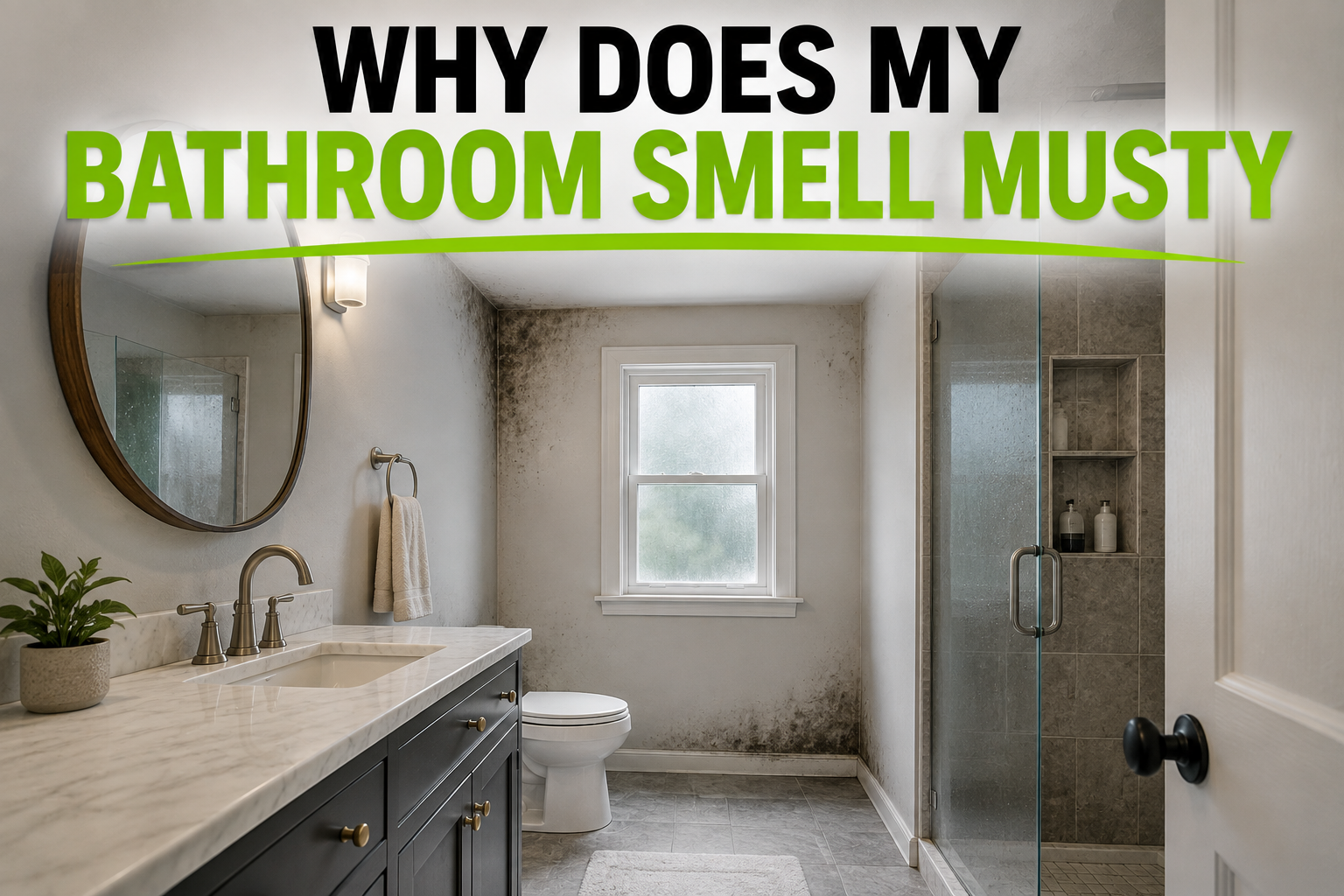
Walking into your bathroom and being greeted by a damp, stale odor is more common than most people realize, and it can be frustrating when you’ve already scrubbed every surface. If you keep asking yourself why does my bathroom smell musty, the answer usually lies in moisture that has nowhere to go. Bathrooms are naturally humid spaces because of showers, baths, and sinks, and that constant exposure to water creates the perfect environment for odor-causing growth to develop in places you can’t always see.
This smell isn’t just unpleasant; it’s often a signal that something in your bathroom needs attention, whether that’s a hidden leak, a clogged drain, or simply poor airflow. In this article, we’ll walk through the most common reasons your bathroom smells musty, how to figure out exactly where the odor is coming from, practical step-by-step fixes, and habits that will keep the smell from coming back.
What Causes a Musty Smell in the Bathroom?
There isn’t usually just one single cause behind a musty bathroom. More often, it’s a combination of moisture, poor airflow, and small maintenance issues that build up over time. Below are the most frequent culprits.
Mold and Mildew Growth
Mold and mildew thrive in warm, moist environments, and your bathroom offers exactly that. These fungi release a distinct earthy, damp odor as they grow, and they can develop in places that aren’t always obvious, such as behind the toilet, under bath mats, or inside cabinet corners where air rarely circulates.
Poor Ventilation and Trapped Humidity
If your bathroom doesn’t have a working exhaust fan or a window that opens, steam and moisture from showers linger in the air far longer than they should. This trapped humidity settles onto walls, ceilings, and fixtures, creating ideal conditions for musty odors to form and spread.
Dried-Out P-Trap (Sewer Gas Smell)
Every drain in your bathroom has a curved pipe underneath called a P-trap, which holds a small amount of water to block sewer gases from entering your home. If a sink, tub, or floor drain isn’t used often, that water can evaporate, allowing an unpleasant, musty sewage-like smell to seep into the room.
Leaky Pipes or Hidden Water Damage
A slow, hidden leak behind a wall, under the floor, or beneath the sink can quietly soak building materials for weeks before you notice any visible sign. This trapped moisture creates a persistent mustiness that cleaning the visible surfaces won’t fix.
Old or Clogged Exhaust Fan
An exhaust fan that’s covered in dust or hasn’t been cleaned in years loses much of its ability to pull moisture out of the room. Over time, this reduced airflow allows humidity to build up, contributing directly to that stale bathroom smell.
Damp Towels, Bath Mats, or Rugs
Textiles that stay damp after use are one of the most overlooked sources of bathroom odor. A bath mat that never fully dries out, or a towel left balled up on the floor, can develop a musty smell within just a day or two.
Grout, Caulk, and Tile Buildup
Grout lines and caulk around the tub or shower are porous and absorb moisture every time you bathe. Over months and years, this repeated exposure allows mildew to settle into these small crevices, and it’s often impossible to fully remove without replacing the caulk.
Drain Buildup (Hair, Soap Scum, Biofilm)
Hair, soap residue, and skin cells collect inside bathroom drains and form a slimy layer called biofilm. As this buildup decomposes, it produces a musty, sometimes sulfur-like odor that rises back up through the drain opening.
Water Damage in Walls or Subfloor
If water has seeped into drywall, insulation, or the subfloor beneath your bathroom, it can cause long-term dampness that’s difficult to detect from the surface. This type of hidden damage is one of the more serious causes of a persistent musty smell.
Washing Machine or Nearby Laundry Area
If your bathroom shares space or plumbing with a laundry area, a washing machine with a damp gasket or a lint trap full of trapped moisture can also contribute musty odors that drift into the bathroom itself.
How to Identify Where the Smell Is Coming From?
Before you can fix the problem, it helps to pinpoint the actual source. Here’s how to narrow it down room by room.
Checking Under the Sink
Open the cabinet under your sink and look for any dampness, discoloration, or soft spots on the wood. A flashlight can help you spot mold growth around the pipes that might otherwise go unnoticed.
Inspecting the Shower/Tub Caulk and Grout
Run your finger along the caulk lines and grout to check for a soft, spongy texture or dark discoloration. Discolored or crumbling caulk is often a clear sign that moisture has been trapped there for a while.
Testing the Drains One by One
Pour a cup of water down each drain in the bathroom, including ones that aren’t used often, like a floor drain. This refills the P-trap and can immediately tell you if a dry trap was the source of the smell.
Checking the Exhaust Fan and Vent
Turn on the fan and hold a piece of tissue paper near it; if the paper barely moves, the fan isn’t pulling air effectively. Dust buildup or a blocked vent duct are common reasons for weak airflow.
Looking for Hidden Leaks Behind Walls
If the smell seems to be coming from a specific wall rather than a fixture, look for subtle signs like peeling paint, warped drywall, or a slightly damp texture. In more serious cases, it may be worth using a moisture meter or calling a professional to check inside the wall.
Step-by-Step Fixes
Once you’ve identified likely sources, these fixes address each one directly.
Cleaning Mold and Mildew Safely
Use a mixture of water and mild detergent, or a diluted vinegar solution, to scrub visible mold from tile, grout, and caulk. Always wear gloves and ensure the room is ventilated while cleaning, since mold spores can become airborne during scrubbing.
Clearing and Disinfecting Drains
Remove visible hair and debris from the drain opening, then flush it with a mixture of baking soda and vinegar followed by hot water. This helps break down biofilm buildup that regular cleaning often misses.
Refilling a Dry P-Trap
Simply pour water down any drain that isn’t used regularly, such as a guest bathroom sink or floor drain, to restore the water seal. Doing this once every few weeks in low-use drains prevents the trap from drying out again.
Cleaning or Upgrading the Exhaust Fan
Remove the fan cover and vacuum out accumulated dust, then wipe down the blades with a damp cloth. If the fan is old or still weak after cleaning, consider replacing it with a higher-capacity model suited to your bathroom’s size.
Re-Caulking and Re-Grouting
Scrape out old, discolored caulk and grout using a caulk removal tool, then apply a fresh, mold-resistant sealant. This step alone can eliminate a surprising amount of lingering musty odor.
Washing and Replacing Bath Mats and Towels Regularly
Wash bath mats and towels at least once a week, and hang them fully spread out to dry between uses rather than leaving them bunched up. Replace mats that have started to smell musty even after washing, since the odor may be embedded in the fibers.
Checking For and Repairing Leaks
If you’ve spotted signs of a leak, shut off the water supply to that fixture and consult a plumber to assess the damage. Repairing the source of moisture is essential, since surface cleaning won’t resolve odors caused by ongoing water intrusion.
Prevention Tips
Once the smell is gone, these habits help keep it from returning.
| Prevention Tip | Why It Helps | How Often |
|---|---|---|
| Run the exhaust fan during and after showers | Removes humid air before it settles on surfaces | Every shower, 15–20 minutes after |
| Use a dehumidifier | Keeps overall room humidity below the level mold needs to grow | Daily, especially in humid climates |
| Wipe down wet surfaces | Prevents standing water from soaking into grout and caulk | After each use |
| Wash bath mats and towels | Stops moisture and bacteria from building up in fabric | Weekly |
| Flush unused drains with water | Keeps the P-trap seal intact | Every 2–3 weeks |
| Deep clean grout and caulk | Removes early mildew before it spreads | Monthly |
| Inspect under sinks and around the tub | Catches leaks early before major damage occurs | Monthly |
Improving Bathroom Ventilation
If your bathroom lacks a window, running the exhaust fan consistently is the most effective way to manage humidity. In bathrooms with especially poor airflow, cracking the door open after a shower can also help moisture escape faster.
Using a Dehumidifier
A small dehumidifier placed in or near the bathroom can noticeably reduce ambient moisture, particularly in homes located in humid regions. This is especially useful for bathrooms without windows or strong ventilation systems.
Daily and Weekly Cleaning Habits
A quick wipe-down of the sink, tub, and toilet area after use prevents soap scum and moisture from settling in. Pairing this with a more thorough weekly clean of grout lines and drains keeps musty odors from building up in the first place.
Keeping Surfaces Dry After Use
Squeegeeing shower walls after each use and leaving the shower curtain or door open to air out can make a significant difference. Drier surfaces mean less opportunity for mold and mildew to take hold.
Routine Drain Maintenance
Making it a habit to flush drains with hot water and occasionally use a natural cleaning solution keeps biofilm from accumulating. This simple routine prevents the slow buildup that often leads to persistent odors over time.
When to Call a Professional?
While most causes of a musty bathroom smell can be handled with regular cleaning and maintenance, some situations call for expert help.
- Visible mold covering a large area (larger than about 10 square feet) that keeps returning after cleaning
- A musty smell paired with soft, warped, or discolored walls, ceilings, or flooring
- Water stains that continue to spread despite no obvious source
- A sewage-like smell that persists even after refilling all P-traps
- Suspected leaks inside walls or under the floor that you can’t access yourself
In these cases, a licensed plumber or a mold remediation specialist can properly diagnose the underlying issue and prevent it from causing further damage to your home.
Conclusion
A musty bathroom smell almost always comes down to trapped moisture, whether that’s from poor ventilation, a dried-out drain trap, hidden mold, or a slow leak you haven’t spotted yet. The good news is that once you understand why does my bathroom smell musty, most causes are fixable with a bit of cleaning, some routine maintenance, and better airflow habits. By addressing the root cause rather than just masking the smell, you can keep your bathroom feeling fresh and clean for the long term.
Related Articles
Are Toilet Seats Universal? Complete Sizing, Fitting & Buying Guide
Why Does My Bathroom Sink Smell Like Rotten Eggs? (Causes & Easy Fixes)
Why Does My Bathroom Sink Smell Like Rotten Eggs? (Causes & Easy Fixes)