


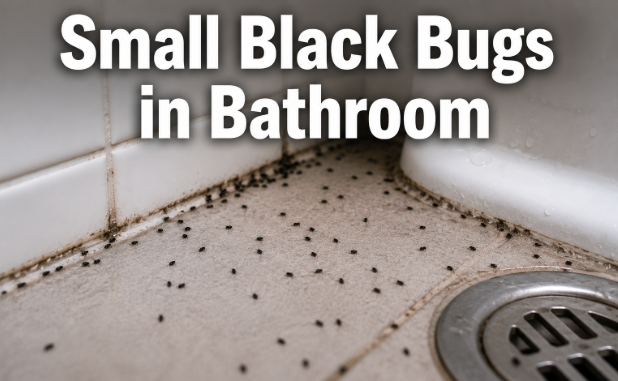
The small black bugs in your bathroom are almost always one of four things: drain flies, springtails, fungus gnats, or small beetles like carpet beetles. All four are drawn to the same thing, the steady moisture a bathroom provides, and each one has a distinct way of moving that gives it away in seconds. Figure out which one you have, and the fix usually takes less than a weekend.
What are the small black bugs in your bathroom?
Watch how the bug moves before you do anything else. Movement is the single fastest way to sort these bugs into the right group, faster than trying to match color or size under bathroom lighting.
Flies flutter or hover. Drain flies flutter weakly and rest on walls with a fuzzy, moth-like look. Fungus gnats hover in place like tiny mosquitoes. Jumpers are almost always springtails, which spring several inches into the air the moment you touch them, even though they have no wings. Slow crawlers with a hard shell are usually carpet beetles or a related small beetle.
Fast crawlers that dart for cover the second the light comes on are worth a closer look, since that is classic cockroach behavior, including in young roaches.
| Bug | How it moves | Size | Color |
| Drain flies | Flutter weakly, short hops when disturbed | 1/16 to 1/5 inch | Gray to dark, fuzzy and moth-like |
| Springtails | Jump several inches when touched | 1/16 to 1/8 inch | Dark gray, black, or white |
| Fungus gnats | Hover and fly like tiny mosquitoes | 1/12 to 1/8 inch | Black with long legs |
| Carpet beetles | Crawl slowly, rarely fly indoors | 1/12 to 3/16 inch | Black or mottled, hard shell |
| Baby cockroaches | Scurry fast, avoid light | About 1/4 inch | Dark brown to black |
Are they drain flies?
Drain flies, also called moth flies, are the most common tiny black bugs found in bathrooms. They are small, about 1/16 to 1/5 inch long, with a fuzzy, grayish body and wings that make them look like miniature moths. According to Clemson University’s Home & Garden Information Center, the complete life cycle from egg to adult can finish in as little as two weeks, which is why a small problem can turn into a swarm fast.
These flies lay their eggs in the thin layer of organic sludge that builds up inside drains, overflow pipes, and rarely used P-traps. The larvae feed on that gunk for about a week to ten days before becoming adults. You will usually spot the adults resting on the shower wall during the day and hovering near the sink or tub drain in the evening.
A drain that has not been used in weeks, like a guest bathroom sink, is a common source too. The water seal in the P-trap dries out, and that opens a path for flies from deeper in the plumbing.
Are they springtails?
Springtails are the tiny black bugs that jump instead of fly. They measure about 1/16 to 1/8 inch and get their name from a forked structure under the abdomen called a furcula, which snaps down and launches them into the air when they feel threatened. The University of Minnesota Extension notes that large numbers of springtails almost always point to a moisture problem, since the insects need very high humidity or standing water to survive.
Unlike drain flies, springtails do not breed inside your plumbing. They live in damp soil, mulch, and organic debris outside, then wander in through gaps around pipes, windows, and foundations when the ground outside dries out. Once inside, they head straight for the dampest spot in the house, which in most homes is the bathroom.
A springtail sighting is a moisture signal, not a plumbing problem. Chasing the humidity source solves it faster than chasing the bugs.
Are they fungus gnats?
Fungus gnats look like miniature mosquitoes, with long legs, thin antennae, and a slow, hovering flight pattern. They measure about 1/12 to 1/8 inch and show up most often in bathrooms that have houseplants nearby, since the larvae live in wet potting soil rather than in drains.
A female fungus gnat can lay well over a hundred eggs in the top inch of moist soil, and adults will drift into the bathroom looking for humidity or light, especially near a window. Letting the top two inches of soil dry out between waterings usually breaks the cycle within a couple of weeks.
Are they carpet beetles or another small beetle?
Small beetles move differently from everything else on this list. They crawl slowly, have a hard, oval shell, and rarely fly indoors. Carpet beetles are the most common culprit, measuring about 1/12 to 3/16 inch as adults.
Finding an adult carpet beetle in the bathroom usually does not mean it is breeding there. Adults wander toward light and can travel a surprising distance from where the larvae are actually feeding, often in a nearby closet, on stored wool or silk, or in accumulated lint behind baseboards. One beetle is a good reason to check those areas, not the bathroom itself.
Could it be a baby cockroach instead?
Occasionally, what looks like a small black bug in the bathroom sink turns out to be a young cockroach rather than a drain fly. Baby cockroaches, called nymphs, are dark and wingless, run fast, and dash for cover the instant a light turns on, which is the biggest tell. Drain flies, springtails, and fungus gnats do not react to light that way.
If you see a bug sprinting toward a gap under the cabinet or behind the toilet rather than fluttering, jumping, or hovering, treat it as a possible roach and check under the sink, around the water heater, and along baseboards for others. A single confirmed nymph is worth a closer look at the rest of the bathroom and any connected utility spaces.
Why do these bugs keep showing up in your bathroom?
Every bug on this list needs the same two things: moisture and organic matter to feed on. A bathroom supplies both without much effort. Showers leave standing water in tile grout and behind caulk. Drains collect hair, soap scum, and skin cells that form a sludge layer. Poor ventilation keeps humidity elevated for hours after someone showers, and that is exactly the range these insects thrive in.
A single bug or two is rarely worth worrying about. A repeat sighting over several days, especially in the same spot, points to an ongoing moisture or organic buildup issue somewhere close by, whether that is a slow leak, a dirty drain, or an overwatered plant.
Bathrooms with poor airflow tend to have the worst problems, since steam from a shower can take an hour or more to clear without a working exhaust fan. Older homes with cast iron or galvanized drain pipes also build up sludge faster than newer plastic piping, because the rougher interior surface gives organic material more to cling to.
How to get rid of drain flies
Clearing drain flies means removing the sludge they breed in, not just killing the adults you can see. Start by confirming the source drain. Cover each drain with a strip of clear tape overnight, sticky side down, leaving a small gap for airflow.
In the morning, check which piece of tape caught flies trying to get out. Once you know the drain, scrub the inside of the pipe with a stiff bottle brush down as far as it reaches, since this is where most of the sludge builds up and bleach alone will not touch it.
Follow with an enzymatic drain cleaner, which digests the organic film rather than just masking it, and repeat every few days for a week to break the life cycle completely. For a rarely used drain, run water through it for about a minute once a week so the P-trap stays sealed.
How to get rid of springtails
Because springtails come from outside moisture, not from your pipes, the fix is about drying the space out rather than cleaning a drain.
Run the bathroom exhaust fan during and for at least twenty minutes after every shower, and leave the door open when you can to help humidity escape.
Fix any dripping faucet, running toilet, or leaking supply line right away, since even a small drip is enough to sustain a population. Check the caulk around the tub and shower for gaps or cracks, and reseal with mold-resistant silicone where it has failed.
A dehumidifier helps in bathrooms that stay humid even with good ventilation. In the meantime, a vacuum picks up visible springtails quickly, and a wipe-down with a household cleaner removes the mold and mildew film they feed on.
How to keep small black bugs from coming back
A few habits keep every one of these bugs from reestablishing once you have cleared them out.
- Run the exhaust fan during and after every shower, and keep it clean so it moves enough air.
- Dry the tub, shower walls, and sink area with a squeegee or towel after use.
- Clean drains monthly with a brush and an enzymatic cleaner, even if you have not seen bugs.
- Fix leaks as soon as you notice them, including slow ones under the sink.
- Keep bathroom humidity below 50 percent, using a dehumidifier if the room has no window.
- If you keep plants in the bathroom, let the topsoil dry between waterings and check for pests before bringing new ones in.
- Reseal cracked grout and caulk around the tub, shower, and sink.
When to call a pest control professional
Most small black bugs in a bathroom clear up within one to two weeks of cleaning drains and cutting humidity. If you have scrubbed the drain, run enzymatic cleaner through it, fixed any leaks, and the bugs are still showing up after two full weeks, the breeding site is probably deeper in the plumbing or in a spot you cannot reach, such as under a loose tile or inside a wall void.
A pest control professional can inspect those hidden areas and, where needed, use an insect growth regulator that stops the life cycle rather than just killing visible adults. It is also worth calling a plumber first if the issue looks more like a clog or a failing seal than a bug problem, since clearing the underlying plumbing issue often removes the bugs’ breeding site entirely.
Skip aerosol insecticides sprayed straight down the drain. They kill adults on contact but rarely reach larvae buried in sludge, and repeated spraying near plumbing can damage seals over time without solving the source of the problem.
Conclusion
Small black bugs in a bathroom are almost always drain flies, springtails, fungus gnats, or a small beetle, and how they move gives away which one you have. Fliers and hoverers mean drain flies or fungus gnats, jumpers mean springtails, and slow crawlers mean beetles.
Clean the drain, cut the humidity, and fix any leak, and most of these bugs are gone within two weeks. If they persist past that, the breeding site is hidden and worth a professional look.
Frequently asked questions
What are the tiny black bugs jumping in my bathroom sink?
Bugs that jump when touched are springtails, not drain flies. They come from outside moisture rather than the drain itself, so drying out the bathroom and fixing leaks solves the problem faster than cleaning the pipes.
Are small black bugs in the bathroom dangerous?
No. Drain flies, springtails, fungus gnats, and carpet beetles do not bite, sting, or spread disease to people. They are a nuisance and a sign of excess moisture, not a health risk.
Why do I keep seeing these bugs even after cleaning?
The breeding site is likely still active. A drain needs brushing well past the visible opening, and a moisture problem needs the actual leak or ventilation gap fixed, not just a one-time cleanup.
Will bleach get rid of drain flies?
Not reliably. Bleach flows over the sludge layer without breaking it down, so the larvae underneath usually survive. A bottle brush plus an enzymatic drain cleaner removes the breeding material instead.
How long does it take to get rid of small black bugs in a bathroom?
Most infestations clear within one to two weeks once the drain is cleaned or the humidity is fixed, since the insects’ life cycles are short. If bugs continue past two weeks, the source is likely hidden and needs a closer inspection.
Related Articles
How to Get Super Glue Off a Wood Floor? Without Ruining the Finish
Why Are Your Hardwood Floors Suddenly Slippery?
How to Clean Yellow Drips on Bathroom Walls?
How to Overlap Metal Roofing Lengthwise for a Leak-Free Roof?