


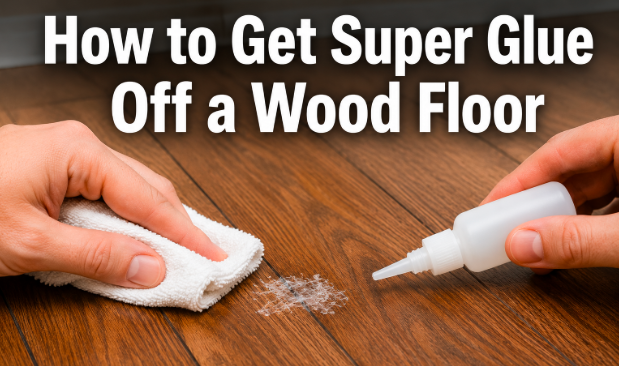
The safest way to get super glue off a wood floor is to harden it first, not soften it. Press an ice cube against the glue for a few minutes until it turns brittle, then lift it with a plastic scraper or an old gift card.
If a thin film is left behind, a dedicated super glue remover or a small amount of acetone on a cloth will finish the job, but only after you test it on a hidden part of the floor. Metal blades, steel wool, and full-strength solvent scrubbing are the fastest way to trade a glue spot for a bigger, permanent one.
Cyanoacrylate, the chemical name for super glue, bonds by reacting with moisture in the air, which is why it sets so fast and grips so hard. That same chemistry is what makes it stubborn on a floor.
The method below works whether the spill happened during a craft project, a furniture repair, or a dropped bottle, and it applies to solid hardwood, engineered wood, and most finished laminate floors.
Why is dried super glue so hard to remove?
Cyanoacrylate starts as a liquid monomer. The moment it touches moisture in the air or on the wood, the molecules link together into a rigid chain, a process chemists call polymerization. That’s why it doesn’t dry the way water or paint does; it reacts and locks into a hard plastic almost on contact. Once that reaction finishes, the glue is chemically closer to a thin sheet of acrylic than to anything you’d normally think of as glue, which is exactly why scrubbing or wiping does so little.
Knowing this changes how you approach it. You are not trying to wash something away. You are trying to either break a hardened plastic film loose from the wood, or dissolve it with a solvent strong enough to attack that polymer chain. That’s the whole logic behind the ice-then-scrape-then-solvent order below.
What actually removes super glue from a wood floor?
Removal comes down to three tools used in order: cold to make the glue brittle, a soft plastic edge to break it loose, and a small amount of solvent only if residue remains. Skipping straight to solvent is the most common mistake, because it can soften the floor’s finish before it touches the glue.
The right combination depends on two things: whether the glue is still wet or already cured, and what kind of finish is on the floor. Answer those two questions first, and the rest of the process is quick.
Is the glue wet or already dry?
Fresh, wet super glue is far easier to deal with than a cured spot. Cyanoacrylate typically sets in 10 to 30 seconds on its own and fully cures within about 24 hours, so if you catch it within the first minute or two, you are working with a soft, moveable liquid rather than a hardened plastic film.
If the glue still looks glossy and feels tacky rather than hard when you touch the edge with a fingernail (carefully), treat it as wet. If it is flat, hard, and does not budge under light fingernail pressure, treat it as cured and skip ahead to the dried-glue steps.
What kind of finish does your floor have?
This matters more than the glue itself. Most hardwood floors installed in the last 25 years are sealed with polyurethane, which cures into a hard plastic layer that shrugs off brief contact with mild solvents. Older floors, or floors refinished by hand, sometimes carry shellac, lacquer, or wax instead, and those finishes soften or dissolve almost instantly when acetone or lacquer thinner touches them.
You can check quickly: dab a cotton swab with a little rubbing alcohol and touch an inconspicuous spot, like inside a closet or under a rug. If the finish goes tacky, smears, or the swab picks up color, you have a solvent-sensitive finish (shellac, lacquer, or wax) and need to stay away from acetone entirely. If nothing happens after 30 seconds, the floor is very likely polyurethane, which tolerates brief, careful acetone contact.
Some floors, particularly older European-style hardwood or newer engineered products marketed as low-sheen or matte, use a penetrating oil finish instead of a surface coating. Oil finishes sit inside the wood grain rather than forming a hard film on top, and they tend to show water spots and solvent contact more visibly than polyurethane. If you know your floor was oiled rather than sealed, treat it the same way you would shellac: mechanical removal only, no acetone.
| Floor finish | Reacts to acetone? | Safest first move |
| Polyurethane (most common) | Resists brief contact; can dull with heavy scrubbing | Ice, then plastic scraper |
| Shellac | Dissolves quickly | Ice and scraper only, no solvent |
| Lacquer | Dissolves quickly | Ice and scraper only, no solvent |
| Wax finish | Strips the wax layer | Ice and scraper, then re-wax after |
| Bare, unfinished wood | Safe to use directly | Acetone or a glue remover, then light sanding if needed |
How do you get wet, fresh super glue off a wood floor?
- Blot, don’t wipe. Press a dry paper towel straight down onto the spill to soak up the excess without spreading it further across the floor.
- Scrape the bulk away. Use the edge of a plastic scraper, an old gift card, or a plastic putty knife to lift what is left while it’s still soft.
- Wash the spot. Mix a few drops of mild dish soap into warm water and wipe the area with a soft cloth, then dry it immediately so no water sits on the wood.
- Check for a thin haze. If a faint film remains once the floor is dry, treat it the same way you would a dried spot, using the steps below.
Working fast matters here. Every extra minute lets more of the glue cure, and cured glue takes real effort to remove without a scraper or solvent.
How do you get dried super glue off a finished wood floor?
Once cyanoacrylate has cured, it forms a hard, glassy bead that will not wipe away with water or soap. The goal is to make it brittle and lift it, rather than scrub at it.
- Hold an ice cube directly on the glue for three to five minutes. Wrap it in a thin cloth if you’d rather not touch cold water. This chills the plastic and makes it more likely to crack cleanly off the wood.
- Apply firm, flat pressure with the edge of a plastic scraper, working from the outer edge of the glue toward the center. A rigid plastic card works well because it can’t gouge the finish the way metal can.
- For a spot that won’t budge, apply a small amount of a dedicated adhesive remover made for cured glue, such as Goof Off’s Super Glue Remover, following the label directions and testing it on a hidden spot first, just as you would with acetone.
Is acetone safe to use on a wood floor?
Acetone dissolves cyanoacrylate effectively, but it is also strong enough to soften or strip shellac, lacquer, and some waxed finishes almost on contact. On a cured polyurethane finish, brief, light contact is usually tolerated, though heavy rubbing or letting it pool can still leave a dull or cloudy patch.
If your test spot confirmed a polyurethane finish, dampen a cotton swab or the corner of a soft cloth with acetone (plain nail polish remover works if it’s pure acetone) and dab, rather than rub, directly on the glue for a few seconds at a time. Wipe the area dry immediately afterward and clean it with a damp, soapy cloth to remove any solvent residue.
Never pour acetone directly onto a wood floor or let it sit and evaporate on its own. Apply it to the cloth or swab first, work in short dabs, and dry the spot right away.
If your test spot showed any softening, stop. Go back to the ice-and-scraper method and be patient. A few extra minutes of scraping is far cheaper than refinishing a section of floor.
What if the glue is on bare or unfinished wood?
Unfinished wood, like a subfloor, an unsealed board, or wood mid-refinish, has no protective layer to worry about, so you have more room to work. Acetone or MEK (methyl ethyl ketone) applied directly to the glue will soften it within a minute or two. Rub with a rag or fine steel wool once it’s soft, then wipe the area clean.
If a faint stain or raised grain remains after the glue is gone, a light hand-sand with 180 to 220 grit sandpaper, sanding with the grain, will level the spot before the floor is sealed or refinished.
How do you get super glue out of the seams between boards?
Glue that has run into the narrow gap between boards is harder to reach with a flat scraper. A wooden toothpick, a plastic guitar pick, or the corner of a stiff plastic card can dig into the seam without scratching the board edges the way metal would.
Work the tip along the seam in short strokes rather than digging straight down, and stop as soon as the visible glue is gone. Trying to get a seam perfectly spotless often causes more finish damage than leaving a barely visible trace.
Does the method change for laminate or engineered wood floors?
Laminate flooring has a printed wood-look layer under a hard, clear wear coating, usually melamine or a similar resin, rather than real wood underneath. That wear layer is tougher and more chemical-resistant than most site-finished polyurethane, so the ice-and-scraper method still comes first, and a brief, tested dab of acetone is typically safe if residue remains.
Engineered wood floors have a thin layer of real hardwood on top of a plywood core, finished the same way solid hardwood is, usually with polyurethane. Treat them exactly like solid hardwood: same finish test, same order of steps. The one thing to watch is thickness. Engineered floors with a very thin wear layer, often 1 to 2 millimeters, have less room for a mistake if you end up needing to sand, so keep any sanding light and local to the glue spot.
A quick safety note before you start with any solvent, including acetone or a commercial remover: work with a window open or a fan running, keep the room ventilated, and skip it entirely if you’re pregnant, have young kids or pets nearby, or have a sensitivity to strong fumes. None of the products discussed here need more than a few minutes of open exposure to do the job.
How do you clean and restore the floor afterward?
Once the glue is gone, the spot has usually seen more handling than the rest of the floor, so it’s worth a proper clean rather than just a wipe. A pH-neutral hardwood floor cleaner removes any leftover haze or fingerprints without leaving a film, unlike an all-purpose household cleaner.
Give the whole floor, not just the spot, a normal clean afterward so the treated area doesn’t stand out with a different sheen. If the finish looks dull or slightly cloudy where you worked, a light buff with a dry microfiber cloth often blends it back in within a few days as the area re-oxidizes.
How do you stop it from happening again?
Lay down a cardboard sheet, a silicone mat, or a few layers of newspaper under any project that involves glue, before you open the bottle. Choose a super glue with a precision or gel applicator rather than a free-flowing liquid nozzle, since it drips far less and gives you a second or two to correct your aim before it lands.
If you do have a spill, treat it in the first minute rather than after it dries. Wet cyanoacrylate comes up with soap and water in under a minute; cured cyanoacrylate can take twenty times as long and carries real risk to the finish.
Conclusion
Getting super glue off a wood floor comes down to patience over force. Harden it with ice, lift it with plastic, and only reach for acetone or a dedicated remover on a finish you’ve already tested. Move in that order and a floor with a normal polyurethane finish should come out looking untouched, with no scraping marks, no dull patches, and no glue left behind.
Frequently asked questions
Will rubbing alcohol remove super glue from a wood floor?
Rubbing alcohol can soften fresh, uncured super glue and is gentler than acetone, but it does little to a fully cured spot. Use it for wet spills or as your finish-safety test before trying anything stronger.
Can I use a razor blade to scrape super glue off my floor?
Avoid metal blades on a finished floor. They cut through the protective coating along with the glue, leaving a scratch that’s harder to fix than the original spot. Stick with a rigid plastic scraper instead.
How long does super glue take to fully cure on wood?
Cyanoacrylate sets within 10 to 30 seconds and reaches a full cure in about 24 hours. Removal is easiest in the first minute, before the bond has fully hardened.
Will Goo Gone or similar sticker removers work on super glue?
General adhesive removers made for tape or sticker residue are usually too mild for cured cyanoacrylate. A remover labeled specifically for super glue, or acetone on a tested finish, works far better.
Does WD-40 remove super glue from wood floors?
WD-40 can loosen super glue on some hard surfaces, but on a finished wood floor it risks leaving an oily residue that dulls the finish and is its own cleanup job. It’s better suited to metal or plastic than to flooring.
Related Articles
Why Are Your Hardwood Floors Suddenly Slippery?
Small Black Bugs in Bathroom: What They Are and How to Get Rid of Them
How to Clean Yellow Drips on Bathroom Walls?
How to Overlap Metal Roofing Lengthwise for a Leak-Free Roof?