


A sudden water outage can turn an ordinary day into a stressful one, especially when it happens without warning. One of the first things most people worry about is their bathroom, because a toilet that won’t flush is not just inconvenient, it can quickly become a hygiene concern for the whole household.
The good news is that you do not need running water to flush a toilet. With a little knowledge and a few simple materials, you can keep your bathroom clean and functional even during a water shortage or a planned shutoff. This guide walks you through everything you need to know about how to flush toilet when water is off, using safe, practical, and easy-to-follow methods.
Why Toilets Stop Working During Water Outages
Before learning the solution, it helps to understand the problem. Most homes rely on a water supply line that constantly refills the toilet tank after every use. When the water supply is cut off, whether due to a city-wide water main break, scheduled maintenance, a burst pipe in your home, a natural disaster, or even a missed utility payment, the tank stops refilling. Without water in the tank, pressing the flush handle does nothing useful, because there is no water left to create the flushing action.
This situation can happen for several reasons, and it is more common than people expect. Municipal water companies sometimes shut off supply temporarily to repair broken pipes or perform routine system upgrades. Storms, freezing temperatures, or earthquakes can damage water lines and cut off service for hours or even days. In some cases, homeowners themselves turn off the main water valve while fixing a leak or replacing a fixture. Whatever the cause, the result is the same: a toilet that looks normal but simply cannot flush the traditional way.
Understanding How a Toilet Normally Flushes
To appreciate why manual flushing works, it is useful to know how a toilet functions under normal conditions. When you press the flush handle, a valve inside the tank opens and releases the stored water into the bowl very quickly. This sudden rush of water raises the water level in the bowl high enough to trigger a siphon effect through the trap, which is the curved pipe at the bottom of the toilet. The siphon pulls waste and water down through the trap and into the drain line, after which the tank slowly refills for the next use.
The key detail here is that flushing is not about the tank itself, it is about how quickly and forcefully water enters the bowl. This is exactly why you can recreate the same effect manually, even without a working tank or water supply line.
Is It Safe to Flush a Toilet Without Running Water?
Yes, it is generally safe to flush a toilet manually when the water supply is off, as long as you have a separate source of water available. The toilet itself does not need pressurized tap water to function, it only needs enough water poured in at the right speed to create that same siphon action described earlier.
That said, there are a few situations where you should be more careful. If the water outage is caused by a sewage backup or a problem with your home’s drainage system rather than the supply line, flushing extra water into the toilet could make the backup worse.
Similarly, during a serious drought or an extended emergency, you may want to conserve water and limit how often you flush, using methods described later in this guide. In most everyday situations, though, manually flushing a toilet is a safe, simple, and sanitary solution.
The Manual Bucket Flush Method
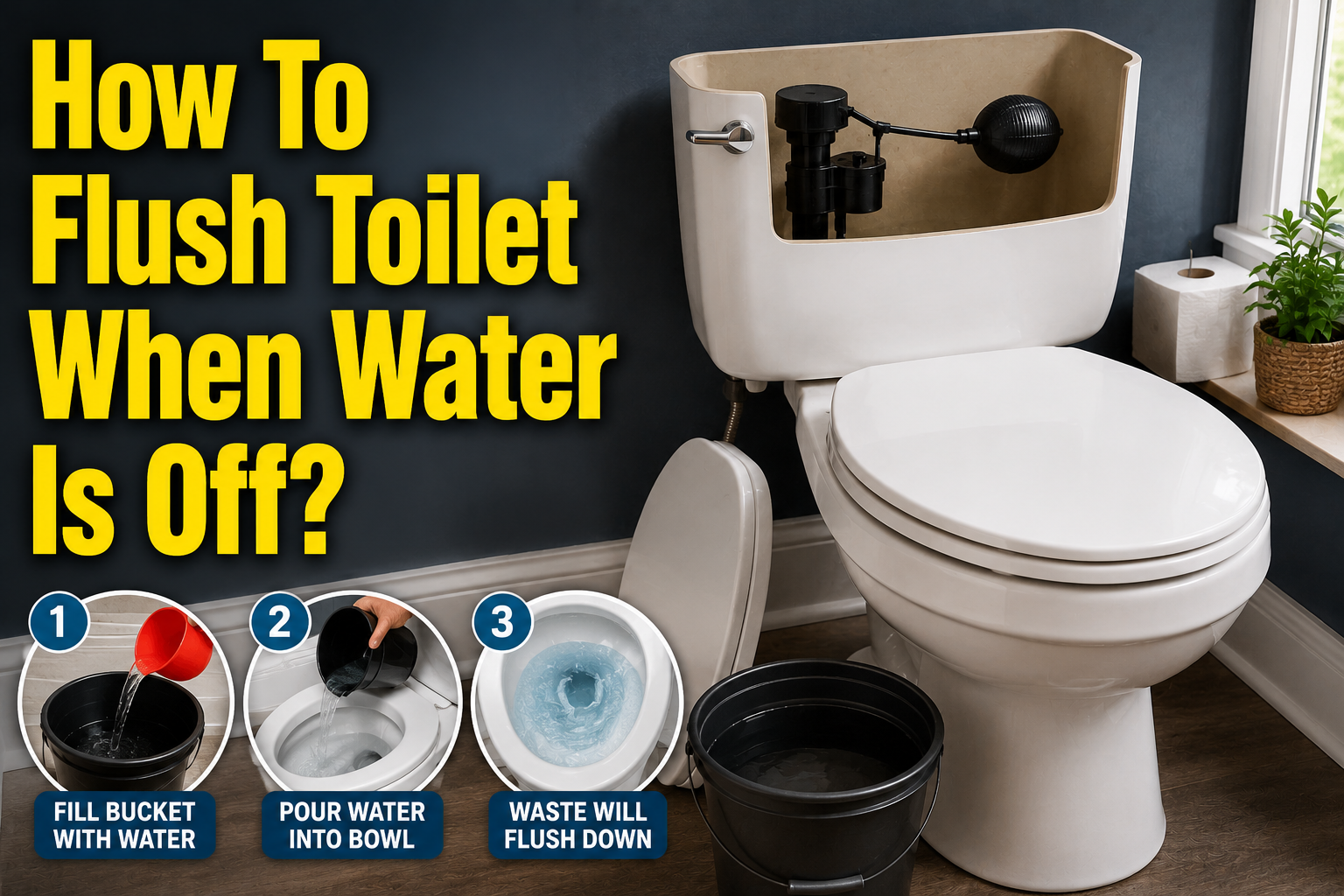
The most reliable and widely used method for flushing a toilet during a water outage is often called the bucket flush method. It requires no tools, no plumbing knowledge, and can be done by almost anyone in just a few steps.
What You Will Need
| Item | Purpose |
|---|---|
| A bucket or large container | To hold and pour water into the bowl |
| Roughly 1 to 1.5 gallons of water | The right amount needed to trigger a full flush |
| A backup water source | Bathtub, rain barrel, pool, or stored containers |
Step-by-Step Instructions
- Gather about one to one and a half gallons of water in a bucket. This amount closely matches what a toilet tank normally releases during a flush, so it works best for triggering the siphon effect.
- Lift the toilet lid so the bowl is fully open and accessible.
- Pour the water into the bowl quickly and directly, rather than slowly trickling it in. The speed of the pour matters more than people expect, because a fast pour mimics the sudden rush of water that a tank normally provides.
- Watch as the water level rises and pulls waste through the trap, just like a normal flush.
- Repeat the process if needed for larger waste amounts, though one properly poured bucket is usually enough for a standard flush.
The reason speed matters so much is simple physics. A slow trickle of water will just rise and drain out through the trap without ever building enough force to create suction. A fast, direct pour recreates the same sudden pressure change that a flush handle normally produces, which is what actually clears the bowl.
Alternative Water Sources You Can Use
When your main water supply is off, you will need to get creative about where your flushing water comes from. Fortunately, there are several safe and practical options depending on your situation.
Rainwater is one of the most convenient sources if you live in an area with regular rainfall, and many households keep a rain barrel specifically for this kind of backup use. Water stored in a bathtub ahead of a planned outage is another excellent option, since many people fill their tubs in advance when they know a shutoff is scheduled.
Pool or hot tub water works well too, particularly for households that already have access to one. Melted snow or ice can serve as an emergency source during winter outages. Even leftover water from washing dishes, sometimes called greywater, can be reused for flushing, although it is best to avoid greywater containing heavy grease or chemical cleaners.
The table below summarizes these options for quick reference.
| Water Source | Best Used For | Notes |
|---|---|---|
| Rainwater | Regular or emergency flushing | Collect in barrels or containers ahead of time |
| Bathtub water | Planned water shutoffs | Fill tub before the outage begins |
| Pool or hot tub water | Extended outages | Widely available in homes with pools |
| Melted snow or ice | Winter emergencies | Let it melt fully before pouring |
| Dish or laundry greywater | Everyday reuse | Avoid water with heavy grease or harsh chemicals |
Refilling the Toilet Tank Manually
While the bucket-to-bowl method is the fastest and most direct solution, some people prefer to refill the toilet tank itself so they can continue using the flush handle normally. This method takes a bit more effort but can feel more familiar for daily use.
To do this, remove the tank lid and pour water directly into the tank until it reaches the fill line, which is usually marked inside. Once the tank is full, you can press the flush handle exactly as you would during normal operation, and the toilet will flush using that stored water. This method uses roughly the same amount of water as the bucket method but takes a little longer since you have to wait for the tank to fill before flushing.
Choosing between the two methods usually comes down to personal preference and how much time you have. The bowl-pour method is faster and better for emergencies, while the tank-refill method feels more natural for ongoing use during a longer outage.
Tips for Conserving Water During an Outage
Water outages can sometimes last longer than expected, so conserving your available supply is important. A well-known water-saving habit is the phrase “if it’s yellow, let it mellow,” which simply means not flushing after every single use when water is limited, particularly for liquid waste. This can significantly reduce how much water your household uses in a day.
Using the minimum effective amount of water per flush is another smart habit, since pouring slightly more than one gallon rarely improves results and only wastes a limited resource. Reusing greywater from dishwashing or laundry, when it is free of heavy grease and harsh chemicals, is another practical way to stretch your supply. If you know in advance that a water outage is coming, filling buckets, bathtubs, or large containers ahead of time will make the entire process much easier once the water actually shuts off.
What to Do If You Have No Extra Water Available
In rare cases, you may find yourself without any backup water source at all. If this happens, there are still a few emergency alternatives worth knowing. Melting clean snow, if it is available, can provide enough water for occasional flushing.
A portable camping toilet or emergency toilet kit can serve as a temporary replacement if the outage is expected to last several days. For short-term emergencies, some people use a heavy-duty trash bag lined inside the toilet bowl along with absorbent material such as cat litter, though this should only be treated as a last-resort option rather than a regular practice.
If your water outage continues for an extended period, or if you notice signs of a sewage backup rather than a simple supply issue, it is best to contact a licensed plumber or your local water utility company for guidance rather than continuing to flush manually.
Preventive Measures for Future Water Outages
Being prepared in advance can make future water outages far less stressful. Most emergency preparedness experts recommend storing at least one gallon of water per person per day for basic needs, and keeping a few extra gallons specifically set aside for toilet flushing is a smart addition to that plan. Some households choose to install a small backup water storage tank or rain collection system for exactly this purpose.
It is also worth knowing the location of your home’s main water shutoff valve, since this can help during emergencies like burst pipes, and understanding your local utility’s outage notification system can give you advance warning before a scheduled shutoff. Keeping a simple emergency preparedness checklist, including stored water, buckets, and basic supplies, can make the entire experience much smoother the next time your water supply is interrupted.
Common Mistakes to Avoid
Even though manually flushing a toilet is simple, a few common mistakes can make the process less effective. Pouring water too slowly is the most frequent error, since a gentle trickle will not build enough pressure to create the siphon effect needed for a proper flush. Using too little water is another issue, as anything significantly less than a gallon may not clear the bowl completely.
Ignoring signs of a sewage backup, such as gurgling sounds or water rising unusually high, can also lead to bigger plumbing problems if you continue flushing without checking the source of the issue. Finally, during a serious water shortage, flushing more often than necessary can needlessly waste a limited and valuable resource.
Frequently Asked Questions
How much water do I need to flush a toilet manually? Roughly one to one and a half gallons is enough for a standard flush, since this closely matches the amount a toilet tank normally releases.
Can I use dirty or greywater to flush the toilet? Yes, water from dishwashing, laundry, or bathing can generally be reused for flushing, as long as it does not contain heavy grease or strong chemical cleaners.
How long can I go without flushing during a water shortage? There is no fixed rule, but many people reduce flushing frequency for liquid waste only, flushing solid waste right away to maintain hygiene.
Will this method damage my toilet or plumbing? No, pouring water manually into the bowl does not harm the toilet or plumbing system, since it simply recreates the same water flow a normal flush would produce.
What if the toilet still does not flush properly after adding water? If the bowl does not clear after a proper fast pour, there may be a separate blockage in the trap or drain line, and a plunger or professional plumber may be needed.
Conclusion
Knowing how to flush toilet when water is off can turn a stressful situation into a minor inconvenience. Whether you use the simple bucket-pour method, refill the tank manually, or rely on alternative water sources like rainwater or stored bath water, keeping your bathroom functional during an outage is completely achievable with materials most households already have on hand.
By understanding the basic mechanics of a flush, preparing a small water reserve in advance, and avoiding a few common mistakes, you can handle any water outage with confidence and keep your home clean and comfortable until regular service is restored.
Related Articles
Can You Paint a Metal Roof? The Complete Answer Homeowners Need
How To Get Rid Of Springtails In Bathroom: Complete Step-By-Step Guide
How to Get Wrinkles Out of New Curtains (No Ironing Required)
How to Install 12×12 Ceiling Tiles With Staples?
Is Ceiling Ghosting Dangerous? What Those Dark Streaks Actually Mean