


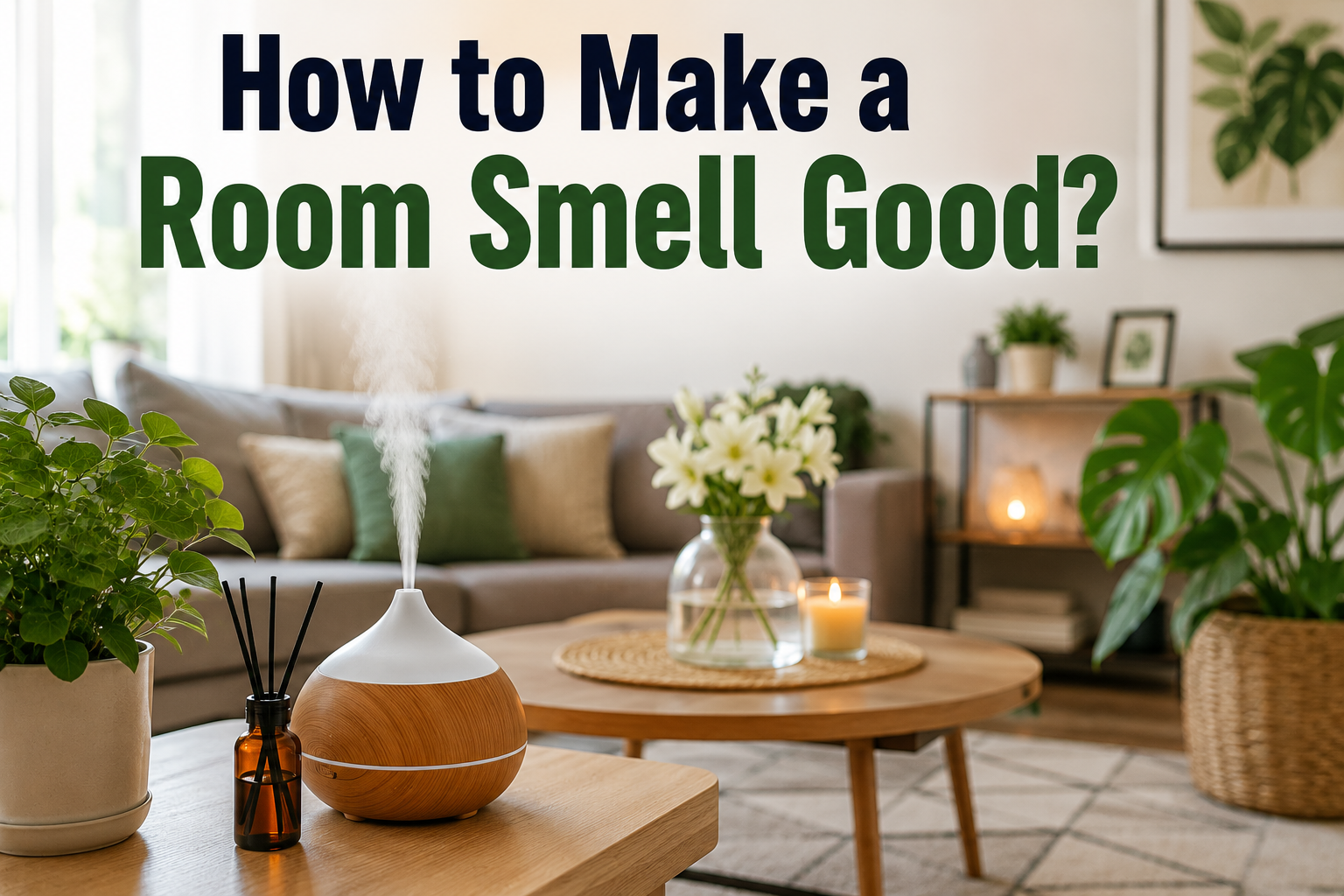
A room smells good when three things happen in order: the actual source of the odor gets removed, fresh air moves through, and a scent gets added that suits the space. Skip the first two and jump straight to spray or a candle, and you end up with a nice smell sitting on top of a bad one, which fades within the hour. Here is how to do all three, starting with what works in the next ten minutes and moving into what keeps a room smelling good for weeks.
Track down the smell before you cover it
Most stale rooms have one or two real sources, not a general staleness that spray can fix. Check the usual spots first: a hamper of worn clothes, a bin that has not been emptied, damp towels, pet bedding, or a trash can that needs a rinse, not just a new bag. Mold and mildew show up as a musty smell near windows, bathrooms, or anywhere damp, and no amount of fragrance will fix that until the moisture is dealt with.
Carpet and fabric hold onto odor molecules far longer than hard surfaces do, which is why a carpeted room can smell stale even after the trash is out and the windows are clean. If you vacuum, use an upholstery attachment on soft furniture too, not just the floor. Once the source is gone, everything you do after this point actually sticks instead of masking a problem that keeps coming back.
Open the windows and get air moving
Fresh air is the fastest, cheapest fix there is. Open windows on two sides of the room, or the whole home, for 10 to 20 minutes. Air moving in one side and out the other, known as cross ventilation, clears stale air far faster than a single open window does. A fan pointed out an open window speeds this up, since it pulls stale air out rather than just stirring it around the room.
This step matters for more than smell. The U.S. Environmental Protection Agency has found that levels of common indoor pollutants, including the volatile organic compounds released by paint, cleaning products, and some air fresheners, can run several times higher indoors than outdoors. Letting outdoor air in dilutes those compounds along with the smell, so ventilation is doing two jobs at once.
Wash and freshen anything made of fabric
Bedding, curtains, rugs, throw blankets, and upholstery all trap odor the way carpet does. Sheets are the single biggest one for a bedroom: wash them weekly if you can, since body oil and sweat break down over a few days and start to smell sour. Curtains and rugs need it far less often, but a wash every few months keeps them from becoming the reason a clean-looking room still smells off.
For anything that cannot go in a machine, a light sprinkle of baking soda works well. Spread it over the surface so it has room to contact the fabric, since a thin dusting reaches more odor molecules than a thick pile in one spot, let it sit for 20 to 30 minutes, then vacuum it up. Baking soda is a mild base, and it reacts with the acidic compounds behind many sour and musty smells, turning them into odorless salts rather than simply covering them up.
Quick fixes for right now
When you need a room to smell better in the next few minutes, a few low-effort tricks work fast:
- A stovetop simmer pot. Slice citrus (lemon, orange, or lime), add a cinnamon stick or a few cloves, cover with water, bring to a boil, then turn it down to a low simmer. It scents a kitchen and nearby rooms within minutes, and it is genuinely one of the strongest, cheapest options there is. Keep an eye on the water level so the pan never runs dry.
- A quick fabric or room spray. Mix distilled water with a small amount of vodka or witch hazel to help the scent disperse, then add a few drops of essential oil. Spray it into the air rather than directly onto fabric or wood.
- An open box of baking soda. Left in a closet, a bathroom, or near a trash can, it slowly absorbs ambient odor over the following weeks.
A quick callout: fragrance works best on a room that is already clean. Spraying a strong scent over a musty or sour smell usually just creates a new, worse smell, since the two odors mix rather than one replacing the other.
Scent that lasts longer than a spray
For a smell that holds up over days rather than minutes, a few options work well without needing constant reapplication:
- A reed diffuser. Combine a carrier oil, such as almond or a light mineral oil, with essential oil in a narrow-necked bottle, then add a handful of rattan sticks. Turning the sticks every few days keeps the scent circulating.
- A simmering wax melt or wax warmer. These release scent without an open flame, which makes them a reasonable option for a bedroom overnight.
- Candles, used carefully. Trim the wick to about a quarter inch before each burn. A long or crooked wick burns hotter and produces more visible soot, which settles as a fine black film on walls and can leave its own faint smell over time.
Match the scent to the room
The right scent depends on what the room is used for. A bedroom tends to benefit from something calming rather than sharp, lavender and chamomile are the most studied options for this, with several small clinical trials linking lavender inhalation to lower stress hormone levels and better reported sleep quality, though the effect size is modest and more research is still needed. A living room or entryway can handle something brighter and more sociable, like citrus, cedar, or a light floral. Bathrooms do well with clean, simple scents such as eucalyptus or mint, since they cut through the specific odors a bathroom deals with rather than fighting them with something heavy and sweet.
Keep the intensity in proportion to the room size. A small bedroom needs far less fragrance than an open living and dining space, and using the same strength in both usually means one room smells faint and the other smells overwhelming.
Natural options that do not need a spray bottle
A few low-maintenance options add scent without any mixing, spraying, or open flame. Fragrant plants such as jasmine, gardenia, and some lilies release a real, ongoing scent as they bloom, and a pot of one on a windowsill does double duty as decor. Dried lavender, rose petals, or cedar shavings tied into a small cloth sachet work the same way in a drawer or closet, releasing scent slowly for weeks with no upkeep beyond adding a fresh drop of essential oil once the scent fades.
Cinnamon and applesauce ornaments are a simple option worth knowing if you like a warm, baked scent without running the oven. Mix equal parts cinnamon and applesauce into a stiff dough, roll it out, cut shapes with a cookie cutter, and let the pieces air dry for a few days. Hung from a hook, doorknob, or shelf, they give off a soft cinnamon smell for months and cost almost nothing to make.
How long a scent lasts, and why some fade fast
Scent strength drops off for a few predictable reasons, and knowing them saves you from reapplying something that was never going to hold. Heat and airflow both speed up evaporation, so a spray or oil near a heating vent, a sunny window, or a doorway with constant traffic fades faster than the same amount in a still corner. Fabric holds scent longer than hard, smooth surfaces, which is why a few drops of oil on a cotton sachet outlasts the same amount sprayed onto a painted wall. If a scent seems to disappear within an hour, the room likely has more airflow than the method was built for, and a stronger or longer-lasting method, like a diffuser instead of a spray, will hold up better in that specific space.
What to avoid
Fragranced sprays, plug-ins, and some candles release volatile organic compounds, a category of airborne chemicals linked to eye, nose, and throat irritation with regular heavy use, so ventilation while using them is worth keeping up even in colder months. Over-spraying is its own separate problem: your nose adapts to a constant smell within about ten minutes, so heavier and more frequent spraying does not make the room smell better to you, it just uses more product for the same result to anyone walking in fresh. Anyone with asthma, allergies, or a scent sensitivity generally does better with fewer, lighter sources of fragrance and more ventilation, rather than compensating for a stronger smell with an even stronger one.
Conclusion
A room smells good when the odor source is gone, fresh air has moved through, and the fragrance you add matches the space. Handle the fabrics and the ventilation first, since no amount of spray fixes a musty rug or a sealed-up room. From there, a simmer pot or spray solves the next ten minutes, and a diffuser, wax melt, or well-trimmed candle keeps it smelling that way for weeks.
Frequently asked questions
What makes a room smell good fast?
Fresh air and heat-based scent work fastest. Open two windows for cross ventilation, then start a stovetop simmer pot with citrus and cinnamon. Both change the smell within about ten minutes.
Does baking soda actually get rid of smells, or does it just cover them up?
It genuinely neutralizes many odors rather than masking them. Baking soda is a mild base that reacts with the acidic compounds behind sour and musty smells, turning them into odorless salts.
Is it bad to use air fresheners and sprays all the time?
Occasional use is fine, but frequent heavy use adds volatile organic compounds to indoor air, which can irritate eyes, nose, and throat. Ventilate the room while using them and space out how often you spray.
What scent should I use in a bedroom versus a living room?
Lavender or chamomile suit a bedroom, since they are linked to lower stress and better reported sleep. Citrus, cedar, or a light floral suit a living room or entryway better, since they read as brighter and more social.
Why does my room smell stale again after only a day?
A quick fix without a source fix rarely holds. Check for a full hamper, damp towels, or a trash can that needs rinsing, since one of those is usually undoing the fragrance within hours.
Related Articles
How Much Do Kitchen Cabinets Cost in 2026? Complete Pricing Guide
What Is the Minimum Pitch for a Metal Roof?
How to Clean Yellow Drips on Bathroom Walls?
How to Adjust a Door Closer: Complete Step-by-Step Guide
Can You Paint Ceiling Tiles? A Complete Guide (Tips, Costs & Steps)