


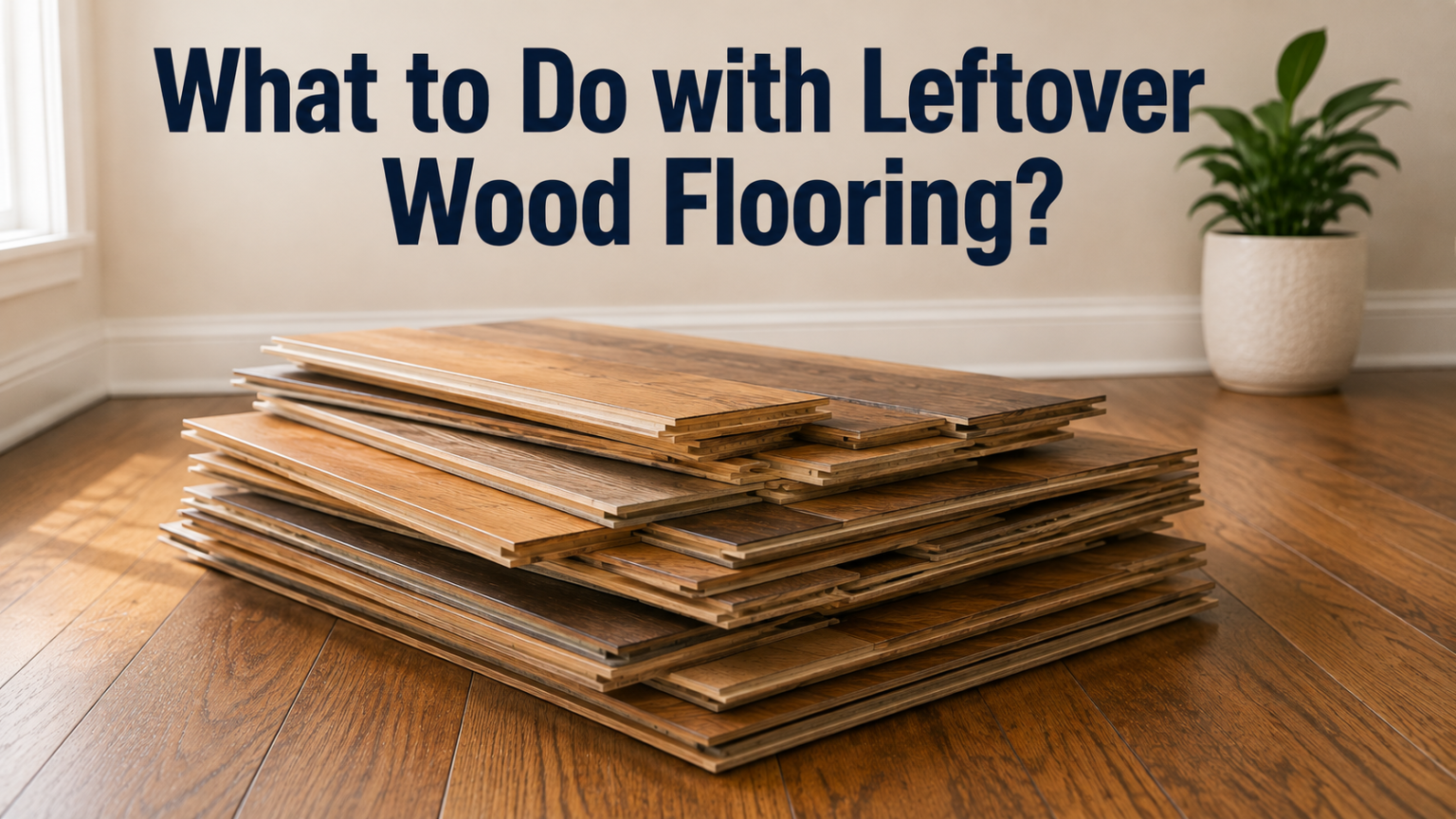
Almost every flooring project ends with a few extra boards sitting in the garage, and most homeowners genuinely don’t know what to do with leftover wood flooring once the installation is finished. The good news is that these spare pieces are far too useful to throw away, no matter how small the pile looks right now.
From simple home repairs to full-blown furniture projects, leftover flooring can be turned into something functional or decorative with very little effort. This guide walks through every realistic option, starting with how to evaluate what you actually have, followed by practical uses, creative projects, and responsible disposal methods for the pieces you truly cannot use.
Assess What You Have Before Deciding
Before picking a project, it helps to look closely at the type, quantity, and condition of your leftover boards, since this single step determines which ideas will actually work. Not every leftover piece behaves the same way, so a quick assessment saves time later.
Identify the Flooring Type
Solid hardwood, engineered wood, laminate, and bamboo all react differently to cutting, gluing, and finishing. Solid hardwood is the most versatile for DIY projects because it can be sanded and refinished repeatedly.
Engineered and laminate boards are thinner and often contain layered materials, which limits how they can be reused.
Check Quantity and Condition
A handful of boards is usually enough for small decor projects, while a larger stack opens the door to furniture or accent walls. Inspect each piece for warping, moisture damage, or a mismatched finish, since damaged boards are better suited for outdoor or rougher projects rather than visible indoor work.
Practical and Functional Uses
Before jumping into decor ideas, it’s worth considering the most straightforward answer to what to do with leftover wood flooring, which is simply keeping it functional around the house. These uses require little cutting or design skill.
Keep Spares for Future Repairs
Flooring finishes fade and change slightly over the years, so keeping a few original boards aside guarantees a perfect match if a plank ever cracks or gets water damage. This is often the smartest first step before considering any other use.
Use as Transition Strips or Thresholds
Leftover boards can be ripped down to size and used as thresholds between rooms or as transition strips where flooring types change. This avoids buying a separate trim piece and keeps the wood tone consistent throughout the home.
Patch Small Hidden Areas
Closets, spaces under large appliances, or areas behind built-in furniture are ideal for using up leftover boards, since any slight imperfections won’t be visible. This extends the same flooring into spaces that were previously overlooked.
Extend Flooring into a Closet or Pantry
If the main room’s flooring never continued into an adjoining closet or pantry, leftover planks make it simple to finish that transition. It creates a more cohesive look without needing to order additional material.
DIY and Home Decor Projects
For anyone with a genuine surplus of boards, small DIY projects are usually the most satisfying answer to what to do with leftover wood flooring. Most of these ideas require only basic tools and a bit of patience.
Floating Wall Shelves
Solid wood flooring planks are thick enough to be cut and mounted as sturdy floating shelves. Sanding the edges and adding a matching or contrasting stain gives them a finished, intentional look.
Wood Coasters and Trivets
Small offcuts can be sliced into coasters or trivets, sanded smooth, and sealed with a food-safe finish. This is one of the easiest beginner projects and uses up scraps that would otherwise be discarded.
Picture and Mirror Frames
Wood flooring strips can be mitered at the corners to build custom picture or mirror frames. The existing finish often adds character that store-bought frames don’t have.
Accent Wall Paneling
An entire wall can be covered using leftover boards arranged in a herringbone, chevron, or straight pattern. This works particularly well when there is enough matching material for a small feature wall rather than an entire room.
Cutting Boards and Serving Trays
Thicker solid wood pieces can be glued together and shaped into cutting boards or serving trays. It’s important to confirm the wood species is food-safe and free of harmful finishes before using it near food.
Wooden Signs and Wall Art
Short leftover pieces are perfect for painted or engraved wooden signs, name plaques, or simple geometric wall art. This is a low-cost way to use up boards that are too small for any other project.
Plant Stands or Small Tables
Combining several boards can produce a small plant stand, side table, or stool top. These projects work best with solid hardwood, since it holds screws and joints more securely than engineered alternatives.
Outdoor and Garden Uses
Outdoor projects are a practical answer for anyone asking what to do with leftover wood flooring that is slightly damaged or no longer suitable for indoor use. Only untreated, solid wood should be used outdoors, since laminate and engineered boards break down quickly with moisture exposure.
Raised Garden Bed Edging
Untreated solid wood boards can be used to frame raised garden beds, adding structure without the cost of new lumber. Over time the wood will weather naturally, which suits most garden aesthics.
Birdhouses or Planter Boxes
Small offcuts are ideal for building birdhouses, window boxes, or compact planters. These projects use minimal material and are a good way to involve family members in a simple weekend build.
Garden Pathway Accents
Thicker flooring pieces can be arranged as edging along garden pathways or flower beds. This works best as a temporary or decorative accent rather than a permanent walking surface, since untreated wood wears down outdoors.
Furniture and Upcycling Projects
For larger leftover quantities, building furniture is one of the more rewarding answers to what to do with leftover wood flooring. These projects take more time but produce long-lasting, useful pieces.
Tabletop or Desk Surface
Multiple boards can be glued edge to edge to form a solid tabletop or desk surface. Once sanded and sealed, it often looks similar to a butcher-block style table at a fraction of the cost.
Headboard for a Bed
Arranging boards vertically or horizontally against a wall-mounted frame creates a simple, custom headboard. This is a popular upcycling project because it uses a large volume of material without requiring complex joinery.
Drawer or Cabinet Fronts
Leftover flooring can be cut down to replace worn drawer fronts or cabinet doors, instantly updating old furniture. Matching the grain direction gives the finished piece a more polished, intentional appearance.
Small Bench or Stool
A basic bench or stool frame can be topped with several glued flooring boards for a sturdy, natural-wood seat. This is a manageable project for someone comfortable with basic woodworking tools.
Donate or Give Away Leftover Flooring
When there isn’t a personal use for the material, donating is a responsible and simple answer to what to do with leftover wood flooring. Several organizations and platforms accept building materials in good condition.
| Option | Best For | Notes |
| Habitat for Humanity ReStore | Larger quantities in good condition | Often provides a donation receipt |
| Local schools or community centers | Small quantities for art or shop classes | Call ahead to confirm they accept wood |
| Facebook Marketplace or Craigslist | Any quantity, especially bulk lots | Free listings attract DIYers quickly |
| Freecycle or local buy-nothing groups | Small leftover stacks | Community-based, no fees involved |
Sell for Extra Cash
Leftover flooring in good condition can also be sold rather than given away, especially if it’s a popular wood species or a larger quantity.
Online marketplaces, local flooring retailers, and contractors are the most common buyers, and listing clear photos with exact measurements tends to attract faster offers. Pricing slightly below new retail cost is usually enough to sell a bundle within a reasonable time.
Recycle Responsibly
Not all leftover flooring can be reused, and in that case recycling is the more sustainable option than sending it to a landfill. Many local recycling centers accept untreated solid wood, though laminate flooring with plastic layers or heavily glued engineered wood is often rejected due to mixed materials. Calling ahead to a local facility before dropping off a load saves an unnecessary trip.
Burn as Firewood or Kindling with Caution
Untreated, unfinished solid wood scraps can be burned safely as kindling or firewood, making this one of the simplest disposal methods for small offcuts.
However, engineered wood and laminate flooring should never be burned indoors, since the adhesives and finishes release harmful fumes when heated. This option should be reserved strictly for plain, chemical-free solid wood pieces.
Storage Tips for Future Use
If none of the current projects fit right away, proper storage keeps leftover boards usable for years. Store the wood flat, in a dry area with stable temperature, ideally off the ground to avoid moisture absorption from a concrete floor.
Labeling the stack with the flooring brand, color name, and purchase date makes future repairs or matching much easier.
Conclusion
Leftover wood flooring rarely needs to end up in the trash, since it can be repaired into future patches, transformed into decor, upcycled into furniture, or passed on through donation and resale.
The right choice mainly depends on the quantity, condition, and type of wood left over, but there is almost always a practical use available. Taking a few minutes to sort and store the material properly ensures none of it goes to waste.
FAQs
Can I use leftover flooring outdoors?
Only untreated solid wood should be used outdoors, since laminate and engineered flooring deteriorate quickly with moisture exposure.
How long can I store wood flooring before it becomes unusable?
Solid wood stored flat in a dry, temperature-stable space can remain usable for many years, while engineered or laminate flooring has a shorter practical shelf life.
Is engineered wood flooring recyclable?
Engineered wood is often rejected by standard recycling centers due to its layered construction and adhesives, so it’s best to check with a local facility beforehand.
Related Articles
How to Fix a Leaky Kitchen Faucet: Complete DIY Repair Guide
How Much Does a Toilet Weigh? Full Weight Guide by Type & Material
Are Toilet Seats Universal? Complete Sizing, Fitting & Buying Guide
Can I Use Ceiling Paint on Walls? Full Guide With Pros, Cons & Tips